Why make this pilgrimage
Perhaps he was your pope, and you want to give thanks. Perhaps you know him only through what your parents say, or through one sentence of his that you keep returning to. Either way the question is the same: what made this man so free and so unafraid, and can it be learned where he learned it?
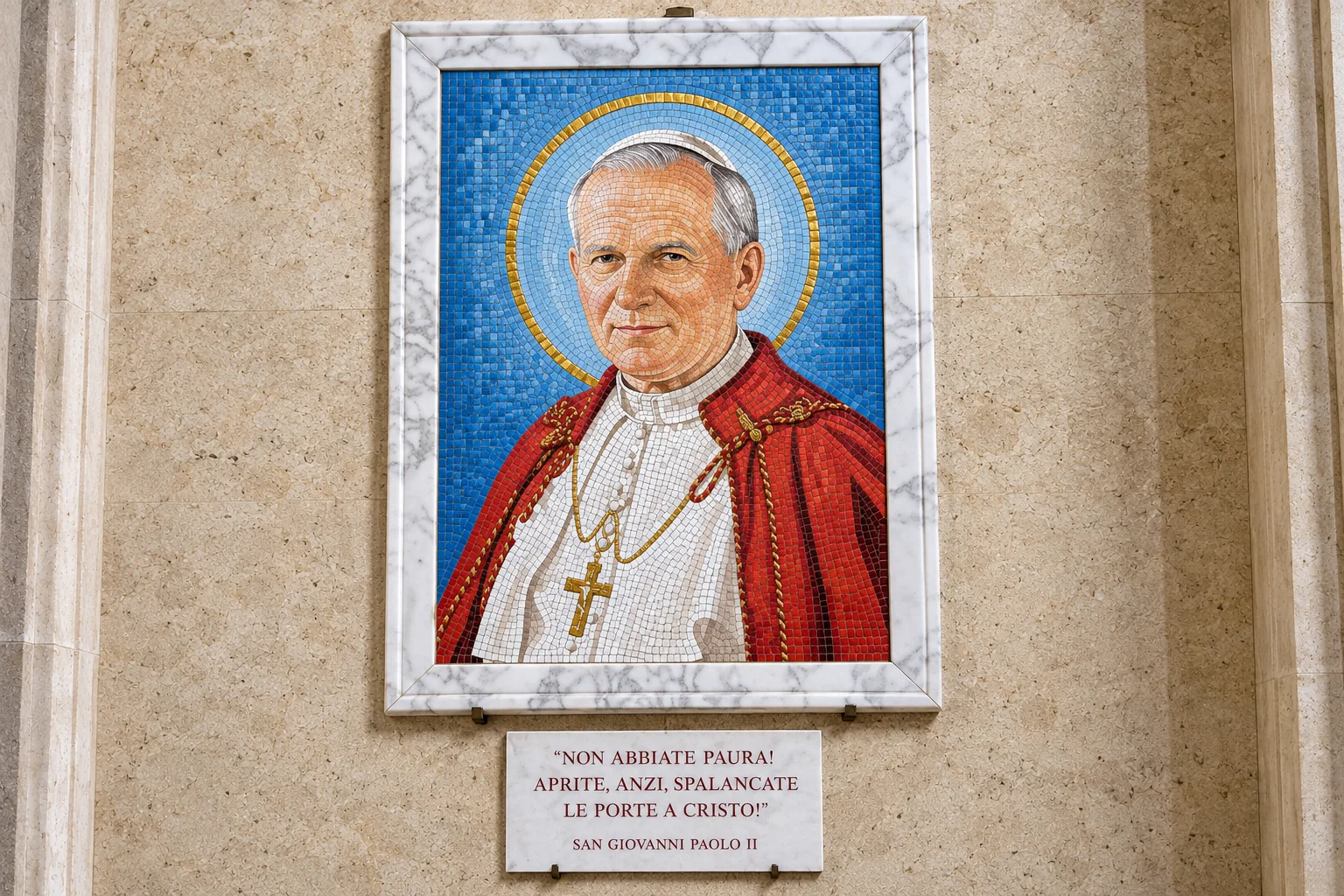
This pilgrimage seeks the answer by following his life in order, from the font where he was baptized to the tomb where he rests. It is not made to admire a famous pope. It is made to ask his intercession, to carry to him the grief, fear or decision you brought from home, and to follow him to the One he pointed to when he said, "Do not be afraid. Open wide the doors for Christ."
THE JOURNEY
From the Font to the Tomb: Wadowice, Kraków, Częstochowa and Rome
- Where
- Poland, Italy, Vatican City
- Length
- About nine to eleven days
- Status
- Under consideration
This journey would follow the life of Karol Wojtyła in the order he lived it. It would begin at his baptismal font in Wadowice and on the hill paths of Kalwaria Zebrzydowska, move to the Kraków of his student, worker, priest and bishop years, and pause at Jasna Góra, where he entrusted himself and the Church to Mary. It would then cross to Rome, where his pontificate began in St. Peter's Square, and end at his tomb inside the basilica. The order is the point: the Polish days could be made from a single Kraków base, and Rome would come last because that is where his life led.
The route, and why each place belongs
- 1
Wadowice
PolandWhy it belongs
He was born here on 18 May 1920 in the house at Kościelna 7 and baptized in the church beside it. He said in 1999 that this was where he "was joined to Christ and received into the community of his Church."
What you would do there
The pilgrim would walk through the family home, now a museum, and then cross to the Basilica of the Presentation of the Blessed Virgin Mary, where the font is preserved. Baptismal promises could be renewed near it, so that the journey starts where his own life in Christ started.
- 2
Kalwaria Zebrzydowska
PolandWhy it belongs
This seventeenth-century Bernardine sanctuary near Wadowice is where he came from childhood, as a priest and as archbishop, and again as pope in 1979 and 2002. Here he asked pilgrims to pray for him "during my life and after my death."
What you would do there
The group could walk part of the Passion or Marian paths between the hillside chapels in silence, praying the Way of the Cross where he prayed it, and spend time before the image of Our Lady of Kalwaria. The paths could be shortened, or left out, by anyone who needs to.
- 3
Kraków: Dębniki, Franciszkańska 3 and Wawel Cathedral
PolandWhy it belongs
Kraków holds his adult life. He lived in the Dębniki district as a student and wartime laborer, was ordained a priest in the chapel of the Archbishop's Palace on 1 November 1946, and was ordained a bishop in Wawel Cathedral on 28 September 1958.
What you would do there
A day on foot would link these places: the streets of Dębniki, the palace at Franciszkańska 3 with its papal window above the street, and Wawel Cathedral. His own words could be read aloud along the way, so that the city is met as the place of his vocation and not as a sightseeing circuit.
- 4
Kraków-Łagiewniki: the Divine Mercy Sanctuary and the Sanctuary of St. John Paul II
PolandWhy it belongs
During the occupation he walked past the Łagiewniki convent in wooden shoes on his way to the Solvay plant. He returned as pope on 17 August 2002 to dedicate the basilica and entrust the world to Divine Mercy, and the sanctuary that now bears his own name stands nearby.
What you would do there
The Chaplet of Divine Mercy could be prayed at the place where he made that entrustment. At the Sanctuary of St. John Paul II, consecrated in 2016, the pilgrim could pray before a relic of his blood, which the regional tourism office describes as kept in the altar; the current display would be confirmed with the sanctuary.
- 5
Auschwitz-Birkenau (for those who choose it)
PolandWhy it belongs
He came here many times as a priest and bishop and celebrated Mass at Birkenau on 7 June 1979, calling it "this Golgotha of the modern world." There he held up St. Maximilian Kolbe, who gave his life for another prisoner, as the Christian answer to that place.
What you would do there
This would be an unhurried, optional day: a place of mourning to be visited with gravity, not a devotional stop. Those who go would walk the grounds quietly and could read his 1979 words afterwards; those who stay in Kraków would keep the day for prayer and rest.
- 6
Jasna Góra, Częstochowa
PolandWhy it belongs
At Poland's national Marian shrine he said he had so often whispered Totus Tuus before the icon, and that here he learned to be "a man of great trust." As pope in 1979 he entrusted the Church to Mary at this shrine.
What you would do there
The pilgrim would have time before the icon of Our Lady of Częstochowa and could pray the Rosary there, including the Luminous Mysteries he proposed in 2002. It would be the last act in Poland: an entrustment made before leaving for Rome.
- 7
St. Peter's Square, Rome
Vatican CityWhy it belongs
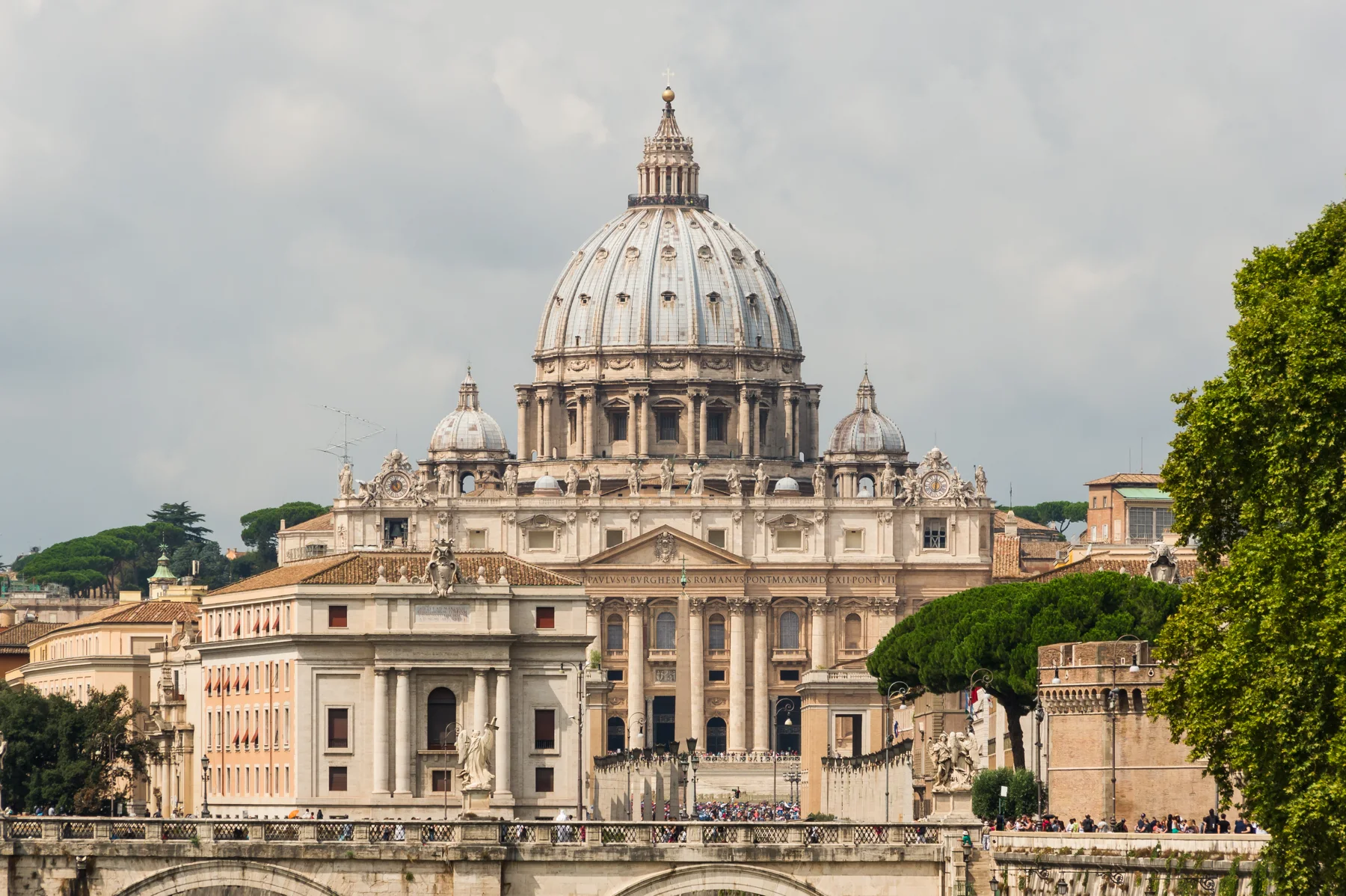
His pontificate began here on 22 October 1978 with the words "Do not be afraid. Open wide the doors for Christ." Here he was shot on 13 May 1981, and here he was beatified and canonized.
What you would do there
The group would stand in the square and hear the 1978 homily read where it was preached, then pray for the grace to forgive, remembering that he forgave the man who shot him. The Rome days would be built around him and not around a general tour of the city.
- 8
The tomb of St. John Paul II, St. Peter's Basilica
Vatican CityWhy it belongs
His body has rested beneath the altar of the Chapel of St. Sebastian, beside the chapel of Michelangelo's Pietà, since May 2011. It is the one stop every form of this pilgrimage shares, and the place this journey has been walking toward since Wadowice.
What you would do there
After the queue into the basilica, the pilgrim would kneel at the chapel for a few minutes with the intention carried from home and ask for what he or she came to ask. The font and the tomb would then stand at either end of one life, and of one pilgrimage.
Prayer and the sacraments
Mass would be sought at the places of his own sacramental life, such as Wadowice, Wawel or Jasna Góra, and in St. Peter's, where the schedule permits; clergy arrangements are confirmed for each departure. The Rosary, the Way of the Cross at Kalwaria and the Chaplet of Divine Mercy at Łagiewniki would give the days their rhythm, with Confession where confessors are available.
Pilgrim’s Time
Pilgrim's Time would be protected in Kraków and again in Rome: an unscheduled afternoon to go back to a church that spoke to you, to read a homily of his slowly, or to return alone to the tomb. On the Auschwitz-Birkenau day it would be kept free on both sides, since that visit should not be followed by a programme.
Pilgrim Pace
The Polish days would involve city walking on cobbles in Kraków, steep and unpaved hill paths at Kalwaria Zebrzydowska that could be shortened or skipped, and a long day on foot at Auschwitz-Birkenau for those who include it; Wadowice and the Kraków sanctuaries are comparatively gentle. Rome would add a flight, and standing and queuing at St. Peter's.
How Pilgrim Pace worksOther ways to make this pilgrimage
- Kraków and southern Poland alone. The same life could be followed from a single Kraków base, without Rome, taking in Wadowice, Kalwaria Zebrzydowska, the Kraków of his student, worker and bishop years, the two Łagiewniki sanctuaries, Jasna Góra and an optional day at Auschwitz-Birkenau.
- Rome alone, on the Rome & Assisi Classic. A pilgrim who cannot go to Poland could still make this pilgrimage at his tomb during the Rome days of the Rome & Assisi Classic; its sample outline lists a basilica visit with protected prayer time but does not name his tomb, so it should be asked for.
- Close to home: Washington, D.C.. For those who cannot travel abroad, there is a national shrine dedicated to him in Washington, D.C., where a day of prayer could be made with the same intention.
No dated departures are currently announced. This is a journey Bold Pilgrim is considering, described so you can picture it. Dates, priest, Gateway Airport and price are published on a departure itself, and only when confirmed.
Who it may be for
Catholics who came of age during his pontificate and want to give thanks. Young adults who know him only by reputation and want to know why their parents speak of him as they do. Men, and fathers with sons, looking for a model of strength that is prayerful rather than loud. Married couples and families drawn by his teaching on love and the family. Anyone discerning a vocation, since his own was found amid loss, manual labor and war. Priests and seminarians. People of Polish descent returning to the faith of their grandparents.
It also suits a first-time pilgrim. The story is recent and easy to follow, southern Poland is compact, and the pilgrimage can be made well in Kraków and its surroundings without long transfers. No one needs a long-standing devotion to him to come: devotion to a particular saint is free, and the pilgrimage is centred on Christ.
- Catholics who grew up during his pontificate, including the World Youth Day generation
- Young adults who want to meet the saint behind the name
- Fathers and sons, and men's groups, looking for a model of prayerful strength
- Married couples and families drawn to his teaching on love and the family
- People discerning a vocation or a major decision
- First-time pilgrims who want a clear, recent, human story to follow
A spiritual purpose has no pace rating; the actual itinerary determines the Pilgrim Pace. The places typical of this pilgrimage involve city walking on cobbles in Kraków, standing and queuing at St. Peter's, a long day on foot at Auschwitz-Birkenau if included, and steep, unpaved hill paths at Kalwaria Zebrzydowska, where the full routes run for several kilometres and can be shortened or skipped. Wadowice and the Kraków sanctuaries are comparatively gentle.
UNDERSTANDING THIS PILGRIMAGE
A St. John Paul II pilgrimage is a journey of prayer to the places where Karol Wojtyła was baptized, lost his family, worked, became a priest and bishop, and is now buried: Wadowice, Kalwaria Zebrzydowska, Kraków and Częstochowa in southern Poland, and his tomb in St. Peter's Basilica in Rome. Its purpose is not to admire a famous pope but to ask his intercession and to follow him to the One he pointed to. He opened his pontificate with the words "Do not be afraid. Open wide the doors for Christ."
What this pilgrimage is: a life followed in order
In Poland the pilgrimage has a natural order because it follows a life. Wadowice is the beginning: the family home, now a museum, and next door the basilica with the font where he was baptized on 20 June 1920. He said there in 1999 that this was where he "was joined to Christ and received into the community of his Church." A short drive away is Kalwaria Zebrzydowska, the hillside sanctuary of Passion and Marian paths that he walked as a boy, as a priest and as archbishop, and where he asked pilgrims to pray for him "during my life and after my death."
Kraków holds his adult life: the Dębniki district where he lived as a student and worker, the archbishop's palace at Franciszkańska 3 where he was ordained on 1 November 1946, and Wawel Cathedral, where he was ordained a bishop in 1958. On the southern edge of the city the Sanctuary of St. John Paul II stands near the Divine Mercy Sanctuary at Łagiewniki, where in 2002 he entrusted the world to Divine Mercy.
Częstochowa belongs because Jasna Góra was where, in his own words, he learned to be "a man of great trust." Auschwitz-Birkenau, which he called "this Golgotha of the modern world," belongs for a different and graver reason.
Rome is the other half. His pontificate began in St. Peter's Square and his body rests inside the basilica, in the Chapel of St. Sebastian. A pilgrim who cannot go to Poland can still make this pilgrimage in Rome, and for those who cannot travel abroad there is a national shrine dedicated to him in Washington, D.C.
Why people are drawn to it
Many pilgrims come because John Paul II was their pope. He reigned from 1978 to 2005 and began the World Youth Days; a whole generation of Catholics first took the faith seriously because of him. For them a visit to Wadowice or to his tomb is close to visiting the grave of a spiritual father.
Others come for what his life shows. He lost his mother at eight, his only brother at twelve and his father at twenty. He worked in a quarry and a chemical plant under Nazi occupation, studied for the priesthood in an underground seminary, and served as a priest and bishop under a Communist government. He was shot in St. Peter's Square on 13 May 1981 and forgave the man who shot him. He grew old and ill in public. People carrying grief, fear, a hard decision about vocation, or the long work of forgiving someone find that his biography speaks to theirs.
And some come for a particular part of his teaching: the dignity of the human person, marriage and the family (Pope Francis called him "the pope of the family"), Divine Mercy, or his entrustment to Mary, summed up in his motto Totus Tuus.
The Catholic foundation: why go to the places of a saint
Catholics do not travel to a saint's home town or tomb to honor a celebrity. The Catechism teaches that the saints "do not cease to intercede with the Father for us" and that "our communion with the saints joins us to Christ." A pilgrimage in the footsteps of a saint is one concrete way of living that communion: you pray where he prayed, you ask him to pray for you, and you let his life question yours. The Church's Directory on Popular Piety is firm that devotion to the saints must never eclipse Jesus Christ, the one Mediator, and should lead back to the liturgy.
John Paul II makes that ordering easy, because his whole teaching is about Christ. The first sentence of his first encyclical reads: "The Redeemer of man, Jesus Christ, is the centre of the universe and of history." Pope Francis canonized him on 27 April 2014, Divine Mercy Sunday, and his memorial is kept on 22 October, the anniversary of the Mass that began his pontificate in 1978.
He is also unusually well documented. Unlike pilgrimages built around ancient saints, where tradition and history have to be carefully separated, most of what a pilgrim sees here is a matter of record: the font of his baptism, the house he was born in, the palace where he was ordained, the marble slab over his tomb.
Questions pilgrims ask
What is a St. John Paul II pilgrimage?
It is a journey of prayer to the places of Karol Wojtyła's life and to his tomb, made to ask his intercession and learn from his faith. In Poland that means Wadowice, where he was born and baptized in 1920, Kalwaria Zebrzydowska, Kraków and Częstochowa. In Rome it means St. Peter's Basilica, where he is buried in the Chapel of St. Sebastian. Like every Catholic pilgrimage it is centred on the Mass and on Christ, whom he called "the centre of the universe and of history."
Which places belong on a St. John Paul II pilgrimage?
The core is in southern Poland: Wadowice, Kalwaria Zebrzydowska, the Kraków of his priesthood with the Sanctuary of St. John Paul II and the nearby Divine Mercy Sanctuary, and Jasna Góra in Częstochowa. Many pilgrims add Auschwitz-Birkenau, and the pilgrimage is completed in Rome at his tomb in St. Peter's Basilica.
Should I go to Poland or to Rome for a John Paul II pilgrimage?
Poland shows you where he came from; Rome shows you where he served and where he rests. If you want to understand the man, his losses, his vocation and his love of Our Lady, go to Kraków and its surroundings, where he spent about forty years. If you mainly want to pray at his tomb and stand where he preached "Do not be afraid," Rome is enough. The two are complementary, and a pilgrim who can make only one has still made a real pilgrimage.
Where is St. John Paul II buried, and can I visit his tomb?
He is buried inside St. Peter's Basilica, beneath the altar of the Chapel of St. Sebastian, the second chapel on the right as you enter. The tomb is on the main floor of the basilica, not in the crypt, and pilgrims pray in front of it; his body is not displayed.
Full answer: Where is St. John Paul II buried, and can you visit his tomb?
When is the feast day of St. John Paul II?
His memorial is 22 October. The date is not the day of his death (2 April 2005) but the anniversary of the Mass that began his pontificate on 22 October 1978. After his canonization on 27 April 2014, a decree of the Congregation for Divine Worship dated 29 May 2014 placed it in the General Roman Calendar as an optional memorial. Check each shrine's own program for the year you plan to go.
What is St. John Paul II the patron of?
Two statements of Pope Francis are the clearest. In his message for the 2014 World Youth Day he wrote that John Paul II "will be the great patron of the World Youth Days which he inaugurated and always supported," and in the canonization homily he said, "Saint John Paul II was the pope of the family." St. John Paul II and St. Faustina were the patrons of World Youth Day Kraków 2016. These are the statements this page can source; it does not list other patronages. A Catholic may ask his prayers for any need.
What did John Paul II mean by "Do not be afraid"?
The words come from the homily at the start of his pontificate on 22 October 1978: "Do not be afraid. Open wide the doors for Christ." He went on to ask that the boundaries of States, economic and political systems, and the fields of culture be opened to Christ's saving power. Benedict XVI said at his beatification: "What the newly-elected Pope asked of everyone, he was himself the first to do."
What does Totus Tuus mean?
Totus Tuus is Latin for "totally yours." It was Karol Wojtyła's motto as a bishop and as pope, taken from a prayer of St. Louis-Marie Grignion de Montfort addressed to Mary: "I belong entirely to you, and all that I have is yours." He understood it as a way of belonging completely to Jesus Christ through his Mother, not as devotion that stops at Mary. He said at Jasna Góra in 1979 that he had whispered it many times before the icon there.