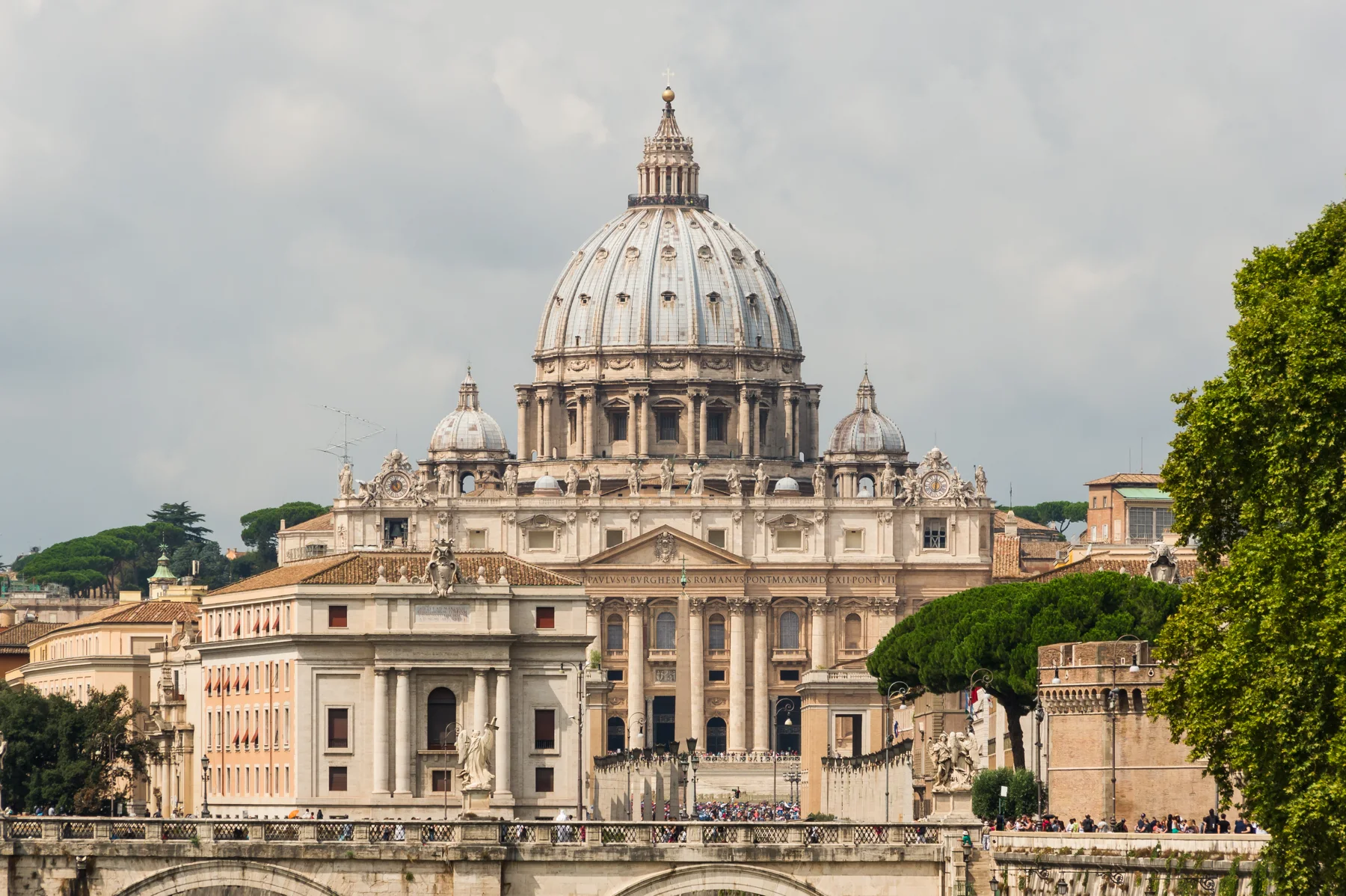
Why make this pilgrimage
Most people who feel drawn toward a monastery are not thinking of becoming monks. They are tired of days that are full and scattered, and they wonder whether there is an older, steadier way to live with God at the center. St. Benedict's answer was practical: fixed hours of prayer, real work, real rest, a table, and a community that stays put.
This pilgrimage goes to see that life where it began and where it is still lived. It would follow Benedict from his birthplace to the cave where he found that God was enough, and on to the abbey where he wrote his Rule and died. You would not only visit. You would sit in the church while monks sing the psalms, be received as a guest, and bring home a pattern of prayer that can be kept in an ordinary life.
THE JOURNEY
In the Footsteps of St. Benedict: Norcia, Subiaco, Monte Cassino and Rome
- Where
- Italy
- Length
- About a week
- Status
- Under consideration
This journey would follow St. Benedict's life in the order he lived it: Norcia in Umbria, where he was born; Subiaco, east of Rome, where he spent three hidden years in a cave; and Monte Cassino in southern Lazio, where he wrote the Rule, died and is venerated at his tomb. It could close in Rome at the Basilica of St. Paul Outside the Walls, where a Benedictine community still keeps the prayer at the Apostle's tomb. The three places lie in different directions from Rome, so the route would keep to a few bases and long stays, with each day arranged around the hours at which a community welcomes visitors to its prayer, and not around a list of sights.
The route, and why each place belongs
- 1
Norcia
Why it belongs
Norcia is Benedict's birthplace, the beginning of the life this pilgrimage follows. St. Gregory the Great says that he came from the province of Nursia, and tradition holds that he and his sister St. Scholastica were born here.
What you would do there
The pilgrim would pray in the Basilica of St. Benedict, brought down by the 2016 earthquake, since rebuilt and rededicated, and now in the care of the local parish; by tradition its crypt preserves the remains of the house where the twins were born. The Benedictine monks of Norcia live apart, in their own enclosed monastery of San Benedetto in Monte outside the town, where their church is open for the conventual Mass.
- 2
Subiaco: the Sacro Speco and the Monastery of St. Scholastica
Why it belongs
Here the young Benedict, having left his studies in Rome wishing to please God alone, lived three years as a hermit in a cave above the Aniene valley. It is the place of his hidden years, and the place where he first gathered disciples into twelve small monasteries.
What you would do there
The Monastery of St. Benedict is built into the cliff around the Sacro Speco, the cave itself: two churches, one above the other, with frescoed chapels cut into the rock, where the pilgrim could pray in silence. A short distance below stands the Monastery of St. Scholastica, which the monks describe as the only survivor of Benedict's twelve foundations in the valley, with a guesthouse beside it. Subiaco would be the natural place for the longest stay, keeping the house's hours where the monks can receive a group.
- 3
Monte Cassino Abbey
Why it belongs
Benedict founded this abbey around 529, wrote the Rule here and died here. It is where the life ends and where the Rule, his gift to the Church, began.
What you would do there
The pilgrim would go up to the hilltop abbey to pray at the tomb venerated as that of Sts. Benedict and Scholastica, in the abbey church rebuilt after the bombing of 1944 and consecrated by Paul VI in 1964. An abbey destroyed and rebuilt several times is a fitting place to read the closing chapters of the Rule and to pray for perseverance.
- 4
Rome: Basilica of St. Paul Outside the Walls
Why it belongs
A living Benedictine community is attached to this papal basilica; the monks say they have served pilgrims at the Apostle's tomb for about 1,300 years. It shows the Rule still being lived in the city Benedict once left.
What you would do there
The journey could end at the tomb of St. Paul, with time to pray in the basilica and, where the community's prayer is open to visitors on the day, to hear the Liturgy of the Hours once more before returning home.
Prayer and the sacraments
The prayer of this pilgrimage would be the monks' own: sitting in the church while a community sings Lauds, Vespers or Compline, and attending the conventual Mass where a house welcomes visitors to it. Mass would be planned for each day where the schedule permits, and clergy arrangements are confirmed for each departure; Confession would be offered where confessors are available. Silence would be kept as each monastery asks.
Pilgrim’s Time
Pilgrim's Time would be the unhurried hours between the offices, kept free of visits. It could be used for lectio divina with the day's Scripture, for reading a chapter of the Rule in the places where it was lived, or simply for rest and an early night.
Pilgrim Pace
The route is quiet but not flat: the Sacro Speco is built into a cliff with stairs between its upper and lower churches, Monte Cassino stands on a hilltop, and monastery guesthouses are often simple buildings that may lack lifts. The three places lie in different directions from Rome, so there would be road transfers between bases, balanced by long stays in each.
How Pilgrim Pace worksIf you can stay longer
Pilgrims who want more of Umbria could add some days in Assisi before or after Norcia, or continue in Rome among the great basilicas, as the Rome and Assisi Classic does.
Other ways to make this pilgrimage
- A monastic addition to Rome. A Roman pilgrimage could add Subiaco, which lies within a day of the city, and possibly Monte Cassino, depending on what each community permits.
- The Way of St. Benedict on foot. Prepared walkers could take some stages of the Cammino di San Benedetto, a waymarked route from Norcia by way of Subiaco to Monte Cassino, which would be a physically demanding journey in its own right.
- A stay in one monastery. Those who want the hours more than the road could spend several days as guests of a single Benedictine guesthouse, on the conditions that house sets.
No dated departures are currently announced. This is a journey Bold Pilgrim is considering, described so you can picture it. Dates, priest, Gateway Airport and price are published on a departure itself, and only when confirmed.
UNDERSTANDING THIS PILGRIMAGE
Yes. A Benedictine pilgrimage goes to the places of St. Benedict of Norcia (about 480 to 547) and to living monasteries that follow his Rule, where an older and steadier way of life, with God at the center, can be seen and shared. In Italy its heart is three places: Norcia, where he was born; Subiaco, where he lived as a hermit in a cave; and Monte Cassino, where he wrote the Rule, died and is venerated at his tomb. What sets it apart from other pilgrimages is that the pilgrim does not only visit: you step into the monks' own rhythm of the Liturgy of the Hours, Mass, silence and work, and are received as a guest.
What a Benedictine pilgrimage means
A Benedictine pilgrimage has a tradition, a saint and a geography: Benedict, his Rule, and the places and communities that carry them. It goes to the places where St. Benedict sought God and to monasteries that still live by his Rule, so that a pilgrim can learn an ordered life of prayer, work and hospitality centered on Christ.
It is not the same as a silent retreat. A pilgrimage chosen for silence and contemplation as such may go to Carmelite, Carthusian or Franciscan places and is a different purpose, described on its own page. The two overlap at Subiaco, and a pilgrim may well want both.
Why someone is drawn to it
Most people who feel pulled toward a monastery are not thinking of becoming monks. They are tired of a life with no shape. Benedict's answer to that is practical: fixed hours of prayer, real work, real rest, a table, a community that stays put. He wrote for ordinary people living together under one roof, and he called his Rule a beginning.
Others come because of what the monasteries did. Through centuries of invasion and collapse, communities living by this Rule kept praying the psalms, copied books, farmed land and received strangers. A pilgrim who cares about how the faith is actually handed on, in a family, a parish or a culture, will find the question taken seriously here.
And some come because Benedict himself began by leaving. He walked away from a city and a career, and found in a cave above the Aniene valley that God was enough. That is not a call to abandon one's duties. It is a reminder of the order they belong in.
The Catholic foundation: a school of the Lord's service
Almost everything known about St. Benedict's life comes from one source: the second book of the Dialogues of Pope St. Gregory the Great, written in the 590s, about half a century after Benedict's death. Gregory was more interested in the spiritual meaning of the life than in dates, and the Benedictines themselves describe the usual chronology (born around 480, Monte Cassino around 529, death on 21 March 547) as traditional. Gregory tells of a young man from the province of Nursia who left his studies in Rome wishing to please God alone, lived three years in a cave at Subiaco, gathered disciples into twelve small monasteries, and then moved to Monte Cassino.
What Benedict left the Church is his Rule: a prologue and seventy-three short chapters that he calls a school of the Lord's service. It orders the day around common prayer, which he names the Work of God and to which nothing is to be preferred, together with sacred reading and manual work. It ends where it began, with Christ: the monks are to prefer nothing whatever to Christ.
The Church has repeatedly held this life up for everyone, not only for monks. In 1964 Paul VI consecrated the rebuilt abbey church at Monte Cassino and, the same day, declared Benedict the principal patron of all Europe, describing how his monks carried the faith across the continent by cross, book and plough. The Catechism teaches that the Liturgy of the Hours, the prayer that structures the monastic day, is the public prayer of the Church and is meant to become the prayer of the whole People of God, laity included.
Questions pilgrims ask
What is a Benedictine pilgrimage?
A Benedictine pilgrimage is a journey to the places of St. Benedict of Norcia and to monasteries that live by his Rule. In Italy that means Norcia, his birthplace; Subiaco, where he lived three years in a cave; and Monte Cassino, where he wrote the Rule and died. Its distinctive mark is taking part in the monastic day: the Liturgy of the Hours, Mass, silence and the hospitality the Rule requires monks to show every guest. The aim is the one Benedict gives his monks: to prefer nothing to Christ.
Where did St. Benedict live, and can pilgrims visit those places?
Yes. Three places in central Italy mark his life. Norcia in Umbria is his birthplace, with a rebuilt basilica over the crypt that tradition identifies with his family home. Subiaco, east of Rome, holds the Sacro Speco, the cave of his three years as a hermit, inside a cliffside monastery. Monte Cassino in southern Lazio is the abbey he founded around 529, where he wrote the Rule and died. They lie in three different directions, so seeing all three well takes several days, not one.
What is the Rule of St. Benedict?
The Rule of St. Benedict is a short guide to monastic life, a prologue and seventy-three chapters, written by Benedict at Monte Cassino in the sixth century. He calls the monastery a school of the Lord's service. The Rule orders each day around common prayer, sacred reading and manual work, and covers practical matters from the abbot's duties to the care of the sick and the welcome of guests. Monks and nuns still live by it, and many lay Christians, including Benedictine oblates, use it to shape ordinary life.
What does ora et labora mean?
Ora et labora is Latin for pray and work. It is the traditional Benedictine motto for the balance at the heart of the Rule, which gives fixed times each day to common prayer, sacred reading and manual labor. The phrase itself is not in the Rule, and scholars trace its first appearance in print only to the nineteenth century, where it is already called an old monastic watchword. The idea is Benedict's own: chapter 48 warns that idleness is the enemy of the soul and says monks are truly monks when they live by the work of their hands.
Can visitors join the monks for prayer at a Benedictine monastery?
Usually, yes. Benedictine communities celebrate the Liturgy of the Hours and the conventual Mass in their church, and many welcome visitors and guests to be present; some provide books so guests can follow the psalms. The Catechism calls the Liturgy of the Hours the public prayer of the Church and encourages the laity to take part. Customs differ from house to house: some communities are strictly enclosed apart from the church, and some pray in Latin with Gregorian chant. Check each monastery's own website before you go.
Can I stay at a Benedictine monastery as a guest?
Often, yes. The Rule of St. Benedict tells monks to receive every guest as Christ, and many Benedictine monasteries keep a guesthouse for that reason. Each house sets its own conditions, so ask the guestmaster and book ahead.
Full answer: Can you stay overnight at a Catholic monastery?
Is the Basilica of St. Benedict in Norcia open again?
Yes. The basilica, largely destroyed in the earthquake of October 2016, was rebuilt and rededicated at the end of October 2025 and is now assigned to the local parish. The Benedictine monks of Norcia live in their own enclosed monastery, San Benedetto in Monte, outside the town. Verify current access before traveling.
Why is St. Benedict the patron saint of Europe?
Pope Paul VI declared St. Benedict the principal patron of all Europe in the apostolic letter Pacis Nuntius of 24 October 1964, the day he consecrated the rebuilt abbey church at Monte Cassino. The letter calls Benedict a messenger of peace and a maker of unity, and says he and his monks brought Christian civilization to peoples from the Mediterranean to Scandinavia by cross, book and plough: by faith, by preserving learning, and by cultivating the land.