
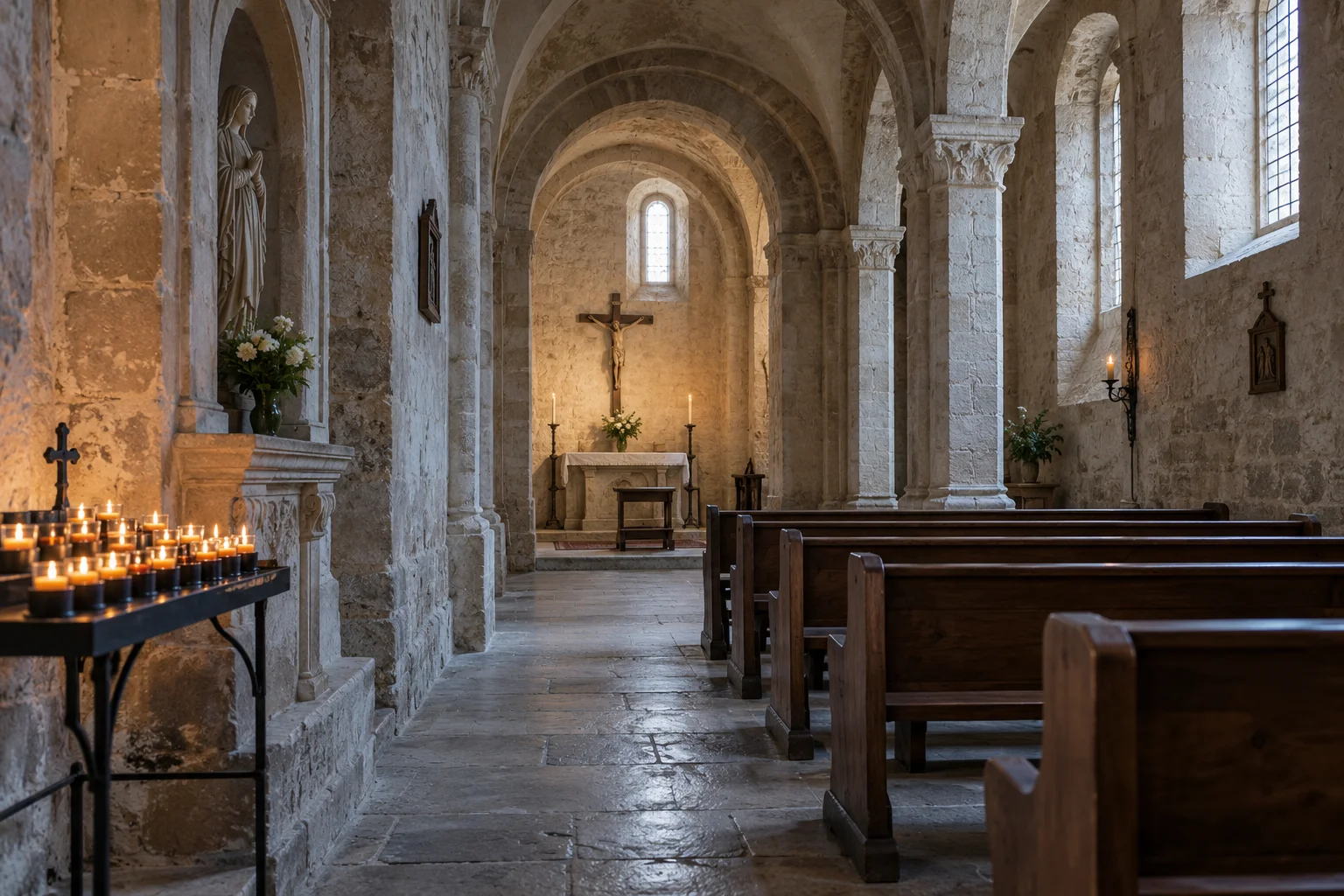
The Catechism mentions the two side by side when it lists places favorable for prayer: monasteries, which offer the solitude that more intense personal prayer needs, and pilgrimages, which recall our earthly journey toward heaven and are traditionally occasions for renewal in prayer. The Church's 1989 letter on Christian meditation adds that a Christian needs certain periods of retreat into solitude. A writer in a seminary's journal, who expected a retreat and was given a pilgrimage, put the contrast simply: a retreat involves sitting or kneeling, and a pilgrimage involves walking.
In practice they overlap. Some pilgrimages keep a day of silence or stay several nights in one place, and some retreats begin with a journey to a shrine. As a rule of thumb, choose a retreat if you need sustained quiet and guidance, and a pilgrimage if you are drawn to a particular place or saint and want to go there with others. A pilgrimage is usually busier and more tiring than people expect, so if rest is the real need, say so when you choose.