
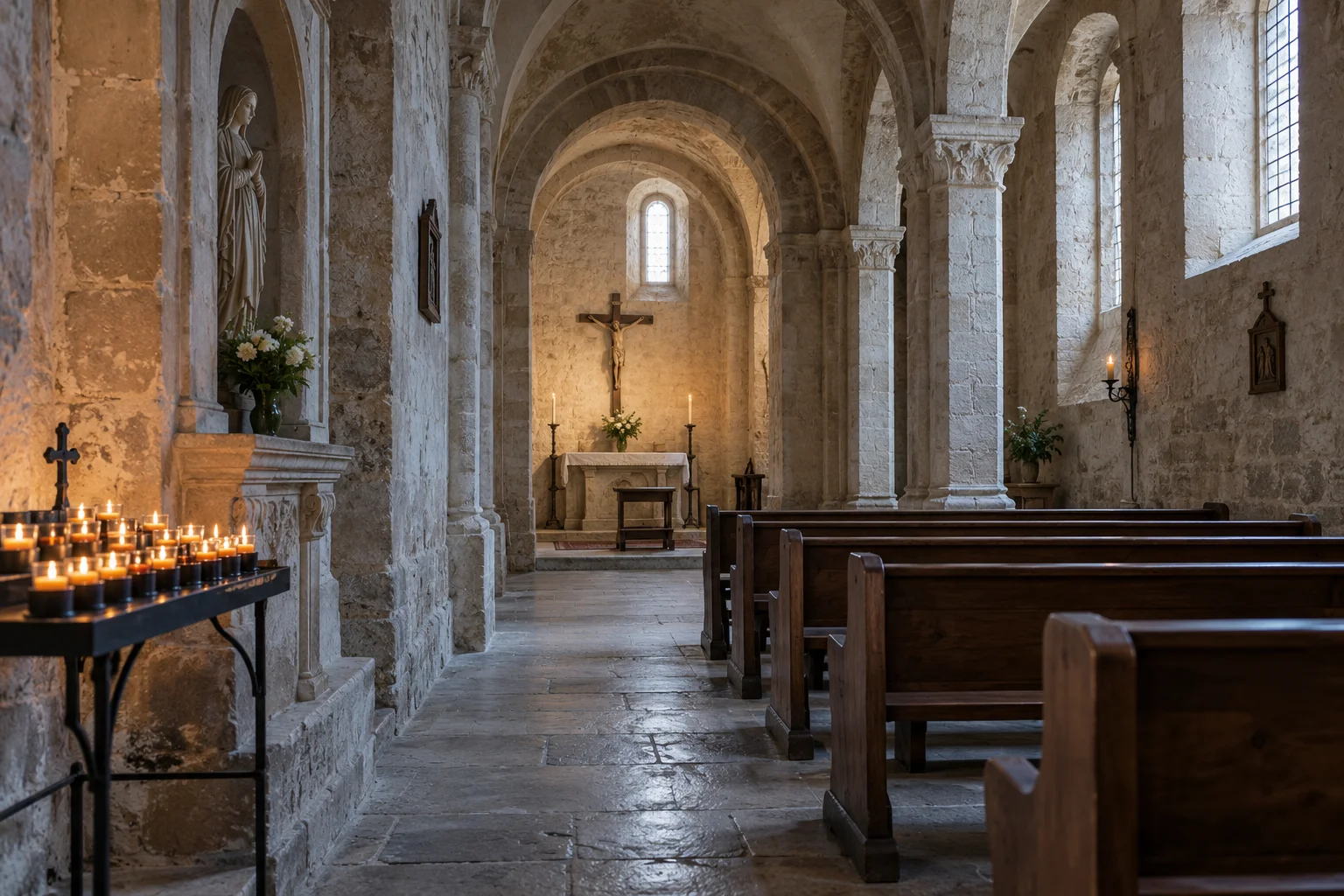
Both shrines look back to 1061, when by tradition the Lady Richeldis was shown the house of Nazareth in a vision and asked to build a copy of it; the bishops' conference presents this as a tradition handed down in a medieval ballad. Walsingham became one of medieval England's great shrines, known as England's Nazareth, until the priory and its Holy House were destroyed in 1538 under Henry VIII. Catholic pilgrimage resumed in 1897 at the Slipper Chapel, a fourteenth-century wayside chapel; it was declared the Catholic National Shrine of Our Lady in England in 1934, and Pope Francis made it a minor basilica in 2015. The Anglican shrine grew from the work of the village's vicar, Fr. Alfred Hope Patten, who revived the devotion in the parish church in 1922.
At the Catholic shrine, which is open from morning to early evening, the daily program takes place in the Chapel of Reconciliation: exposition of the Blessed Sacrament and confessions from mid-morning, the Rosary shortly before midday, Mass at noon, exposition again in the early afternoon, and devotions, Rosary and Benediction in the mid-afternoon (checked October 10, 2026). Pilgrims pray before the statue of Our Lady in the Slipper Chapel, and it is traditional to walk the Holy Mile between the village and the shrine praying the Rosary.
Good to know before you go: there is no railway to Walsingham. The shrine gives Norwich and King's Lynn as the nearest stations, each about 30 miles (48 km) away. From King's Lynn, the village's travel page describes a bus to Fakenham (Lynx service 49, about every two hours Monday to Saturday) and a change there to the Coastliner 36, which runs through Walsingham, about 1 hour 15 minutes in all; a taxi from King's Lynn takes around 45 minutes. The shrine itself is 1.3 miles (2 km) south of the village, so allow for the walk or a local taxi.