THE JOURNEY
The Last 100 km to Santiago: Sarria to the Cathedral on Foot
- Where
- Spain
- Length
- About eight to ten days
- Status
- Under consideration
This journey would follow the final stretch of the Camino Francés from Sarria to the Cathedral of Santiago de Compostela, just over 100 km and usually five or six walking days. The order is the road's own: a day to gather and begin in Sarria, the walking days through Galicia, a pause for Confession at Monte do Gozo on the approach to the city, and then the cathedral, where the walk would be completed at the tomb venerated as that of the Apostle St. James and at the Pilgrim's Mass. It forms one pilgrimage because every day would move toward the same church, and an unhurried day in Santiago would close it.
The route, and why each place belongs
- 1
Sarria
Why it belongs
Sarria is where the final stretch of the Camino Francés begins, the usual choice for a first walking pilgrimage and far enough from Santiago for the Compostela.
What you would do there
The journey would begin here with the pilgrim credential, which the cathedral issues for those who walk "with a Christian sentiment, even if it is only with an attitude of search." Pilgrims could name the person or intention they are walking for before the first step.
- 2
The road from Sarria to Santiago
Why it belongs
On a walking pilgrimage the days on foot are part of the prayer and not only the way of getting there, so the road is the heart of this journey.
What you would do there
Five or six consecutive days would be spent walking from village to village: long stretches of silence, the Rosary or a single line of a psalm at walking pace, conversation with strangers who become companions, and stamps collected in the credential at churches and lodgings. Mass in a village church would be joined wherever it is offered.
- 3
Monte do Gozo
Why it belongs
Monte do Gozo lies on the approach to the city, and the cathedral names it among the places where priests may hear pilgrims' Confessions.
What you would do there
The group could pause here before the last walk into Santiago, with time for an examination of conscience and for Confession where confessors are available, so that the arrival is prepared and not rushed.
- 4
Cathedral of Santiago de Compostela
Why it belongs
The cathedral is the end of every Camino route, and it still receives walkers as a church. Pilgrims have come on foot to the tomb venerated as the Apostle's since the ninth century; how his body came to Galicia is tradition.
What you would do there
Pilgrims would go down to the crypt beneath the high altar to pray before the silver reliquary, climb the small stair behind the altar to embrace the statue of St. James, and attend the Pilgrim's Mass. Those who arrive for religious or spiritual reasons after at least the last 100 km on foot could ask the Pilgrim's Office for the Compostela, the cathedral's Latin certificate, which is the least important part of arriving.
Prayer and the sacraments
Mass would be joined in village churches where it is offered and where the schedule permits, and the Pilgrim's Mass in the cathedral would complete the walk; clergy arrangements are confirmed for each departure. The Rosary, the Psalms of Ascent and stretches of agreed silence could shape the walking hours, with Confession before or on arrival where confessors are available.
Pilgrim’s Time
Much of each walking day would already be a pilgrim's own, at their own speed and in their own silence. The unhurried day in Santiago would be kept open as Pilgrim's Time, so that each person could return to the crypt, sit in the cathedral, or simply rest.
Pilgrim Pace
This would be several consecutive days of walking on mixed paths, with hills, variable weather and little shelter between villages, so it would sit at the demanding end. Luggage carried ahead, shorter stages and a non-walking option for each stage would change the picture considerably, and anyone considering it should talk to a doctor and train in the shoes they would wear.
How Pilgrim Pace worksOther ways to make this pilgrimage
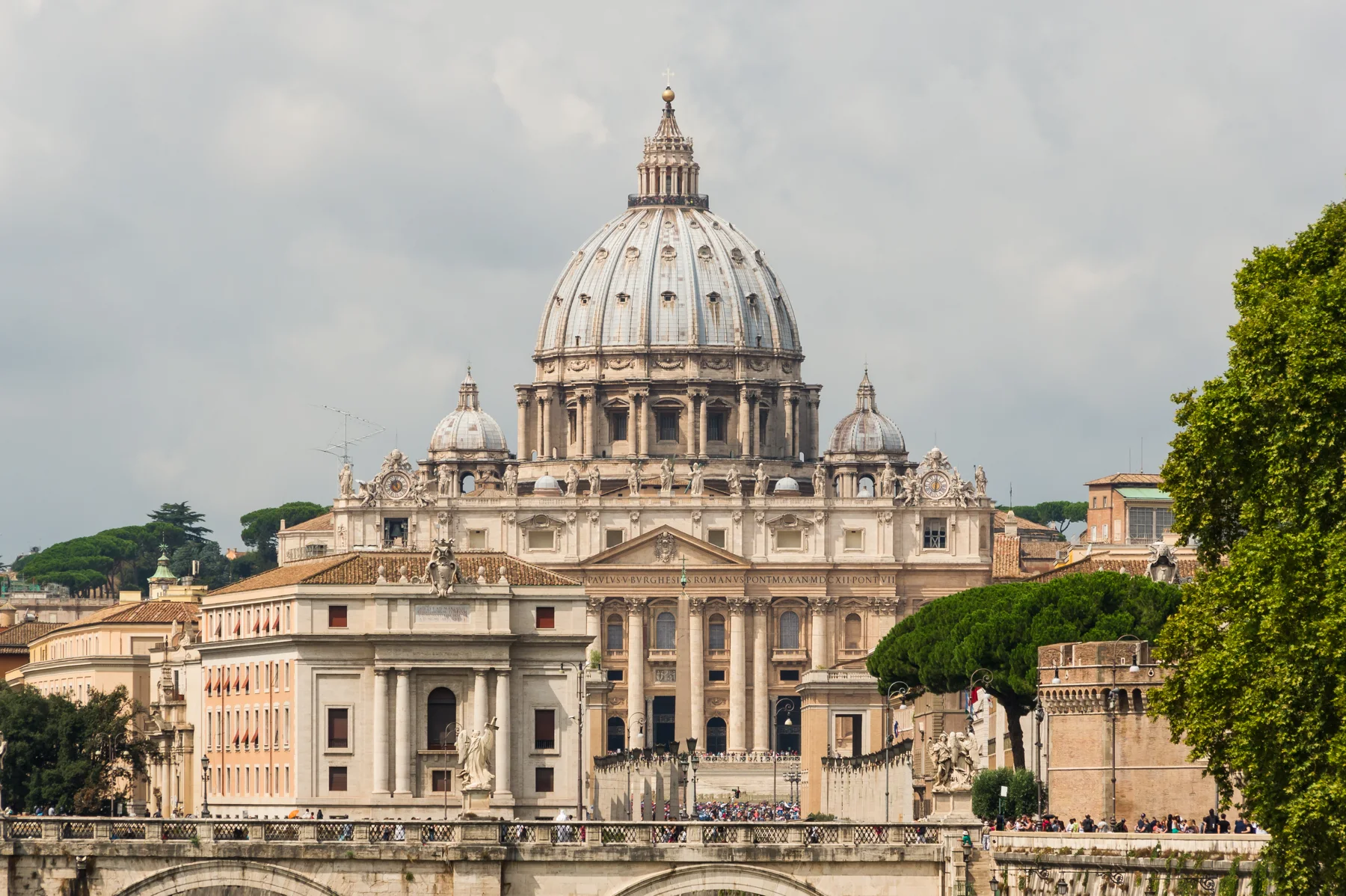
- Walking into Rome on the Via Francigena. The final stages into the city could end at the tomb of St. Peter, where St. Peter's Basilica issues the Testimonium on request to those who have travelled at least 100 km on foot to Rome, and could be joined to days at the major basilicas.
- A short walk added to a conventional pilgrimage. A day or two on the Way of St. Francis into Assisi, or the Seven Churches walk in Rome, could suit those who want to arrive somewhere on foot without a full week of walking.
- A walking pilgrimage close to home. A parish or men's group could walk to a diocesan or national shrine in the United States over a weekend, planned with the pastor.
No dated departures are currently announced. This is a journey Bold Pilgrim is considering, described so you can picture it. Dates, priest, Gateway Airport and price are published on a departure itself, and only when confirmed.
Who it may be for, and who should think twice
A walking pilgrimage suits people who pray better in motion than in a pew, people at a turning point who need unhurried days, fathers and sons, friends, couples who talk best side by side, and Catholics who have drifted and want a way back that does not begin with a lecture. It suits people who are grieving, because walking gives grief something to do.
It is not a test of worth. The Compostela asks for the last 100 km, usually five or six walking days, not the whole of Spain; luggage can be carried ahead and private rooms booked. A pilgrim who cannot walk far is no less a pilgrim, and can travel to the shrine, pray at the tomb and receive the sacraments like anyone else. Talk to your doctor before a multi-day walk, train in the shoes you will wear, and choose the route to fit the person and not the other way round.
A walking pilgrimage can be made alone, with friends, or with a parish. A priest who walks with a group can offer Mass and hear Confessions along the way, and that is a real gift. What a lay organizer may do, and whether a group needs a priest, are covered in the answers linked on this page. No dated departures are currently announced, and Bold Pilgrim has no walking itinerary at present; the Camino answers linked here are there to help you plan honestly.
- People who pray better while moving
- Men's groups, fathers and sons, friends walking together
- Young adults
- People at a turning point: retirement, a career change, a decision to make
- Those who are grieving and want to walk for someone
- Catholics returning to practice who want an unforced way back
- Parish groups able to walk several days in a row
- Fit older pilgrims with time to train
A spiritual purpose has no Pilgrim Pace rating; the actual itinerary determines the pace. The places involved typically mean several consecutive days of walking on mixed paths, with hills, variable weather and little shelter between villages, so a true walking pilgrimage will usually sit at the demanding end. Luggage transfer, shorter stages and non-walking alternatives change the picture considerably, and any future itinerary would state its own pace.
UNDERSTANDING THIS PILGRIMAGE
Yes: a walking pilgrimage is a journey made on foot to a holy place, in which the days of walking are themselves part of the prayer and not only the way of getting there. The best known is the Camino de Santiago, the network of routes across Spain to the tomb venerated as that of the Apostle St. James, but Catholics also walk to Rome on the Via Francigena, to Chartres, to Jasna Góra in Poland and to shrines at home. The Catechism says pilgrimages "evoke our earthly journey toward heaven"; walking makes that literal, and the road ends in a church, at Mass, before Jesus Christ. Nobody can promise what the road will change in you. It gives you days in which to pray.
What a walking pilgrimage is: a people on the way
Walking to a holy place is older than the Church. Israel went up to Jerusalem on foot for the great feasts, singing the Psalms of Ascent (Psalms 120-134), and Mary and Joseph made that journey every year for Passover, taking Jesus with them when He was twelve (Luke 2:41-42). Jesus calls Himself "the way" (John 14:6), the first Christians were known as followers of "the Way" (Acts 9:2), and on the day of the Resurrection He walked beside two disciples on the road to Emmaus and was known to them in the breaking of the bread (Luke 24:13-35). That last scene is the pattern of every walking pilgrimage: a road, a conversation with Christ, and the Eucharist at the end of it.
The Catechism of the Catholic Church puts the meaning in one line: "Pilgrimages evoke our earthly journey toward heaven and are traditionally very special occasions for renewal in prayer" (2691). The Holy See's Directory on Popular Piety and the Liturgy calls pilgrimage the most significant of the expressions of popular piety tied to holy places, and recalls the medieval journeys to the Holy Land and to the tombs of the Apostles and martyrs. Until quite recently most of that travelling was done on foot. For most pilgrims the walk was not an optional extra. It was the pilgrimage.
Pope Benedict XVI, speaking in the Cathedral of Santiago in 2010, drew the line between this and a walking holiday: "To go on pilgrimage is not simply to visit a place to admire its treasures of nature, art or history." It means, he said, "to step out of ourselves in order to encounter God where he has revealed himself." A pilgrimage on foot is a devotion, freely chosen. No Catholic is obliged to make one. But it is a devotion with deep roots in Scripture and in the practice of the saints.
The Camino de Santiago, and why it is first
The Camino is the model because it has never stopped being what it was. The Cathedral of Santiago counts the city with Jerusalem and Rome as one of the three great pilgrimage cities of Christianity. Pilgrims have walked to the tomb venerated as the Apostle's since the ninth century, and the cathedral that receives them still does so as a church: with a Pilgrim's Mass, priests to hear Confessions, a crypt where the relics are venerated beneath the high altar, and the old custom of climbing behind the altar to embrace the statue of St. James. Whether St. James is really buried there is a fair question with its own answer, linked on this page.
The cathedral's own paperwork says the same thing. The pilgrim credential is issued for those who walk "with a Christian sentiment, even if it is only with an attitude of search," and the Compostela, the cathedral's Latin certificate, is given to those who arrive for religious or spiritual reasons after at least the last 100 km on foot. The certificate is a record. It is not the purpose. An indulgence is something else again: the Catechism defines it as the remission of temporal punishment due to sins already forgiven (1471), and the indulgence answers linked on this page set out what the Church asks.
Many who walk today would not call themselves religious. Hundreds of thousands arrive in Santiago each year, and by the Pilgrim's Office's own figures, as the press has reported them, well under half give a purely religious motive. That is not a reason for a Catholic to stay away. It is a description of the road as it has always been, shared with people who are searching, and a reason to walk it deliberately as a pilgrim: with Mass where it is offered, Confession before the end, and an intention carried the whole way.
Beyond the Camino: other roads Catholics walk
The Camino is one road among several. The Via Francigena brings walkers to Rome and the tomb of St. Peter, and pilgrims who have travelled at least 100 km on foot to Rome can ask St. Peter's Basilica for the Testimonium, Rome's counterpart to the Compostela. In France, pilgrims walk from Paris to the cathedral of Chartres at Pentecost. In Poland, organized groups from towns and cities across the country walk each summer to the icon of Our Lady at Jasna Góra, a custom centuries old; the Warsaw pilgrimage has set out every year since 1711. In Spain the Ignatian Way retraces the journey of St. Ignatius from Loyola to Manresa, and in Italy the Way of St. Francis leads into Assisi.
There are also walking pilgrimages closer to home. In the United States there are established walks to shrines in Kansas and Wisconsin, among others, and our answer on walking pilgrimages in the United States describes them. A walking pilgrimage does not need an ocean crossing. It needs a holy place, a road, and the decision to pray your way along it.
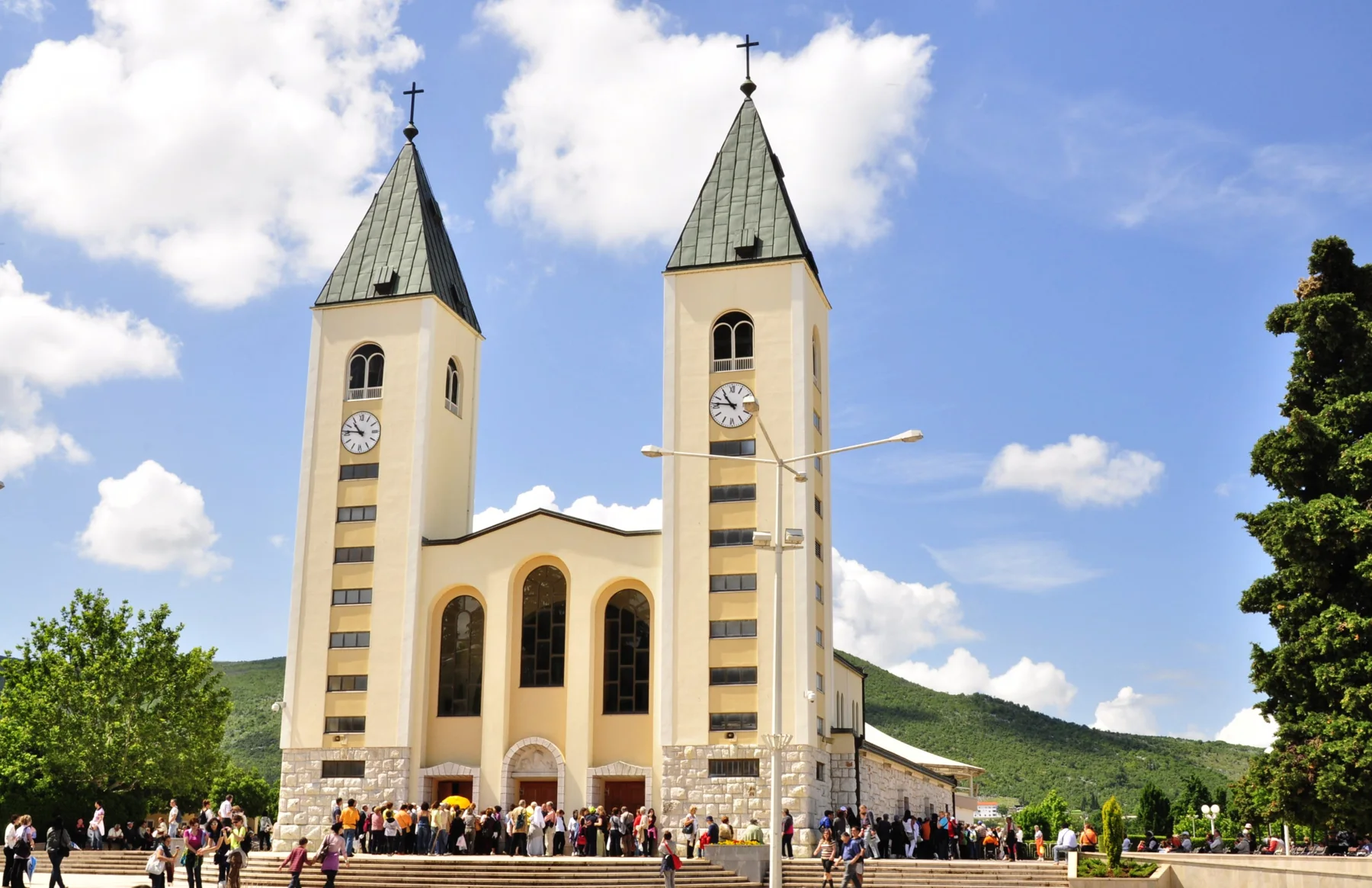
Some walks are short and steep and belong more to penance than to distance: the hills of Medjugorje, Croagh Patrick in Ireland, the last mile into a shrine. They are treated under Penitential Pilgrimage, and they are worth knowing about if a week of walking is not possible for you.
Questions pilgrims ask
What is a walking pilgrimage?
A walking pilgrimage is a journey on foot to a holy place, made as an act of prayer. The walking is part of the pilgrimage, not transport to it: the pilgrim prays, carries an intention, accepts the effort, and completes the journey with Confession and Mass at the shrine. The Camino de Santiago to the tomb venerated as that of St. James is the best-known Catholic example. Others include the Via Francigena to Rome, the Pentecost walk to Chartres and the summer walks to Jasna Góra in Poland. The Catechism describes pilgrimages as evoking "our earthly journey toward heaven."
Why walk, when you could simply travel to the shrine?
Because walking gives the body a share in the prayer. Days on foot strip a journey down to essentials, make room for silence, and give a pilgrim hours in which to pray for someone. It is also how most pilgrims before the modern age reached Rome and Santiago. Benedict XVI said in Santiago that pilgrimage means "to step out of ourselves in order to encounter God where he has revealed himself." Walking is one honest way of stepping out. It is not required: a pilgrim who reaches the shrine by other means has still made a pilgrimage.
Is the Camino de Santiago a Catholic pilgrimage?
Yes. The Camino exists because of a Catholic shrine: it leads to the Cathedral of Santiago de Compostela, which issues the pilgrim credential and the Compostela and celebrates the Pilgrim's Mass. People of any faith or none are welcome to walk it, and the credential is offered even to those walking "with an attitude of search." What makes it a pilgrimage for you is how you walk it.
Is St. James really buried in Santiago de Compostela?
The Church venerates the tomb beneath the cathedral's main altar as that of St. James the Greater; how his body came to Galicia is tradition, not documented history. The full answer, with what the Church and the historians each say, is linked here.
Full answer: Is St. James really buried in Santiago de Compostela?
Can I go to Mass and Confession while walking the Camino?
Usually, with some planning. Santiago Cathedral celebrates a Pilgrim's Mass, and the cathedral says priests may hear Confessions there, in the city's parishes and at Monte do Gozo on the approach to the city. Along the routes, Mass depends on the village and the day, so ask at each stop and check current schedules locally. A group that walks with a priest can have Mass along the way. Plan Sunday Mass first and fit the stages around it. We do not publish Mass times; confirm them on the spot.
What do pilgrims do when they arrive at Santiago Cathedral?
The traditional acts are simple. Pilgrims go down to the crypt beneath the high altar to pray before the silver reliquary holding the relics venerated as those of St. James. They climb the small stair behind the altar to embrace the statue of the Apostle. They go to Confession and attend the Pilgrim's Mass, receiving Holy Communion if they are able. Those who qualify collect the Compostela from the Pilgrim's Office. The certificate is the least important of these. Check the cathedral's current arrangements before you arrive.
What is the Via Francigena, and how do I get the Testimonium in Rome?
The Via Francigena is the walking pilgrim road to Rome and the tomb of St. Peter. St. Peter's Basilica issues the Testimonium, on request, to those who have travelled at least 100 km on foot or 200 km by bicycle to Rome with a stamped credential. Our full answer gives the basilica's own procedure.
Full answer: How do I get the Testimonium in Rome after walking the Via Francigena?
Are there Catholic walking pilgrimages in the United States?
Yes. The Father Kapaun Pilgrimage in Kansas, about 60 miles over four days, and the one-day Walk to Mary in Wisconsin, about 22 miles, are established annual walks. Our full answer describes them and how to plan a walk to a shrine near home.
Full answer: Are there Catholic walking pilgrimages in the United States?