Why make this pilgrimage
Most people who look for a pilgrimage like this are not looking for punishment. They have been to Confession, or know they need to go, and they find that words alone do not seem equal to what happened. They want to do something with their feet, their appetite and their sleep as well as with their lips. The Church has always honored that instinct: the Catechism lists "pilgrimages as signs of penance" among her penitential practices.
This pilgrimage seeks to answer a mercy already given. It does not earn forgiveness, which Jesus Christ gives freely, ordinarily in the sacrament of Confession. It is what a forgiven person might do next: accept a journey that costs something, in prayer, simple food and effort, to turn more fully back to God. Some would make it for themselves, and some for a person they carry, living or dead. A harder journey is not a holier one, and nothing about how you would feel afterward can be promised.
THE JOURNEY
Ireland's Penitential Road: Knock, Croagh Patrick and Lough Derg
- Where
- Ireland
- Length
- About a week
- Status
- Under consideration
This journey would begin at Knock, Ireland's Marian shrine in County Mayo, and then go to the two places in Ireland where penance is still made with the body: Croagh Patrick, the holy mountain in the same county, and Lough Derg in County Donegal, where the Three Day Pilgrimage of fasting, bare feet and vigil is kept each summer. It would be a summer journey for that reason. The order is deliberate. Knock would be the quiet beginning, a place to pray and prepare; the climb would come next as a single hard day; and Lough Derg would come last, after a day of rest, because it asks the most and because it is a place to stay and pray, not a place to pass through. Together they would form one act of penance: a shrine where the journey is entrusted to Our Lady, a mountain climbed and an island kept.
The route, and why each place belongs
- 1
Knock Shrine, County Mayo
Why it belongs
On 21 August 1879 fifteen witnesses reported a silent apparition here of Our Lady, St. Joseph and St. John beside an altar with a lamb and a cross. A Church commission of inquiry that year found their testimony trustworthy and satisfactory, a second commission examined the surviving witnesses in 1936, and Pope Francis recognized Knock as an international Eucharistic and Marian shrine in 2021. A penitential journey would begin before that image of the Lamb, who takes away the sins of the world.
What you would do there
The first day or two would be kept here, without hurry: prayer at the place of the apparition, the Rosary, and time to name honestly what each pilgrim has come to repent of and to offer. Confession would be encouraged here, where confessors are available, so that the climb and the island are made as penance already begun in the sacrament. Mass would be attended where the schedule permits.
- 2
Croagh Patrick, County Mayo
Why it belongs
This is Ireland's holy mountain, climbed by pilgrims especially on Reek Sunday in late July, some of them barefoot. Tradition holds that St. Patrick fasted for forty days on the summit; that is a tradition, not a documented fact.
What you would do there
After the days of preparation at Knock, pilgrims would climb the Reek on foot, in silence for at least part of the way, each carrying the person or the sin they came to pray about. Those who do not climb would keep the same hours in prayer at the foot of the mountain and would be no less pilgrims for it.
- 3
Lough Derg (St. Patrick's Purgatory), Station Island, County Donegal
Why it belongs
The sanctuary describes Lough Derg as an ancient site of pilgrimage associated with St. Patrick, and it keeps its pilgrimage under his name in a tradition of prayer, fasting and vigil. That he himself prayed here is tradition, not documented fact. Nowhere else on this journey is penance asked of the pilgrim so plainly.
What you would do there
Pilgrims would cross to the island and make the sanctuary's own Three Day Pilgrimage: the fast begins at midnight before arrival and runs to midnight on the third day, with one simple Lough Derg meal each day, and the days are spent barefoot and include a twenty-four-hour vigil. The sanctuary also offers one-day retreats, guided days of prayer with a light lunch and without the fast, and a pilgrim for whom the three days are not right could make one of those instead.
Prayer and the sacraments
On the island the sanctuary's own programme of prayer would govern the three days, and the group would simply join it. On the other days Mass would be sought where the schedule permits, and clergy arrangements are confirmed for each departure. Confession would be encouraged at Knock before the climb, where confessors are available, and the Stations of the Cross could be prayed together on one of the preparation days.
Pilgrim’s Time
Pilgrim's Time would be protected on the day between the mountain and the island, and again after the vigil, before the journey home. On this pilgrimage it would be used first for rest and sleep, and then for quiet: writing down what was offered, giving alms, or deciding what amends at home would follow the journey.
Pilgrim Pace
This would be a physically demanding journey: a mountain climb on foot, then three days of fasting, bare feet, kneeling and loss of sleep. For the Three Day Pilgrimage the sanctuary requires pilgrims to be fit, at least fifteen, and able to kneel unaided, and each pilgrim would need to weigh that honestly beforehand; the one-day retreat and a day of prayer at the foot of the mountain would be real alternatives for those who should not attempt the harder form.
How Pilgrim Pace worksOther ways to make this pilgrimage
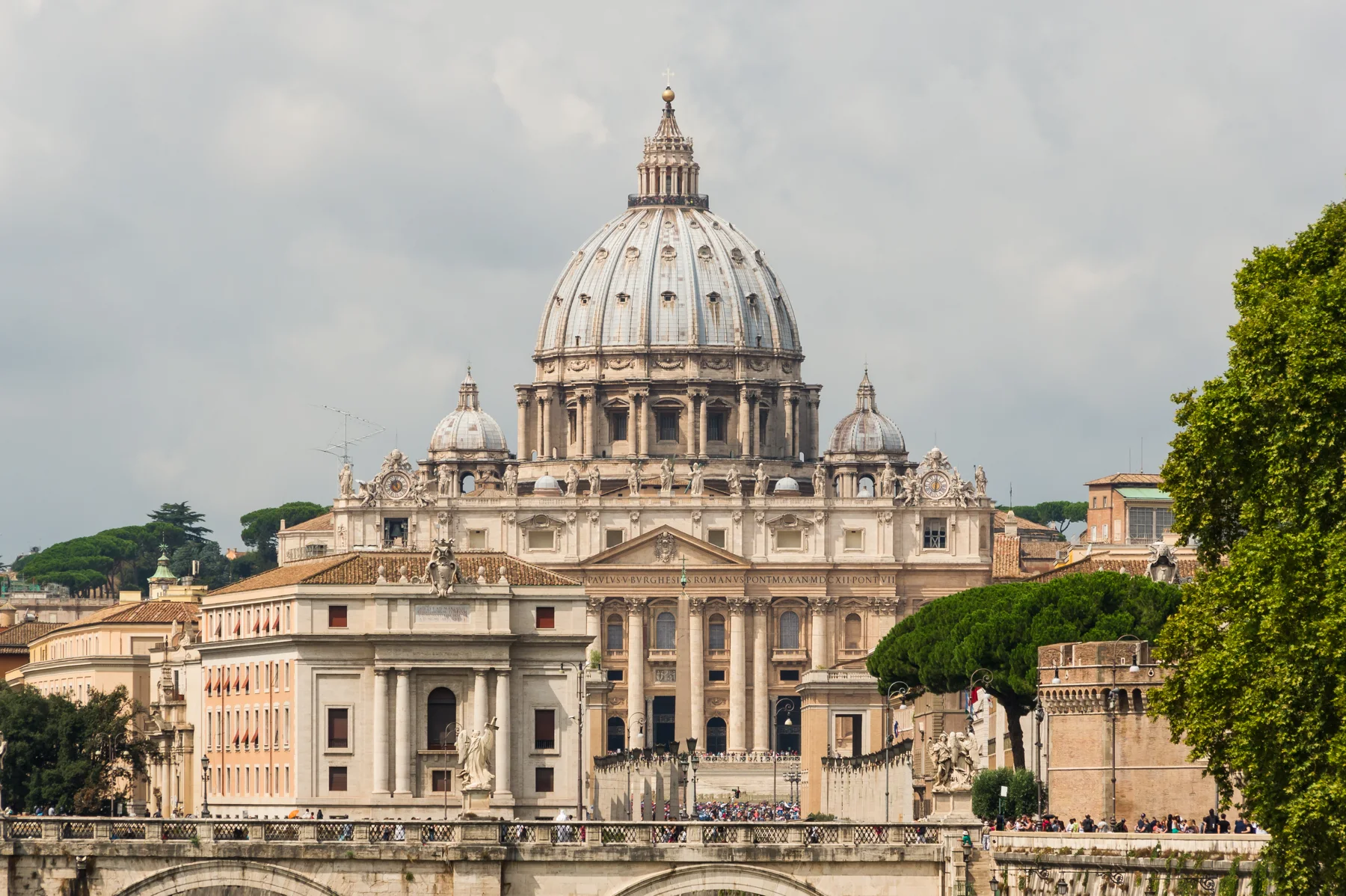
- A Lenten week in Rome. A gentler journey could be built in Rome around the Holy Stairs, twenty-eight steps climbed on the knees in memory of Christ's Passion, the papal basilicas with the tombs of St. Peter and St. Paul, and the Lenten station churches, with any liturgical participation depending on the Roman calendar for that year.
- A walking penitential pilgrimage. A final stretch of the Camino to Santiago de Compostela, one of the great destinations to which medieval penitents were sent, could be walked simply and in a spirit of penance, with Confession on arrival where confessors are available.
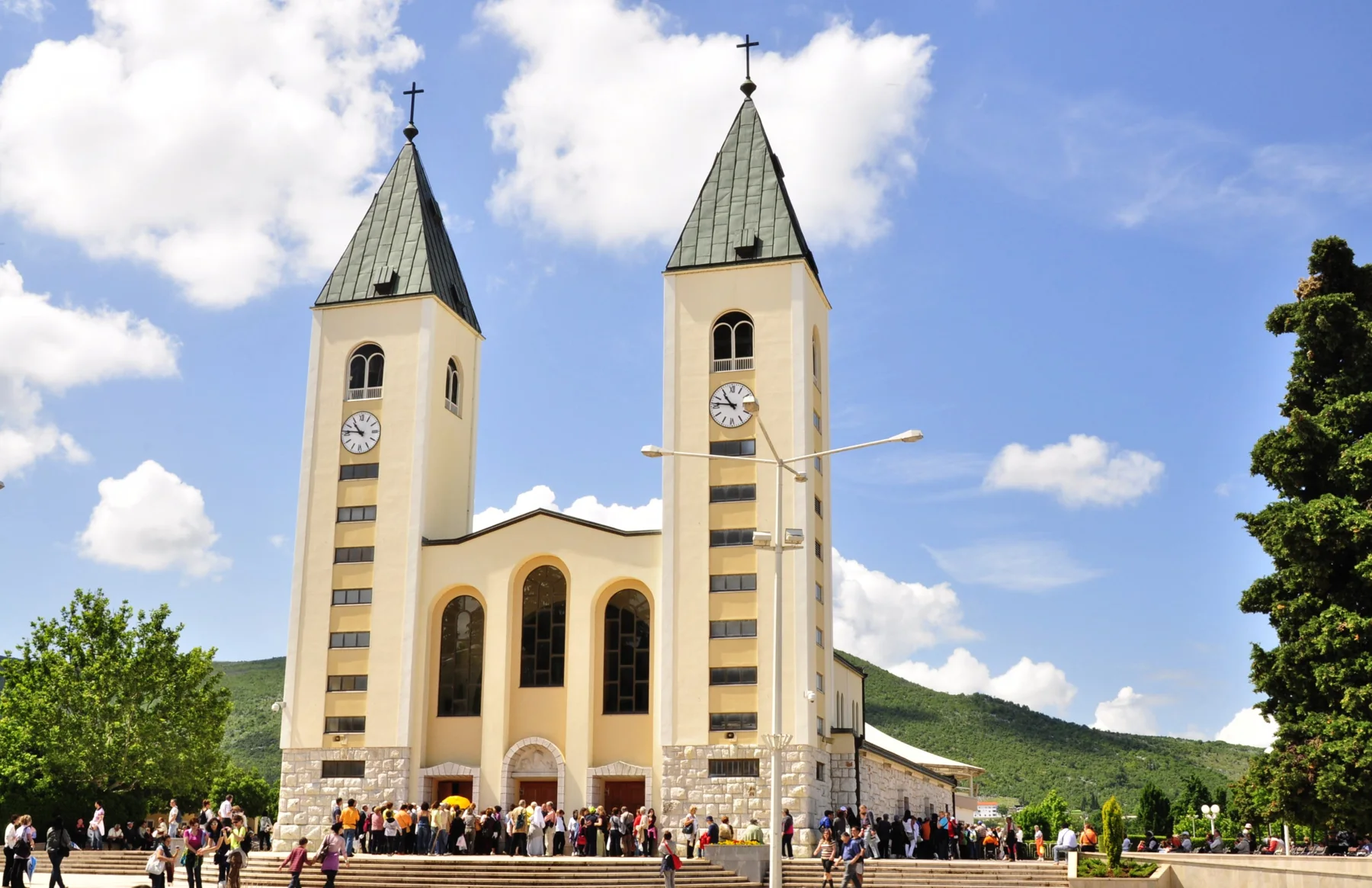
- Cross Mountain on the Medjugorje & Croatia Classic. That sample itinerary keeps a quieter day for Confession and personal prayer and offers Cross Mountain, prayed as the Stations of the Cross, as a demanding optional climb with a gentle day for everyone else; the Holy See permits pilgrimage and public devotion at Medjugorje without judging the alleged apparitions supernatural.
No dated departures are currently announced. This is a journey Bold Pilgrim is considering, described so you can picture it. Dates, priest, Gateway Airport and price are published on a departure itself, and only when confirmed.
WHAT YOU MAY EXPERIENCE
What a pilgrim might experience
The outward forms are few and old. Walking, often uphill and sometimes barefoot. Fasting, or at least eating simply. Keeping vigil. Kneeling. Praying the Stations of the Cross, which move the body from place to place in memory of the road Christ walked to Calvary. Going to Confession, and receiving the Eucharist, which the Catechism calls the source and nourishment of daily conversion (1436).
At Lough Derg in Ireland this takes three days of fasting, bare feet and a twenty-four-hour vigil. At the Holy Stairs in Rome it is a single climb: twenty-eight steps, taken on the knees in memory of the Passion. On a hill of Stations it may be one hard morning. The scale differs; the act is the same.
The Church attaches indulgences to some of these acts, and they are easily misread. The Catechism defines an indulgence as "a remission before God of the temporal punishment due to sins whose guilt has already been forgiven" (1471). It is not forgiveness of sin and never a substitute for Confession. The Apostolic Penitentiary's instruction The Gift of the Indulgence (2000) gives the conditions for a plenary indulgence as sacramental Confession, Eucharistic Communion, prayer for the Pope's intentions and complete detachment from sin, even venial sin. The particular grants are set by the Church's own norms, and conditions for particular places and years change, so verify them for your dates.
None of this comes with a promised feeling. What the Church proposes is plainer: an answer, made with the whole self, to a mercy already received.
In practice
- Praying the Stations of the Cross outdoors, on foot
- Confession, unhurried
- A day of fasting or simple food, freely chosen
- Climbing the Holy Stairs on the knees
- A barefoot or uphill walk made in silence
- A night vigil or an early hour of prayer
- Giving alms as part of the journey
Who it may be for, and two cautions
This kind of pilgrimage suits someone returning to the sacraments who wants to mark the return; someone who has confessed a serious sin and wants to make an act of reparation; someone praying for a person who has died; and anyone who wants a Lent, or a turning point, that is more than a resolution.
First caution: hardship is not the measure. A penitential pilgrimage does not have to hurt, and a harder one is not a holier one. Penance is first a change of heart, and age, illness, pregnancy and disability change the form of penance, not its worth.
Second: where you have wronged a person, the Catechism puts repair first, returning what was taken, restoring a reputation, making what amends you can (1459). No journey replaces that.
A penitential pilgrimage ends where every pilgrimage ends, at the feet of Jesus Christ, who in the words of St. Peter "bore our sins in his body on the tree" (1 Peter 2:24).
- Catholics who have been to Confession and want to make a concrete act of penance or reparation
- People returning to the sacraments who want to mark the return with more than words
- Pilgrims who want a Lenten journey, or a clear line before a new beginning
- Those praying for someone who has died
- Pilgrims who want a journey that asks something real of them, physically and spiritually
- Parish and men's or women's groups looking for a serious, simple pilgrimage
A spiritual purpose has no Pilgrim Pace rating; the actual itinerary determines the pace. The places most associated with penitential pilgrimage tend to be physically demanding: steep or rocky climbs, kneeling on stone or wood, long hours standing, and at Lough Derg fasting and loss of sleep, for which the sanctuary requires pilgrims to be fit, at least fifteen, and able to kneel unaided. None of this is necessary to make a penitential pilgrimage, and every hard element should have a real alternative.
UNDERSTANDING THIS PILGRIMAGE
Yes: a penitential pilgrimage is a journey to a holy place made as an act of penance, in which you accept its effort, simplicity and prayer as a way of turning back to God and making some repair for sin. The Catechism names "pilgrimages as signs of penance" among the Church's penitential practices. It does not earn forgiveness, which Jesus Christ gives freely in the sacrament of Confession; it is what a forgiven person does next, with body as well as soul.
What penance is, and why a journey can be one
Penance, in Catholic teaching, begins inside. St. Paul VI described it in Paenitemini as a "change of heart", an "intimate and total change and renewal of the entire man", and he rejected "any form of penitence which is purely external". But he also taught that the Church invites everyone to accompany that inner conversion with voluntary outward acts. We are bodies as well as souls, and repentance that never reaches the feet, the stomach or the calendar tends to stay an idea.
The Catechism names fasting, prayer and almsgiving as the classic forms of penance (1434) and lists "pilgrimages as signs of penance" among the practices suited to the Church's penitential days and seasons (1438). A pilgrimage gathers all three: you pray, you go without, and you give time and money that could have gone elsewhere.
The order matters. Sin is forgiven by Jesus Christ, ordinarily in the sacrament of Confession. Absolution takes away sin, the Catechism says, but it does not repair all the disorder sin has caused, so the forgiven person still does something to make amends; that is what the Church calls satisfaction, or penance (1459). The same teaching is careful about where its value comes from: such acts draw their power from Christ, are offered to the Father through Him, and help conform us to Him who alone atoned for our sins (1460). A penitential pilgrimage is a response to mercy. It is never the price of it.
An old practice, honestly told
Pilgrimage as penance is among the oldest reasons Christians have traveled. A tenth-century English canon issued under King Edgar called it "a deep penitence" for a man to lay aside his weapons and travel far barefoot, with fasting, vigils and prayer. In the Middle Ages confessors and Church courts assigned pilgrimages for grave sins, and civil courts sometimes did the same; the registers of the Inquisition at Carcassonne list four major pilgrimages imposed in this way, to Rome, Santiago de Compostela, Canterbury and Cologne.
The same history records the warnings. St. John Chrysostom, St. Jerome and St. Augustine all insisted that holiness lies in how one lives and loves God, not in the miles covered. Later centuries saw real abuses, and when St. Paul VI reformed indulgences in 1967 he named them plainly: "untimely and superfluous indulgences" and "illicit profits" that brought the practice into disrepute. He kept the doctrine and dropped the old reckoning of partial indulgences in days and years.
What remains today is voluntary and personal. No one is sentenced to a pilgrimage. The phrase is still in living use: in July 2022 Pope Francis described his coming journey to Canada, made for healing and reconciliation with Indigenous peoples, as a "penitential pilgrimage".
Why someone is drawn to it
Most people who look for a penitential pilgrimage are not looking for punishment. They have usually been to Confession, or know they need to go, and they find that words alone do not seem equal to what happened. They want to do something. That instinct is sound, and the Church has always honored it: the Catechism calls taking up one's cross each day and following Jesus "the surest way of penance" (1435).
Others come because faith has become comfortable and they want it to ask something of them again, or because they are carrying another person, living or dead, and want to pray for them with more than a sentence. Some come in Lent, or before a new beginning, to mark a line between what was and what will be.
Questions pilgrims ask
What is a penitential pilgrimage?
A penitential pilgrimage is a journey to a holy place made as an act of penance. The pilgrim accepts its effort and simplicity, prays, usually goes to Confession, and offers the whole journey to God in sorrow for sin and in a desire to change. The Catechism lists "pilgrimages as signs of penance" among the Church's penitential practices (1438). It can be as demanding as three days of fasting at Lough Derg or as simple as a walk to a local shrine on a Friday in Lent.
Can I make a pilgrimage as penance for my sins?
Yes. The Catechism lists "pilgrimages as signs of penance" (1438). The pilgrimage does not obtain forgiveness, which Christ gives, ordinarily in the sacrament of Confession; it is the forgiven person's effort to repair what sin has damaged, so Confession comes first or on the way.
Why do Catholics do penance if Jesus already paid for our sins?
Because penance is a response to what Christ did, not an addition to it. Catholics believe He alone atoned for sin and that His forgiveness is free. But forgiven sin leaves damage behind, in the sinner and in others, and the Catechism says absolution does not repair all of that disorder (1459). Penance is how a forgiven person cooperates in the repair. Its value comes entirely from Christ: such acts draw their power from Him and are offered to the Father through Him (1460).
Does a penitential pilgrimage have to be physically hard?
No. Penance is first a change of heart, and St. Paul VI wrote that the Church rejects "any form of penitence which is purely external". What makes a pilgrimage penitential is the intention, the prayer and some real self-denial, which might be simple food, silence, an early start or money given away. A demanding climb can express that; so can a slow walk by someone of eighty. A harder pilgrimage is not a holier one, and nobody is a lesser pilgrim for traveling comfortably or for not climbing.
What if I cannot kneel, fast or climb?
Then your penance takes another form. Canon law binds adults to the fast only until the beginning of their sixtieth year (canon 1252; the United States bishops give the ages as 18 until 59), and no one is asked to fast or climb against medical advice. At the Holy Stairs in Rome, side staircases lead to the same chapels. Prayer, patience with one's own limits and a gift to the poor are penance too.
Is there an indulgence for making a pilgrimage?
The Church attaches indulgences to particular prayers and visits that pilgrims make, not to travel as such. The Catechism defines an indulgence as "a remission before God of the temporal punishment due to sins whose guilt has already been forgiven" (1471), so it does not forgive sin. The conditions for a plenary indulgence, and how pilgrims meet them, are set out in the linked answer.
Do the hardships of a pilgrimage count for anything?
Yes, when they are accepted in prayer. The Catechism calls taking up one's cross each day and following Jesus "the surest way of penance" (1435), and it counts the patient acceptance of the cross we must bear among the forms penance can take (1460). Blisters, a hard bed, a missed meal or a delayed flight can all be offered to God in that spirit. Their worth does not lie in the discomfort but in the love and trust with which they are borne.
Do I have to fast on a pilgrimage?
No. The Church's law requires fasting only on Ash Wednesday and Good Friday, and abstinence on the Fridays the Church prescribes (canon 1251); a pilgrimage adds no obligation. Some places ask for more as part of their own program: at Lough Derg pilgrims fast for three days on one simple meal a day. Elsewhere any fasting is your free choice. If you want to fast, keep it modest when you are walking long distances or in heat, and do not fast against medical advice.