Why make this pilgrimage
Some things are carried for years: something you did and have never said aloud, or something done to you that you cannot put down. The question underneath is simple. Can I really be forgiven, and can I learn to forgive?
This pilgrimage is made to bring that question to the place where the Church answers it. It seeks an unhurried Confession, perhaps the first in a long time, to a priest who has never met you, and days of prayer for one person you need to forgive or ask forgiveness from. The journey does not forgive anything by itself. It brings you, without hurry, to Christ, who does.
THE JOURNEY
Rome for Reconciliation: the papal basilicas, Nettuno and the tomb of St. Peter
- Where
- Italy, Vatican City
- Length
- About a week
- Status
- Under consideration
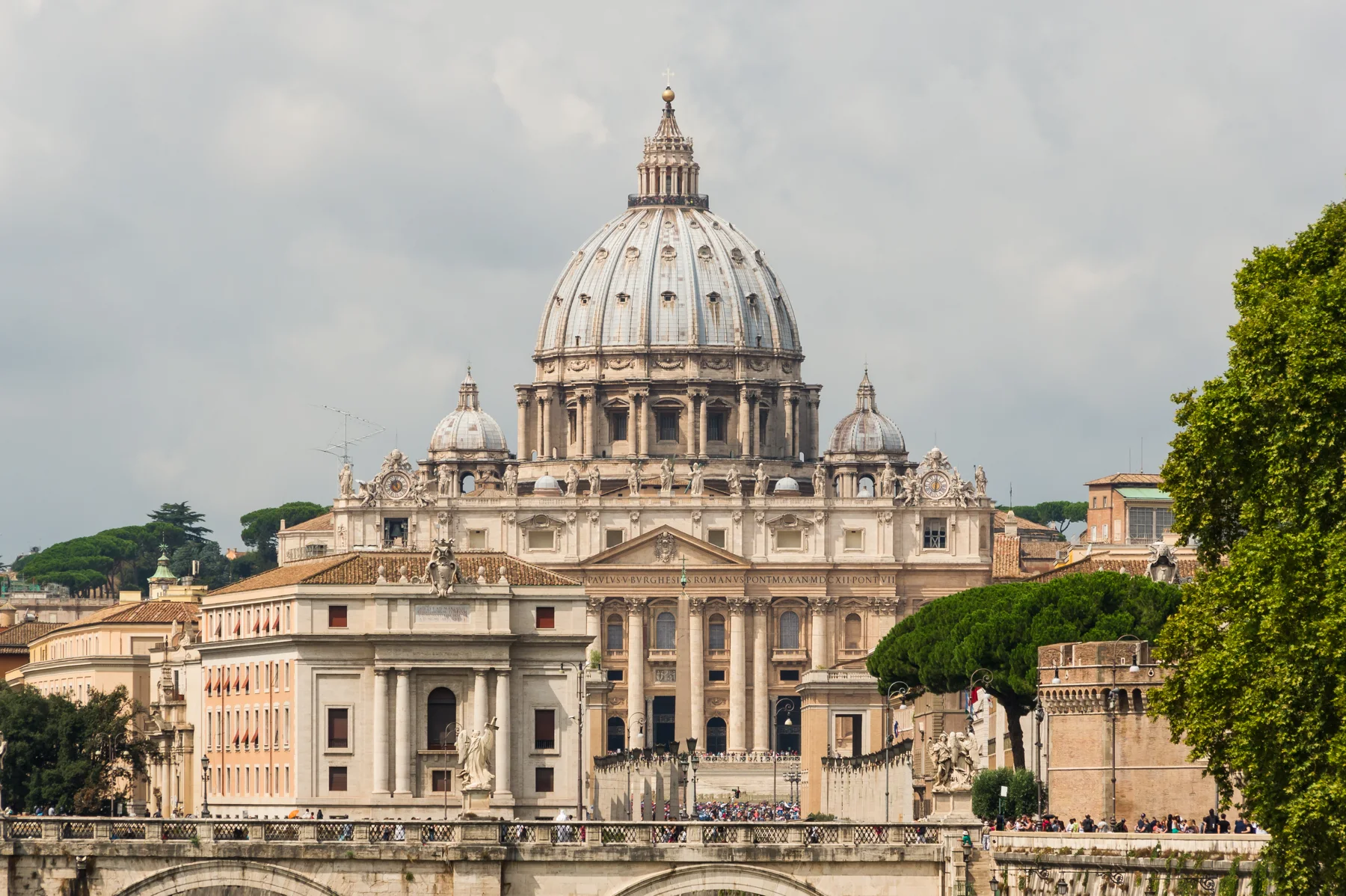
This would be a slow stay in Rome from a single base, with no change of lodging, built around the papal basilicas whose confessors serve pilgrims. The order would follow the purpose: first days to prepare and to confess when you are ready, then a day on the coast at Nettuno with St. Maria Goretti, who forgave the man who killed her, and last the tomb of St. Peter, the Apostle who denied Christ and was restored. Being forgiven would come first, forgiving second, and the journey would end beside a forgiven man before the road home.
The route, and why each place belongs
- 1
Basilica of St. Mary Major, Rome
ItalyWhy it belongs
The confessors here are a college of Dominican friars from many nations, instituted in 1568 to serve pilgrims. The Church calls Mary Mother of Mercy and Refuge of Sinners: not the source of forgiveness, but the mother who brings her children to her Son.
What you would do there
The journey would begin here quietly, with time to sit in the basilica, pray the Our Father slowly and begin an examination of conscience. Nobody would be asked to confess on the first day, or at all.
- 2
St. John Lateran and St. Paul Outside the Walls, Rome
ItalyWhy it belongs
These papal basilicas also have confessors, called penitentiaries, whose work is to hear the confessions of pilgrims. They are the reason Rome serves this pilgrimage so well: you may confess to a priest who has never met you.
What you would do there
Two unhurried days would be given to these basilicas, one each, so that a pilgrim could go to Confession where confessors are available, in English where one is on hand, and then stay to pray. Waiting can mean standing in line, and the time afterward would be left open.
- 3
Shrine of Our Lady of Grace and St. Maria Goretti, Nettuno
ItalyWhy it belongs
Maria Goretti died in this town at eleven, having forgiven the man who stabbed her and wished to have him with her in paradise; he later repented and asked her family's pardon. Her story is the other half of this pilgrimage: forgiving someone else.
What you would do there
A day out to the coast south of Rome would bring the pilgrim to the shrine, in the care of the Passionists, where the saint's body is venerated. Here you could pray by name for the person you need to forgive or ask forgiveness from.
- 4
St. Peter's Basilica and the tomb of St. Peter
Vatican CityWhy it belongs
Peter denied Christ three times and was restored by Him. The tomb venerated beneath the basilica is that of a forgiven man, and confessors serve pilgrims here too, including in English.
What you would do there
The journey would end with a visit to the basilica and protected time to pray near the place venerated as the Apostle's tomb. It would be a last opportunity for Confession for anyone who needed the whole week to be ready, and a place to give thanks.
Prayer and the sacraments
Confession would be the center of the journey, at the basilicas where confessors are available and always at the pilgrim's own choosing. Mass would be attended where the schedule permits, and clergy arrangements are confirmed for each departure; the days could also hold time before the Blessed Sacrament, the Stations of the Cross prayed slowly, and Psalm 51 and the Act of Contrition in the days before Confession.
Pilgrim’s Time
Pilgrim's Time would be protected each day, with nothing scheduled, and on this journey it matters more than usual: it is the time to examine your conscience beforehand, to pray or write after Confession, to return alone to a basilica, or simply to rest.
Pilgrim Pace
The route would be gentle in distance but not in standing: large basilicas mean long walks on stone floors, security queues at St. Peter's and lines for Confession, with one day's road transfer to the coast and back. The churches themselves are mostly reached on level ground, and anyone with limited mobility should ask what a specific itinerary requires.
How Pilgrim Pace worksIf you can stay longer
A pilgrim with more days could continue to Assisi and the Porziuncola, home of the Pardon of Assisi, an indulgence that Franciscan tradition dates to 1216 and that presupposes Confession and is not itself the forgiveness of sin; or to San Giovanni Rotondo, where St. Padre Pio heard confessions for decades.
Other ways to make this pilgrimage
- The three confessors: Ars, Padua and San Giovanni Rotondo. A longer route through the places of St. John Vianney, St. Leopold Mandić and St. Padre Pio, with time for Confession at each, which would need careful routing between France and Italy.
- The Rome & Assisi Classic. Its Rome days already include St. John Lateran, St. Mary Major and St. Paul Outside the Walls, and its Assisi days include Santa Maria degli Angeli and the Porziuncola.
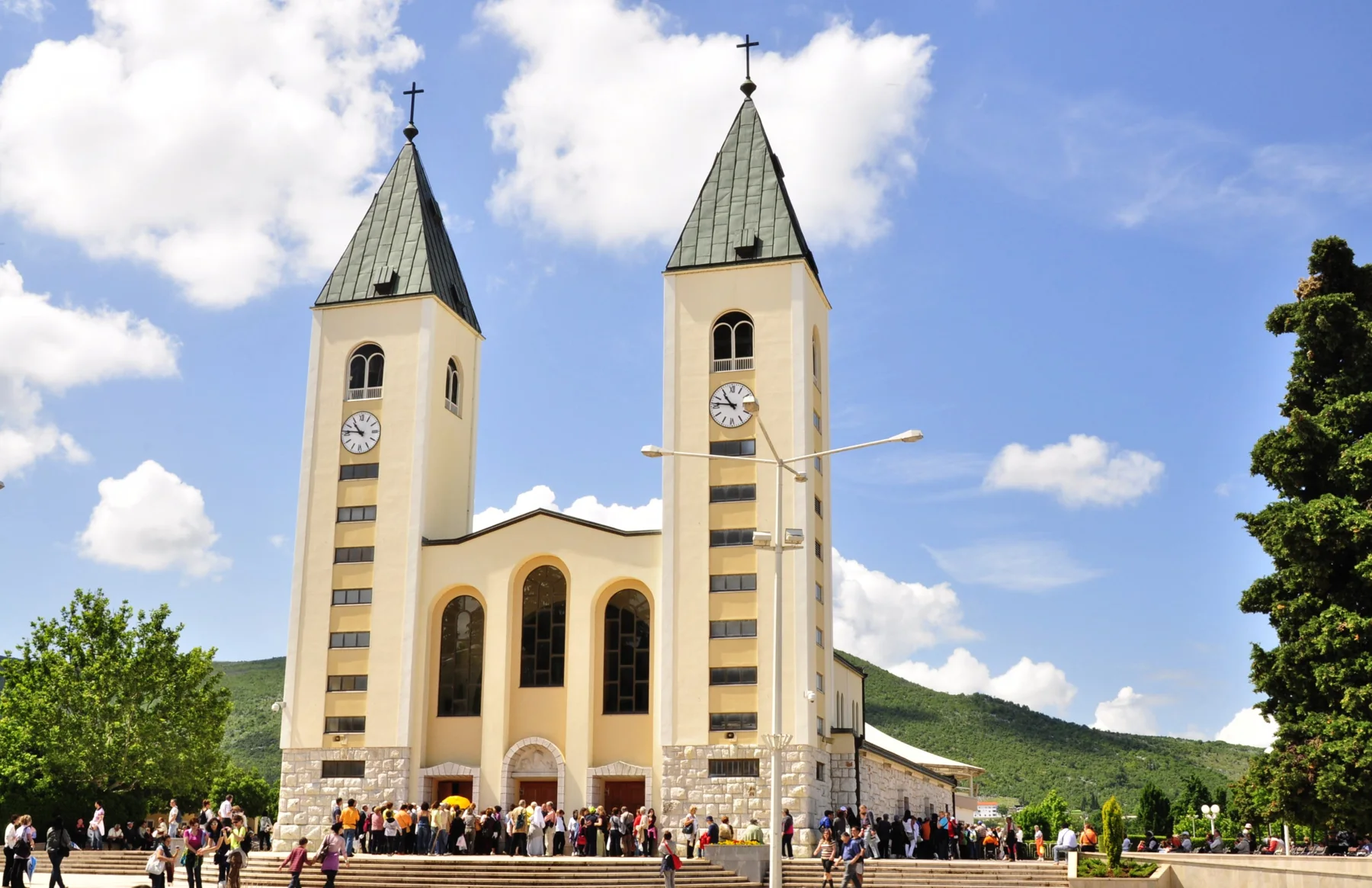
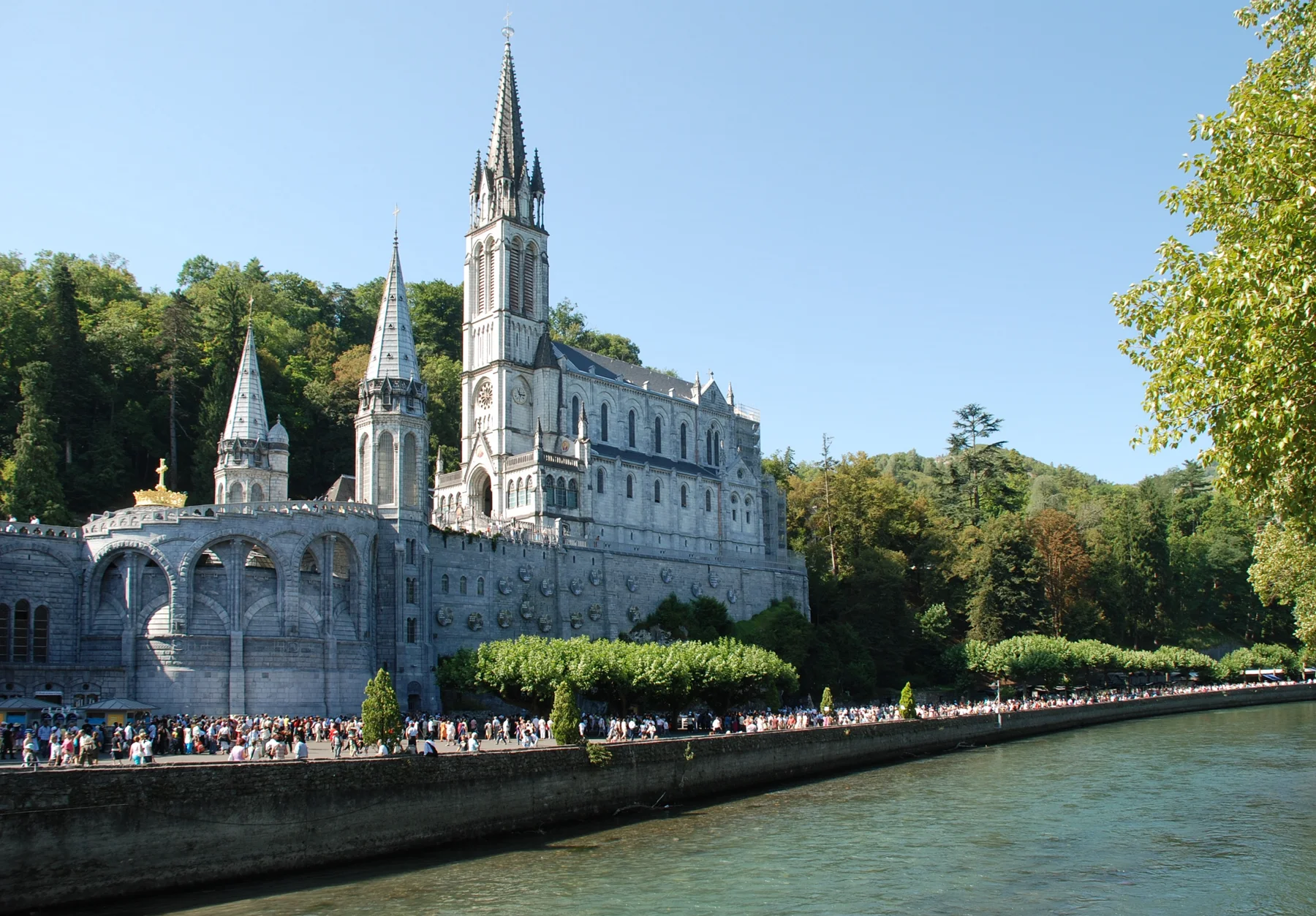
- Medjugorje or Lourdes. The Medjugorje & Croatia Classic keeps a quieter day for Confession in a parish where the Holy See's 2024 Note, which permits and encourages pastoral pilgrimage without judging the reported apparitions to be supernatural, lists numerous confessions among the spiritual fruits; the Fátima & Lourdes Classic leaves open time at Lourdes, where chaplains hear confessions in the Chapel of Reconciliation.
No dated departures are currently announced. This is a journey Bold Pilgrim is considering, described so you can picture it. Dates, priest, Gateway Airport and price are published on a departure itself, and only when confirmed.
WHAT YOU MAY EXPERIENCE
What a pilgrim may experience
No one can promise what you will feel, and this page will not. The Catechism says that in those who receive the sacrament with a contrite heart it is "usually followed by peace and serenity of conscience with strong spiritual consolation" (CCC 1468). Usually is an honest word: the feeling may come at once, slowly, or in a form you did not expect. Some regret can remain, and the Catechism explains why: "Absolution takes away sin, but it does not remedy all the disorders sin has caused" (CCC 1459). Making amends where you can is part of the road, and a confessor is the person to talk to if the weight does not lift.
The places themselves teach. In Rome the papal basilicas keep confessors for pilgrims of many nations. At Lourdes the sanctuary's chaplains hear confessions in a Chapel of Reconciliation, and the sanctuary insists that the penance Our Lady asked for there "is not about going on a guilt-trip." In Medjugorje, Confession is a large part of parish life; the Holy See's 2024 Note lists "numerous confessions" among the spiritual fruits there, without judging the reported apparitions to be supernatural. At Ars, San Giovanni Rotondo and Padua you stand where three priests, St. John Vianney, St. Padre Pio and St. Leopold Mandić, gave long hours, day after day, to hearing confessions.
Forgiving someone else usually goes more slowly than being forgiven. A pilgrim might carry one name to every altar for a week and pray for that person, which is how the Catechism says hurt becomes intercession. Some go home having forgiven. Some go home having started. Some realize they need to ask someone's pardon and now know how they will begin. All of these are real, and none of them can be scheduled.
In practice
- Confession at a shrine, to a priest you have never met, in your own language where available
- Unhurried time to examine your conscience beforehand and to pray afterward
- Mass where the schedule permits, and time before the Blessed Sacrament
- The Stations of the Cross, prayed slowly
- Standing where great confessors and forgiven sinners lived, and at their tombs
- Carrying one person's name in prayer from place to place
- Conversation with a priest, if one is traveling with the group or available at the shrine
- Protected free time (Pilgrim's Time) with nothing scheduled, for silence, writing or rest
Who it may be for, and what it is not
This pilgrimage may suit a Catholic who has been away from Confession for a long time, someone carrying long-held guilt, someone struggling to forgive a spouse, parent, child or friend, a couple or family seeking to begin again, and anyone who wants to make a deliberate, unhurried Confession at a turning point in life. It also suits people who are simply not sure they believe forgiveness is possible for them and want to see where others have found it. You do not need to have anything resolved before you go.
It is distinct from two neighbors. A Divine Mercy pilgrimage follows a particular devotion, the image, chaplet and feast that came through St. Faustina, to Kraków and the places of her life. A penitential pilgrimage is a journey made as an act of penance: its effort, simplicity and prayer are taken up in response to Christ's forgiveness, to make some repair for sin, and it need not be far or severe. A mercy and forgiveness pilgrimage is defined by its purpose, reconciliation with God and with other people. It can be physically gentle, and a pilgrim may well make both at once.
Three limits should be stated plainly. First, the sacrament belongs to the priest's ministry; a lay organizer or a pilgrimage company can make room for Confession and cannot provide it. Bold Pilgrim does not promise to supply a priest, and clergy arrangements are confirmed for each departure. Second, nothing here is a judgment about anyone's particular situation. If yours is complicated, or concerns something as heavy as an abortion or a broken marriage, that is a reason to speak with a priest and to come to the Sacrament of Reconciliation, not a reason to stay home. Third, a pilgrimage is not therapy and does not replace professional care. Anyone carrying abuse, trauma or serious depression should have the help of a qualified professional alongside the help of the Church.
- Catholics who have not been to Confession in years and want a gentle, anonymous place to begin
- People carrying guilt over something long past, confessed or not
- Anyone struggling to forgive a spouse, parent, child, sibling or friend
- Couples and families who want to begin again after a serious rupture
- Those grieving someone with whom things were left unresolved
- Pilgrims marking a turning point with a deliberate, unhurried Confession
- People unsure whether forgiveness is possible for them, who want to see before they decide
A spiritual purpose has no Pilgrim Pace rating; the actual itinerary determines the pace. The places that serve this pilgrimage are mostly churches and sanctuaries reached on level ground, and waiting for Confession can mean standing in line, sometimes outdoors. Medjugorje's hills are optional and rocky; Assisi is steep in places; large basilicas involve long walks on stone floors. Anyone with limited mobility should ask what a specific itinerary requires.
UNDERSTANDING THIS PILGRIMAGE
The Church's answer is yes: "There is no offense, however serious, that the Church cannot forgive" (CCC 982), and a mercy and forgiveness pilgrimage is a journey to a holy place made to receive that forgiveness in Confession and to ask for the grace to forgive. For most pilgrims that means an unhurried Confession, sometimes the first in many years, and time to pray about a person they need to forgive or ask forgiveness from. The pilgrimage does not forgive anything by itself; it brings you to Jesus Christ, who forgives in the sacrament of Penance, and gives you days in which to let that forgiveness change how you live.
The Catholic foundation: forgiveness has a face and a sacrament
Pope Francis began the bull announcing the Jubilee of Mercy with one sentence: "Jesus Christ is the face of the Father's mercy." Mercy in the Catholic sense is not a mood or a general amnesty. It is something Christ does. He forgave the paralytic, the woman caught in adultery and the thief beside Him on the cross, and He told the story of a father who runs down the road to meet a son who had wasted everything. The Catechism calls that parable the description of the whole process of conversion and repentance (CCC 1439).
Christ also left His Church a concrete way to receive that forgiveness. In the sacrament of Penance, also called Reconciliation or Confession, a person who is sorry, confesses to a priest and intends to change receives God's forgiveness through the priest's absolution and is reconciled with the Church (canon 959). The Catechism is blunt about the scope of this: "There is no offense, however serious, that the Church cannot forgive" (CCC 982). The priest is "not the master of God's forgiveness, but its servant" (CCC 1466), and what he hears is covered by a seal that admits no exceptions (CCC 1467).
Pilgrimage belongs to this. The Catechism names pilgrimages among the Church's "signs of penance" (CCC 1438), and Pope Francis described pilgrimage as "an impetus to conversion" whose steps include not judging, not condemning, and forgiving (Misericordiae Vultus 14). A pilgrimage does not replace the sacrament. It is the road to it and the road home from it.
What this purpose means: being forgiven and forgiving
Every pilgrim prays the Our Father many times a day, and its fifth petition ties two things together: "forgive us our trespasses, as we forgive those who trespass against us." The Catechism says love is indivisible here; a heart that refuses to forgive closes itself to the mercy it is asking for (CCC 2840). That is a hard saying, and the Church knows it. Pope Francis acknowledged how hard forgiving can seem, in the same paragraph in which he called pardon "the instrument placed into our fragile hands to attain serenity of heart" (Misericordiae Vultus 9).
The Church is also precise about what forgiving is not. It is not forgetting: "It is not in our power not to feel or to forget an offense; but the heart that offers itself to the Holy Spirit turns injury into compassion and purifies the memory in transforming the hurt into intercession" (CCC 2843). It is not pretending no wrong was done; St. John Paul II taught that forgiveness "does not cancel out the objective requirements of justice" and never means indulgence toward evil or injury (Dives in Misericordia 14). He called forgiveness "a decision of the heart to go against the natural instinct to pay back evil with evil."
So this pilgrimage has two movements, and most pilgrims arrive needing one more than the other. Some come to be forgiven. Some come because they cannot forgive. Many discover on the road that the two are connected.
Why a Catholic may feel drawn to it
People rarely announce this reason. It tends to sit underneath another one. Something done long ago that has never been said aloud. A Confession put off for ten or thirty years because the first sentence seems impossible. A marriage, a sibling, a parent, a friendship broken and left that way. A death that came before the conversation did. A sin that was confessed and absolved years ago and still does not feel finished.
Distance helps. A column in a diocesan newspaper, answering a Catholic anxious about returning to Confession, suggests exactly this: a shrine or pilgrimage site, where you are unlikely to see the priest again. Church law protects that freedom; every Catholic may confess to any approved confessor of their choice (canon 991). At the great shrines the confessors are used to pilgrims, and hearing confessions is the work they are there to do.
Time helps too. At home, Confession is often a short slot before a weekend Mass. On pilgrimage there are days around it: time to examine your conscience without hurry, to go, and then to stay in a place of prayer with what has happened instead of walking straight back into ordinary life.
Questions pilgrims ask
What is a mercy and forgiveness pilgrimage?
It is a pilgrimage made in order to be reconciled: with God through the sacrament of Confession, and with other people through forgiving or asking forgiveness. It is defined by that purpose and not by one destination. Shrines known for Confession, such as the Roman basilicas, Lourdes and Medjugorje, and the places of saints who heard confessions or forgave great wrongs, serve it well. The pilgrimage does not forgive sins. It brings you, with time and without hurry, to Christ, who does.
Does going on a pilgrimage forgive your sins?
No, not by itself. Canon law calls individual confession and absolution the only ordinary means by which a Catholic conscious of grave sin is reconciled with God and the Church (canon 960), and the Catechism lists pilgrimages among the "signs of penance" (CCC 1438). A pilgrimage can bring you to Confession; the forgiving is done by Christ in the sacrament.
Full answer: Does going on a pilgrimage forgive your sins?
Can I go to Confession during a pilgrimage?
Yes. Confession is available at the major Catholic shrines, often in several languages, though availability varies by shrine and season, so check the sanctuary's own information. Bold Pilgrim can leave room for Confession in a journey and does not promise to provide a priest.
Full answer: Can I go to confession during a pilgrimage?
Do I have to confess to the priest traveling with my group?
No. Every Catholic is free to confess to a lawfully approved confessor of his or her choice (canon 991), so you may go to a priest at a shrine who has never met you and is unlikely to see you again. Many pilgrims prefer this, and large sanctuaries keep confessors available for it. If you do confess to a priest in your group, the sacramental seal is inviolable: he may not betray what you said in any way or for any reason (canon 983). Nobody on a pilgrimage is required to go, and nobody will ask whether you did.
Is there any sin that cannot be forgiven in Confession?
The Catechism says, "There is no offense, however serious, that the Church cannot forgive" (CCC 982), and Pope Francis wrote that "there is no sin that God's mercy cannot reach and wipe away when it finds a repentant heart" (Misericordia et Misera 12). On the sin against the Holy Spirit, the Catechism says: "There are no limits to the mercy of God, but anyone who deliberately refuses to accept his mercy by repenting, rejects the forgiveness of his sins and the salvation offered by the Holy Spirit" (CCC 1864). If you are afraid that what you carry is too much, or your situation seems complicated, take it to a priest in the Sacrament of Reconciliation.
Does forgiving someone mean forgetting what happened or giving up on justice?
No. The Catechism says, "It is not in our power not to feel or to forget an offense; but the heart that offers itself to the Holy Spirit turns injury into compassion and purifies the memory in transforming the hurt into intercession" (CCC 2843). St. John Paul II taught that forgiveness "does not cancel out the objective requirements of justice" (Dives in Misericordia 14) and called it "a decision of the heart to go against the natural instinct to pay back evil with evil." What that asks of you in a particular relationship, above all where you have been seriously harmed, is something to talk through with a priest.
Can a pilgrimage help me forgive someone who hurt me?
It can give you the conditions; it cannot do the forgiving for you, and no one can promise the result. Pope Francis described pilgrimage as "an impetus to conversion" whose steps include not judging, not condemning and forgiving. In practice that means days away from the situation, prayer each day, Confession for your own part, and the chance to carry the person's name to each holy place, which is how the Catechism says hurt is transformed into intercession (CCC 2843). Some pilgrims come home having forgiven. Others come home having begun.
Is there a patron saint of forgiveness?
We know of no act of the Church naming one. Several saints are closely associated with forgiveness. St. Maria Goretti forgave her murderer as she died and is venerated at Nettuno, south of Rome. St. Padre Pio, St. Leopold Mandić and St. John Vianney were known above all as confessors; Pope Francis had the relics of the first two brought to Rome during the Jubilee of Mercy. Pope St. John Paul II forgave the man who shot him. St. Peter denied Christ three times and was restored by Him. This page closes by asking St. Pio's prayers as a devotional choice of Bold Pilgrim, not as a claim of formal patronage.