THE JOURNEY
Eucharistic Italy: Rome, Bolsena, Orvieto, Assisi and Lanciano
- Where
- Italy
- Length
- About nine or ten days
- Status
- Under consideration
The journey would begin in Rome, at the altars of the papal basilicas, then travel north to Bolsena and Orvieto, where the tradition of the bleeding Host and the history of the feast of Corpus Christi belong together. It would settle in Assisi, at the tomb of St. Carlo Acutis, and then cross to Lanciano, the earliest of the widely known Eucharistic miracle traditions, before returning to Rome. The order makes sense on the map and in prayer: the Mass first, then the places where the Church's faith in the Real Presence has been prayed and handed on, with the standing of each tradition explained before the pilgrim arrives.
The route, and why each place belongs
- 1
Rome
Why it belongs
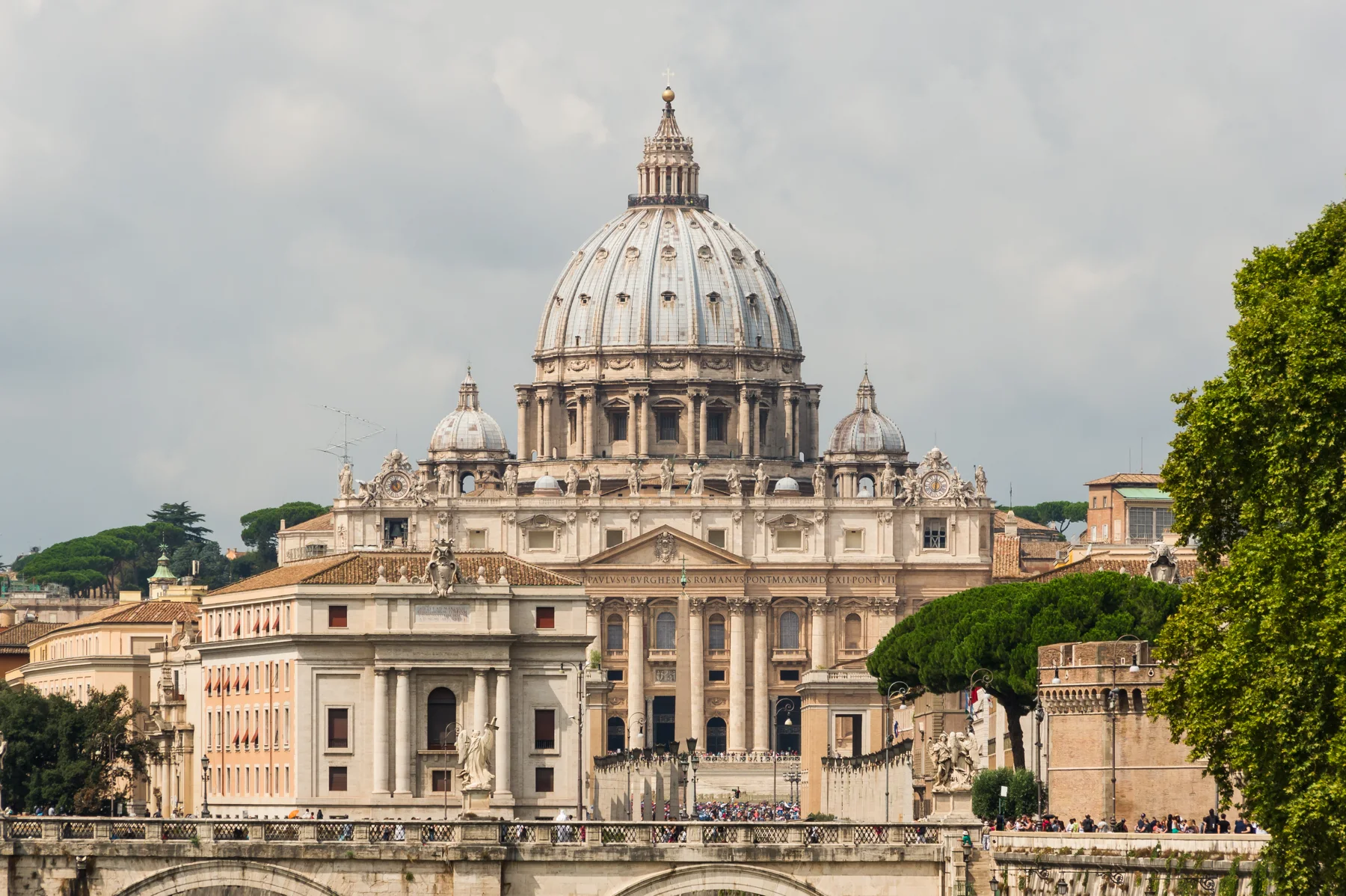
Rome is where this pilgrimage would set its centre before visiting any miracle shrine: Mass is celebrated daily in the papal basilicas, which also keep Blessed Sacrament chapels set apart for prayer.
What you would do there
The pilgrim would visit St. Peter's, St. John Lateran, St. Mary Major and St. Paul Outside the Walls, attend a public Mass where the schedule permits, and stay a while in a Blessed Sacrament chapel instead of hurrying on to the next church.
- 2
Bolsena: Basilica of Santa Cristina
Why it belongs
This is the church where, by tradition, a priest troubled by doubt saw blood come from the Host during Mass in 1263. It is a thirteenth-century tradition whose veneration the Church has long permitted; belief in it is not required.
What you would do there
A short, quiet visit to the church where the tradition places that Mass, with the story told as tradition beforehand, and a few minutes of silent prayer for anyone who carries doubts of their own.
- 3
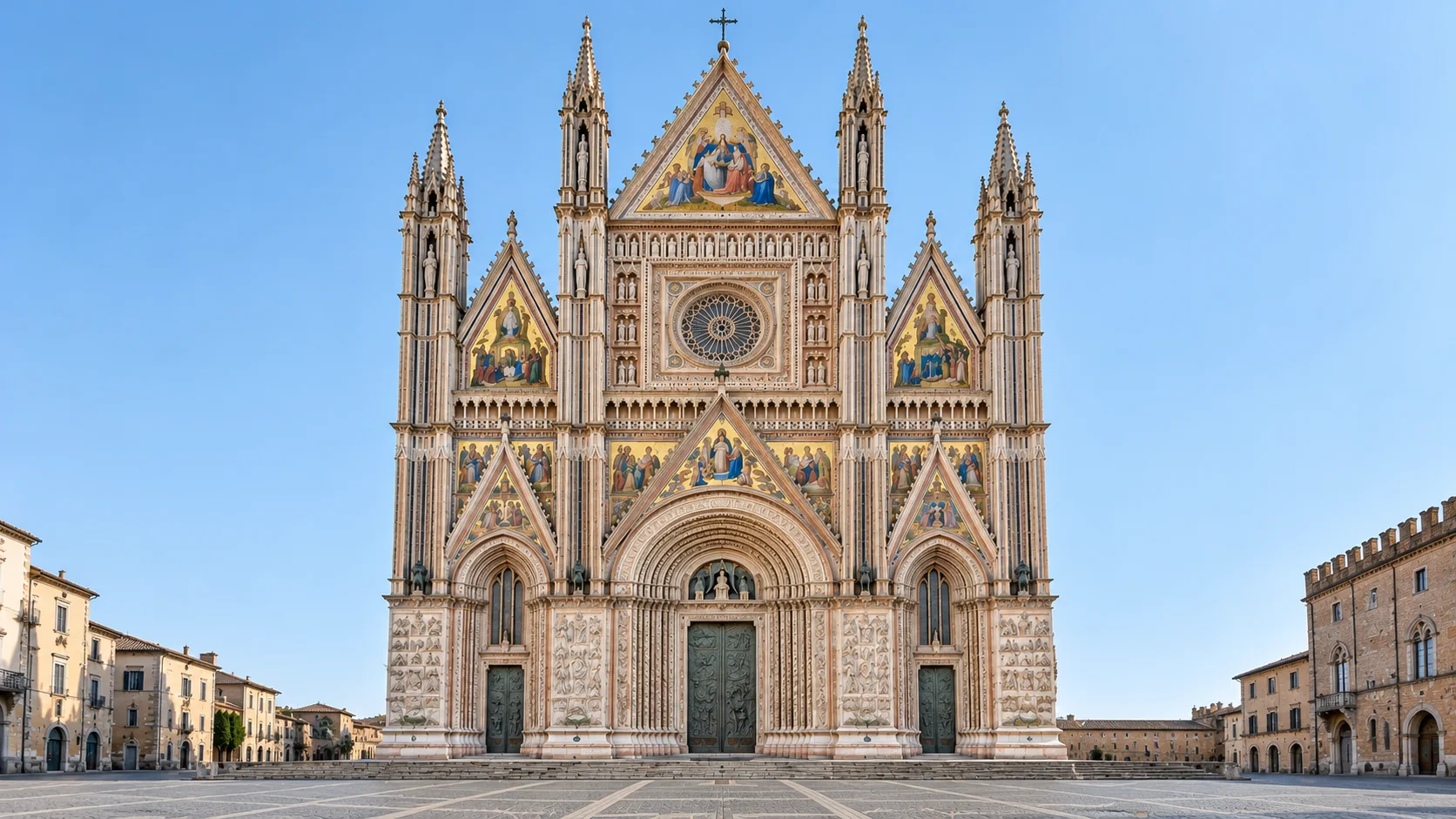
Orvieto: the Cathedral and the Chapel of the Corporal
Why it belongs
The cathedral keeps the Corporal of Bolsena, which Urban IV had brought here, and it was from Orvieto that he extended the feast of Corpus Christi to the whole Church in 1264. St. Thomas Aquinas wrote the hymns of the feast that the Church still sings.
What you would do there
The pilgrim would pray in the Chapel of the Corporal before the reliquary of the corporal, and could read or sing one of the Corpus Christi hymns there. Mass in the cathedral would be sought where it can be arranged.
- 4
Assisi: the Sanctuary of the Renunciation and the tomb of St. Carlo Acutis
Why it belongs
St. Carlo Acutis, canonized in 2025, went to daily Mass from his First Communion, stayed long in adoration and called the Eucharist his highway to Heaven. He rests in the Sanctuary of the Renunciation, the church of Santa Maria Maggiore, in a town he loved without being a Franciscan.
What you would do there
The pilgrim would pray at his tomb, then stay before the tabernacle as he did. The days in Assisi could also include the Basilica of St. Francis, the Basilica of St. Clare and the Porziuncola at Santa Maria degli Angeli, at an unhurried Umbrian rhythm.
- 5
Lanciano: Sanctuary of the Eucharistic Miracle
Why it belongs
Lanciano holds the earliest of the widely known Eucharistic miracle traditions, dated to the eighth century. It is a local tradition whose veneration the Church has long allowed, not an article of faith.
What you would do there
The relics are displayed above the altar of a working church. The visit itself would be brief; what gives it weight is what follows, Mass in that church where it can be arranged or silence before the tabernacle a few steps away.
Prayer and the sacraments
Mass would be the centre of each day where the schedule permits, celebrated at the shrines themselves where it can be arranged or attended with the local community; clergy arrangements are confirmed for each departure. A daily Holy Hour before the Blessed Sacrament would be written into the plan, with Confession as preparation for Communion where confessors are available, and John 6 and the Emmaus account in Luke 24 read along the way.
Pilgrim’s Time
Pilgrim's Time would be kept free in Rome and above all in Assisi, with nothing arranged. On this journey it is the natural hour to go back alone to St. Carlo's tomb or to a quiet side church and sit before the tabernacle for as long as you wish.
Pilgrim Pace
Most of these churches are reached on foot through old towns, and Orvieto and Assisi are hill towns with slopes, steps and uneven paving. Lanciano lies a long way east and would add long road time, and adoration means sitting or kneeling for extended periods, which most people can adapt with a chair.
How Pilgrim Pace worksIf you can stay longer
Additional quiet days in Assisi could follow independently for anyone who wants rest and more time in prayer before travelling home.
Other ways to make this pilgrimage
- Rome & Assisi, with a Eucharistic emphasis. The Rome & Assisi Classic already rests on the same two bases, and a pilgrim could ask about adding St. Carlo's tomb and Orvieto, which its outline does not list, while leaving Lanciano for another time.
- Corpus Christi in Orvieto or Rome. The same route could be timed to the feast and its procession, though the date moves each year and local arrangements would need verifying for the year in question.
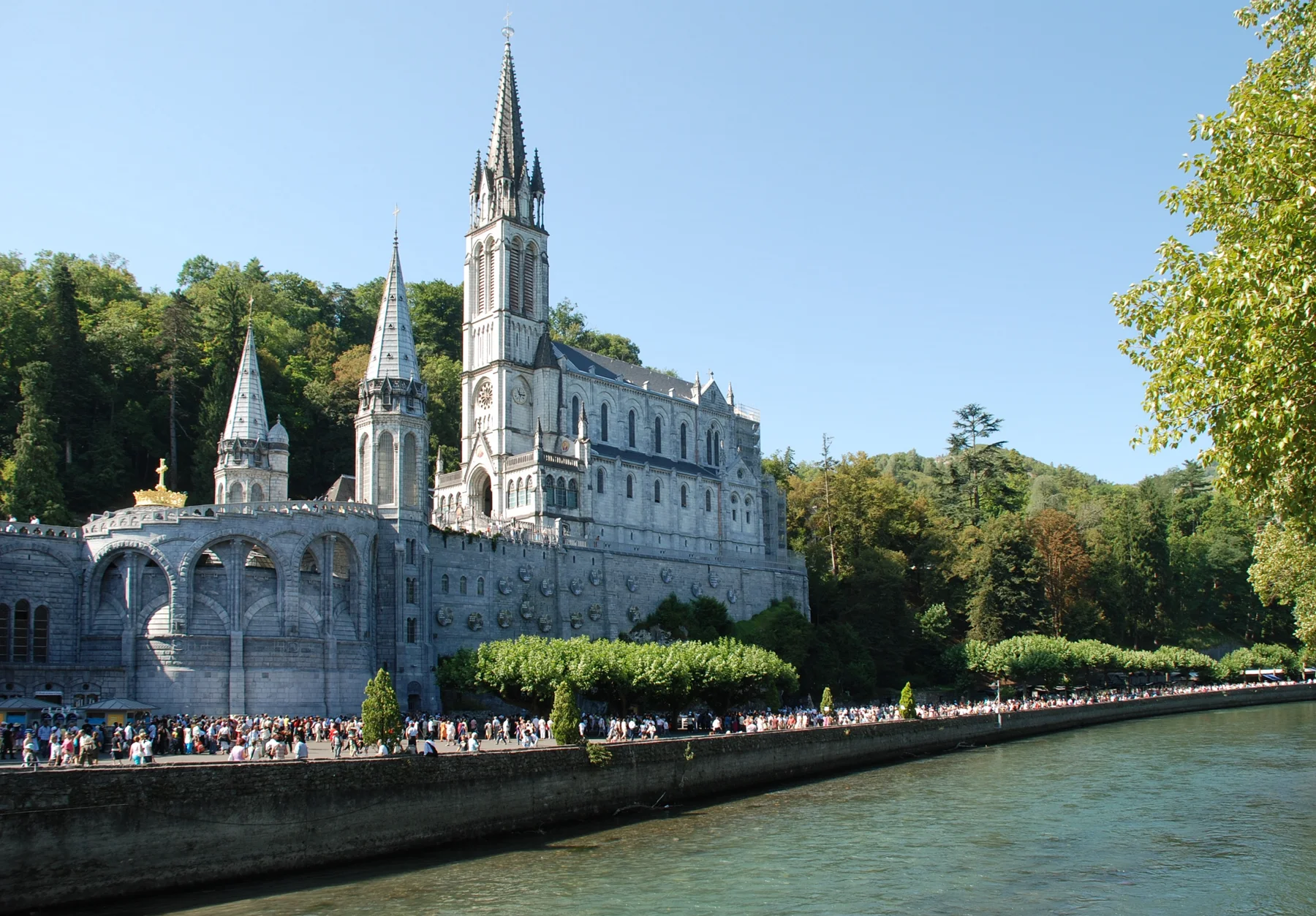
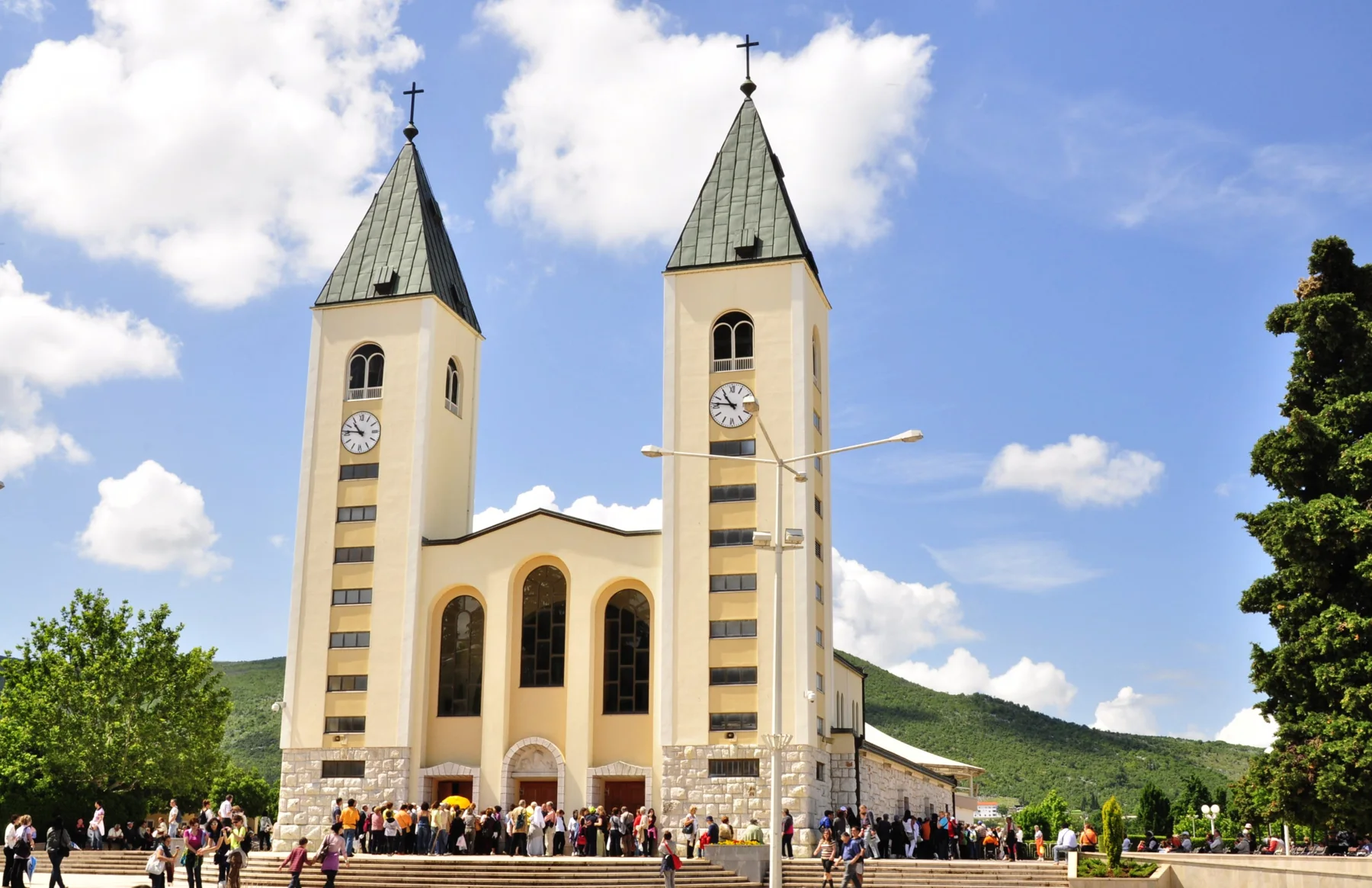
- Fátima and Lourdes. The Fátima & Lourdes Classic could carry the same purpose through the adoration chapel at Fátima and the Eucharistic procession with the blessing of the sick at Lourdes.
No dated departures are currently announced. This is a journey Bold Pilgrim is considering, described so you can picture it. Dates, priest, Gateway Airport and price are published on a departure itself, and only when confirmed.
UNDERSTANDING THIS PILGRIMAGE
A Eucharistic pilgrimage is a Catholic pilgrimage whose purpose is the Eucharist itself: the Mass at the centre of each day wherever it can be celebrated or attended, unhurried time in adoration, and visits to places tied to the Church's Eucharistic faith, such as Orvieto, Bolsena, Lanciano, the tomb of St. Carlo Acutis at the Sanctuary of the Renunciation in Assisi, and the adoration chapels and processions of Lourdes and Fátima. It does not depend on seeing a miracle. Its destination is a Person, Jesus Christ, who is present in every tabernacle, and the journey is meant to send the pilgrim home to Sunday Mass with deeper faith.
What a Eucharistic pilgrimage is
A Eucharistic pilgrimage is a journey ordered to Jesus Christ truly present in the Eucharist: to the Mass, to adoration, and to the places where the Church's faith in that presence has been prayed, defended and handed on.
It is not a specialty devotion added to the faith. It takes the centre of Catholic life and gives it room: the Mass first, then time before the Blessed Sacrament, then the places and saints that help a pilgrim understand what he or she is receiving.
The Catholic foundation
The Church teaches that at Mass the bread and wine become the Body and Blood of Christ, and that the whole Christ is truly, really and substantially present under their appearances. The Catechism calls the change transubstantiation and says plainly that this presence is known by faith, not by the senses (CCC 1374–1376, 1381). That is doctrine. Everything else on a Eucharistic pilgrimage rests on it.
Because Christ remains present as long as the consecrated species remain, the Church reserves the Eucharist in the tabernacle and adores Him outside Mass as well, in silent prayer, exposition and processions (CCC 1378–1379). St. John Paul II wrote that the Church draws her life from the Eucharist, and called worship of the Eucharist outside Mass of inestimable value. The Catechism also names the church building as the privileged place for adoring the Real Presence, in the same paragraph in which it describes pilgrimages as occasions for renewal in prayer (CCC 2691).
Eucharistic miracles: what the Church does and does not say
Many pilgrims first hear of this kind of journey through the Eucharistic miracle shrines, so it helps to set the Church's own words side by side. The Catechism teaches that the presence of Christ in the Eucharist is known by faith, not by the senses (CCC 1381). The Holy See's 2024 norms on alleged supernatural phenomena, which also cover reported Eucharistic miracles, say that such phenomena “do not become objects of faith, which means the faithful are not obliged to give an assent of faith to them.”
The shrines do not all have the same standing, and a careful pilgrimage says which is which. Benedict XVI recounted the tradition that in 1263 a priest at Bolsena saw blood come from the consecrated Host onto the corporal, which Urban IV had brought to Orvieto, where the cathedral still keeps it. Lanciano is an older tradition, dated to the eighth century.
St. Carlo Acutis designed an international exhibition, The Eucharistic Miracles of the World, to draw people to the Mass. It is a work of catechesis that gathers reported Eucharistic miracles of differing status; it is not a Church register, and a place in it is not a Church judgment on each one. Bishop Raffaello Martinelli, who introduced the exhibition as an official of the Congregation for the Doctrine of the Faith, wrote there that “a Christian is not obliged to believe in Eucharistic miracles,” and that “the most common and accessible miracle to all is the one that takes place in our churches whenever Mass is celebrated.”
Why someone is drawn to it
Some come because their faith in the Real Presence is strong and they want to give it time. Some come because it is weak. Talk of how few Catholics understand the Eucharist has left many people wanting to stand somewhere the Church has prayed about this for a thousand years, and to ask honestly for faith.
Many are drawn by a person, and today that person is most often St. Carlo Acutis. From his First Communion he went to Mass every day, stayed long in adoration before the Blessed Sacrament and prayed the Rosary daily; he called the Eucharist his highway to Heaven. He died at fifteen in 2006, was canonized in 2025, and rests in the Sanctuary of the Renunciation in Assisi, a town he loved without being a Franciscan. What he hands on is not a theory about miracles. It is a habit anyone can take up: go to Mass, and stay a while before the tabernacle.
Others come through older teachers: St. Thomas Aquinas, who wrote the hymns of Corpus Christi that the Church still sings, and St. Paschal Baylon, the Franciscan lay brother who spent nights in prayer before the altar. And some are simply tired, and want what St. John Paul II took as his image for the Eucharist, the road to Emmaus: a stranger who walks with two discouraged disciples and is recognized in the breaking of the bread.
Questions pilgrims ask
What is a Eucharistic pilgrimage?
A Eucharistic pilgrimage is a journey made for the sake of the Eucharist: the Mass, time in adoration before the Blessed Sacrament, and visits to places connected with the Church's Eucharistic faith, such as Orvieto, Lanciano, Assisi, Lourdes and Fátima. The phrase is also used for a walking procession with the Blessed Sacrament, like the National Eucharistic Pilgrimage in the United States. In both senses the goal is the same: Jesus Christ, truly present in the Eucharist.
Is a Eucharistic pilgrimage the same as the National Eucharistic Pilgrimage?
No. The National Eucharistic Pilgrimage is a specific American event in which the Blessed Sacrament is carried in procession along set routes, with the public invited to join. A Eucharistic pilgrimage in the wider sense is any pilgrimage centred on Mass, adoration and Eucharistic shrines, at home or abroad.
Full answer: When and where is the National Eucharistic Pilgrimage in 2027?
Where do people go on a Eucharistic pilgrimage?
Italy has the best-known sites: Orvieto and Bolsena, Lanciano, and Assisi, where St. Carlo Acutis rests in the Sanctuary of the Renunciation. Pilgrims also go to Fátima, to Lourdes for its Eucharistic procession, and to the Upper Room and Capernaum in the Holy Land. No miracle site is required: any shrine with Mass and adoration can be the destination.
Do Catholics have to believe in Eucharistic miracles?
The Catechism teaches that Christ is truly, really and substantially present in the Eucharist, and that this presence is known by faith, not by the senses (CCC 1374, 1381). Of reported supernatural phenomena, which include alleged Eucharistic miracles, the Holy See's 2024 norms say that they “do not become objects of faith, which means the faithful are not obliged to give an assent of faith to them.” The preface to the exhibition St. Carlo Acutis designed says the same, “A Christian is not obliged to believe in Eucharistic miracles,” and asks respect for those whose authenticity the Church has recognised.
What is the connection between Bolsena, Orvieto and Corpus Christi?
By tradition, in 1263 a priest troubled by doubts about the Real Presence was celebrating Mass at Bolsena when blood came from the consecrated Host onto the altar cloth, the corporal, which Orvieto Cathedral still keeps. In 1264 Pope Urban IV, then living in Orvieto, extended the feast of Corpus Christi, first celebrated in Liège at the urging of St. Juliana, to the whole Church, and St. Thomas Aquinas composed its liturgy.
What do you do during Eucharistic adoration on a pilgrimage?
You pray in silence before the Blessed Sacrament, usually exposed on the altar in a monstrance. On entering, genuflect or bow, then kneel or sit as you are able. There is no set method: you can adore, give thanks, ask, read Scripture or pray the Rosary quietly, or simply remain there. An hour is traditional and called a Holy Hour, but a shorter visit is fine. Everyone is welcome, including people who are not Catholic.
How should I prepare for a Eucharistic pilgrimage?
Start with the Mass you already have, read John 6 and the road to Emmaus in Luke 24, and try a short visit to the Blessed Sacrament in your parish so that silence is not new to you. Go to confession before you leave: the Catechism teaches that anyone who desires to receive Christ in Eucharistic communion must be in the state of grace (CCC 1415).
Who is the patron saint of the Eucharist?
The Church has named no single patron of the Eucharist itself. St. Paschal Baylon, a sixteenth-century Spanish Franciscan lay brother who spent nights in prayer before the altar, was proclaimed patron of Eucharistic congresses and associations by Pope Leo XIII; his feast is 17 May. St. Carlo Acutis, canonized in 2025, went to Mass and adoration every day and is the saint many pilgrims now turn to first; he holds no formal Eucharistic patronage. Bold Pilgrim asks the prayers of both on this page, St. Carlo as a devotional choice.