
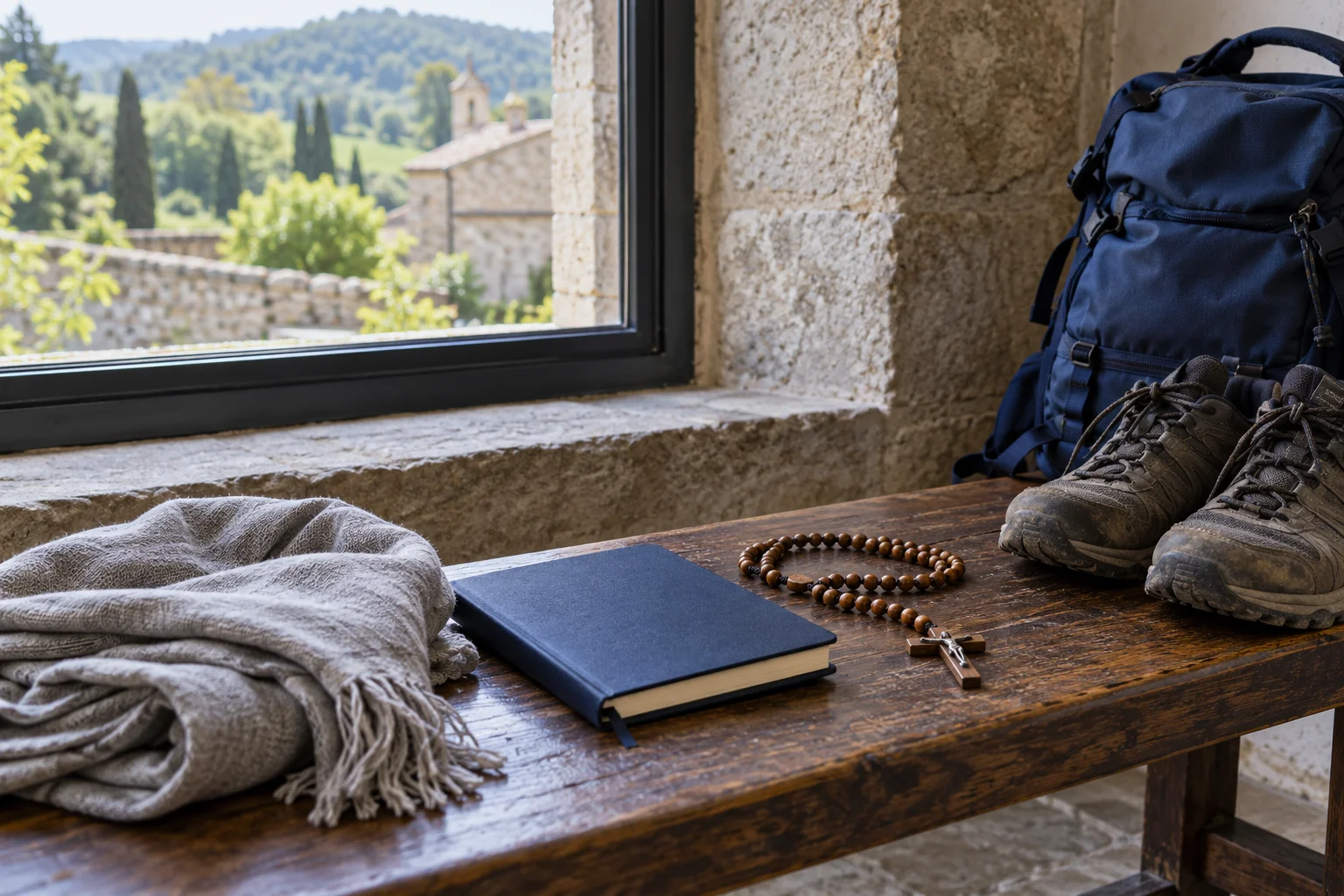
Eight weeks out, book the confession and check the passport. For Europe's Schengen countries the State Department says a passport must be valid for at least three months beyond your planned departure; other destinations set their own rules, so read the country page. Its processing times, as posted on October 5, 2026, were four to six weeks routine and two to three weeks expedited, not counting up to two weeks of mailing each way, so a renewal begun now may need the expedited service. Travelers to Europe now have fingerprints and a photo taken at the border under the EU's Entry/Exit System, at no charge, and a separate online travel authorization, ETIAS, was planned to begin in late 2026; check whether it has started before you fly.
Six weeks out, start walking. Three or four outings a week of two to three miles in the actual shoes will show whether they work before the cobblestones do. Buy travel medical insurance with evacuation coverage: the State Department notes that Medicare does not cover medical costs outside the United States and that an air ambulance home can cost $20,000 to $200,000. Carry medicines in their original packaging with copies of the prescriptions and a doctor's letter, and check each country's embassy for restricted drugs.
Four weeks out, settle the spiritual plan. An intention written on a card and carried through the pilgrimage keeps the purpose clear. If your pilgrimage offers a plenary indulgence, as at a Holy Door in a Holy Year, the conditions are confession, Communion, prayer for the Pope's intentions, and detachment from sin, and the Apostolic Penitentiary allows confession within about twenty days before or after.
Two weeks out, pack, photocopy the passport, and tell your bank you will be using your cards abroad. The last week is for rest, not errands.