
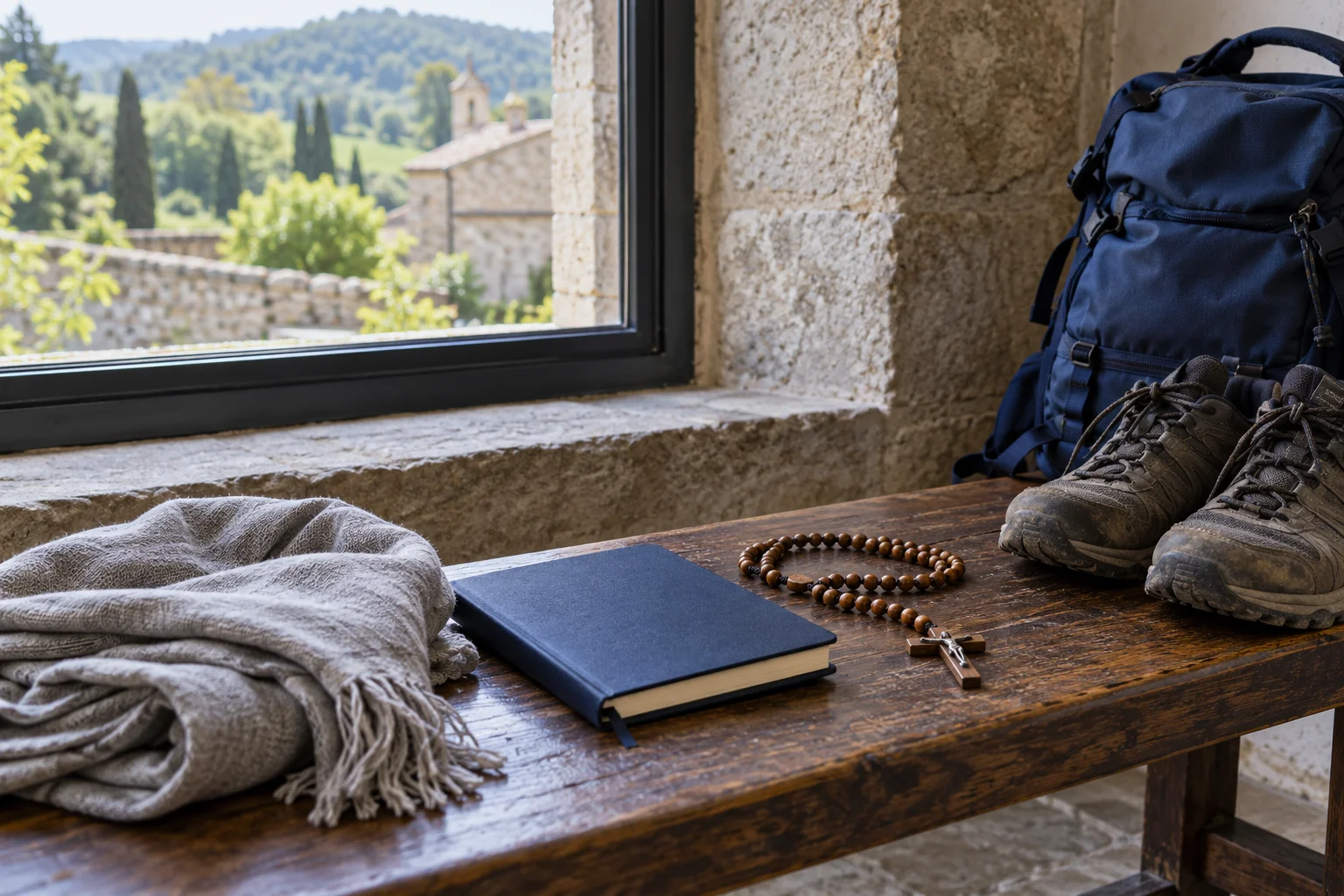
Each item has a reason. The State Department advises keeping medicines in their original packaging, carrying copies of prescriptions and a doctor's letter that lists them by generic name, and checking each country's embassy for restricted drugs. Shoulders and knees covered is the rule at St. Peter's and the safe standard at every church. The day bag should be small: St. Peter's has no luggage storage and advises against large bags. Add a refillable water bottle, sunscreen and a hat, a notebook, and the list of intentions people have asked you to carry.
A few things change by destination. For Rome and Assisi, a scarf or light layer for cool churches, and shoes with grip for stone streets and Assisi's slopes. For the Holy Land, sun protection and sturdy shoes; the Holy Sepulchre alone has steep stairs up to Calvary and down to its lower chapels. For Lourdes and Fátima, a rain layer and something warm for the evening processions; the baths at Lourdes ask nothing of you in advance, since individuals need no booking and the sanctuary opens them in the morning from April to November. For Medjugorje, closed shoes with grip for the hills, which the parish describes as steep, and a small flashlight if you climb early or late.
The Camino de Santiago is the exception, because there the pack is carried: American Pilgrims on the Camino suggests keeping it to about 10 percent of your body weight. For any group pilgrimage, ask the organizer for the packing list, which may add items for a particular Mass or walk.