THE JOURNEY
Signs of the Gospel: Cana, the Sea of Galilee, Bethany and Jerusalem
- Where
- The Holy Land
- Status
- Under consideration
This journey would go to the places of Christ's own signs, because every later miracle the Church has examined takes its meaning from them. It would follow the order of St. John's Gospel: north first, to Cana, where Jesus worked His first sign, and to the shore of the Sea of Galilee; then up to Jerusalem by way of Bethany; and last to the Holy Sepulchre, the place of the Resurrection, the one sign Jesus offered to those who demanded a sign. Two bases, Galilee and Jerusalem, would keep the route simple, and the Gospel would be read aloud at each place. The miracles of Jesus belong to Scripture and the Church's faith; where exactly each one happened rests on tradition and archaeology, and you would be told which is which. Any journey here is subject to conditions in the Holy Land at the time.
The route, and why each place belongs
- 1
Cana in Galilee
Why it belongs
According to St. John, Jesus worked His first sign here, changing water into wine at the request of Mary, His Mother. It sets the pattern for the whole pilgrimage: she brings the need to her Son and points to Him.
What you would do there
The group would read the account of the wedding feast (John 2:1-11) on the spot and name, aloud or in silence, the intentions carried from home. You would also hear honestly what the Custody of the Holy Land itself notes: local tradition has placed Cana at different sites over time. The sign belongs to the faith; the address belongs to tradition.
- 2
The shore of the Sea of Galilee
Why it belongs
The lakeshore is where the Gospels place the feeding of a crowd and several more of Christ's signs. The Catechism says these mighty works show that the Kingdom is present in Him and "are not intended to satisfy people's curiosity or desire for magic" (CCC 547-548).
What you would do there
Most of what you would find is quiet: water, stones, an open Gospel. The days here would be slow ones, with the lakeside passages read where the Gospels set them, time to sit by the water, and a Rosary that returns to the first sign at Cana. His healings, the Catechism says, pointed to "a more radical healing: the victory over sin and death" (CCC 1505), and this is the place to pray with that in mind.
- 3
Bethany
Why it belongs
On the way up to Jerusalem lies Bethany, where St. John sets the raising of Lazarus, the last of the signs he recounts before the Passion. It belongs here because it is the sign that most plainly looks ahead to what Jesus Himself was about to undergo.
What you would do there
A shorter visit, made on the day of arrival in Jerusalem or the day after: the eleventh chapter of St. John read on site, and prayer for the dead and for those at home who are grieving. As elsewhere, the identification of the place rests on tradition and archaeology, and it would be presented that way.
- 4
Jerusalem: the Church of the Holy Sepulchre
Why it belongs
Asked for a sign on demand, Jesus offered only "the sign of Jonah," His own death and Resurrection (Matthew 12:39-40). The Holy Sepulchre is where the Church keeps the memory of that Resurrection, the miracle Catholics profess above all others and the measure of every other on this road.
What you would do there
The pilgrim would pray at the place of the tomb, more than once if possible and at different parts of the day, and leave there the intentions carried through the whole journey. Before leaving Jerusalem the group would read the Lord's words to St. Thomas, "Blessed are those who have not seen and have believed" (John 20:29), as the last word of the pilgrimage.
Prayer and the sacraments
Mass would be celebrated where the schedule permits, at or near the places of the signs where it can be arranged, and clergy arrangements are confirmed for each departure. The Gospel of John would be the prayer book of the journey, read aloud at each stop, with the Rosary, silence by the lake and Confession where confessors are available. The petition of the pilgrimage would be the one from St. Mark: "I do believe, help my unbelief."
Pilgrim’s Time
Pilgrim's Time, the protected unscheduled time inside each day, would be kept for the lakeshore in Galilee and for returning alone to the Holy Sepulchre in Jerusalem. It is the time for the prayer you came to make, for writing down the intentions you carry for others, or simply for rest.
Pilgrim Pace
The Holy Land involves uneven ground and heat in some seasons, with a good deal of standing at the holy places and a transfer day between Galilee and Jerusalem. Keeping to two bases would limit the packing and the coach time. Anyone travelling while ill should plan with their doctor.
How Pilgrim Pace worksOther ways to make this pilgrimage
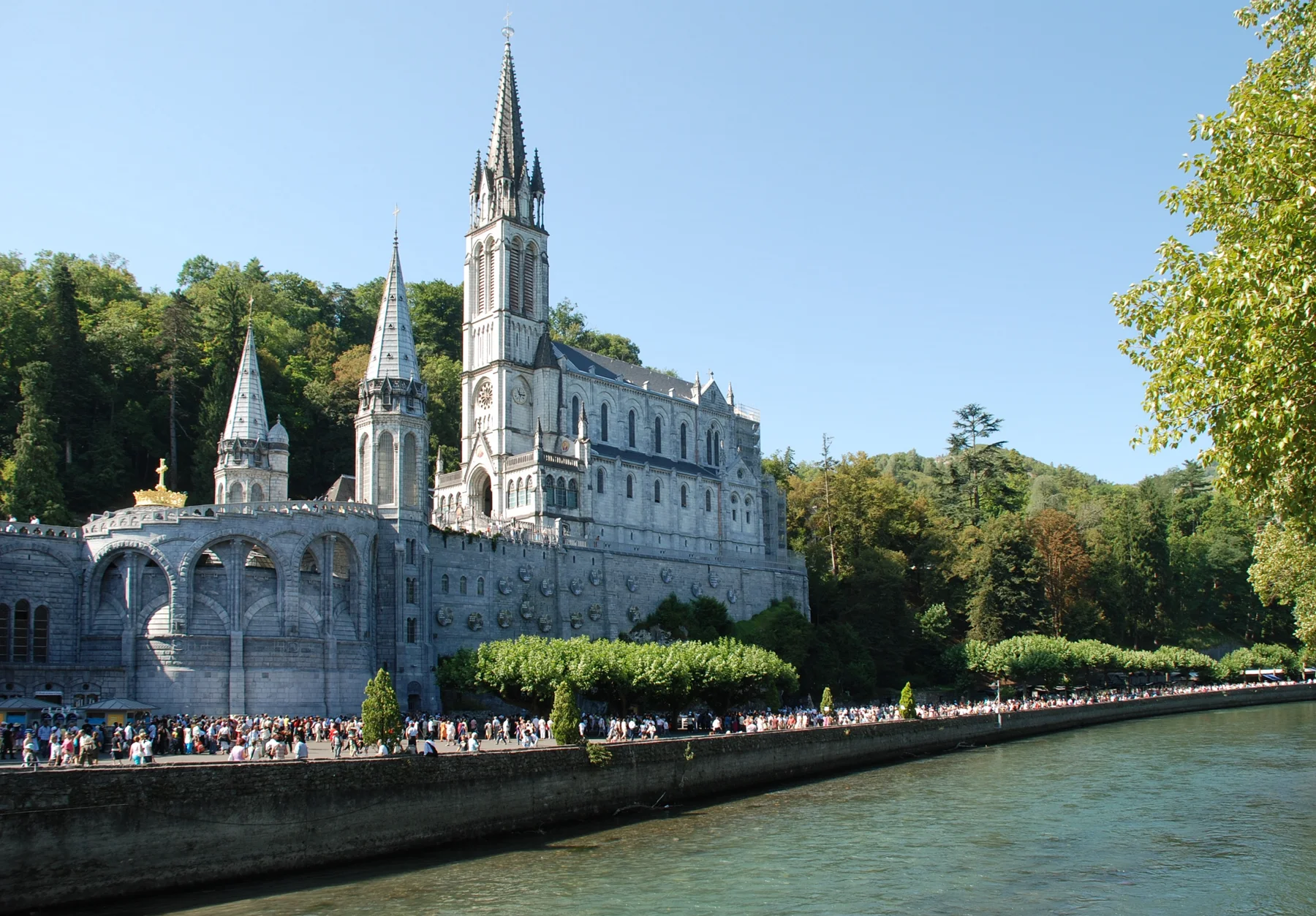
- Fátima & Lourdes. The existing Classic gives several days to each shrine: Fátima, where in 1930 the bishop of Leiria declared the children's visions worthy of belief, and Lourdes, where a Medical Bureau examines reported cures and it is a bishop, not a doctor, who declares one miraculous.
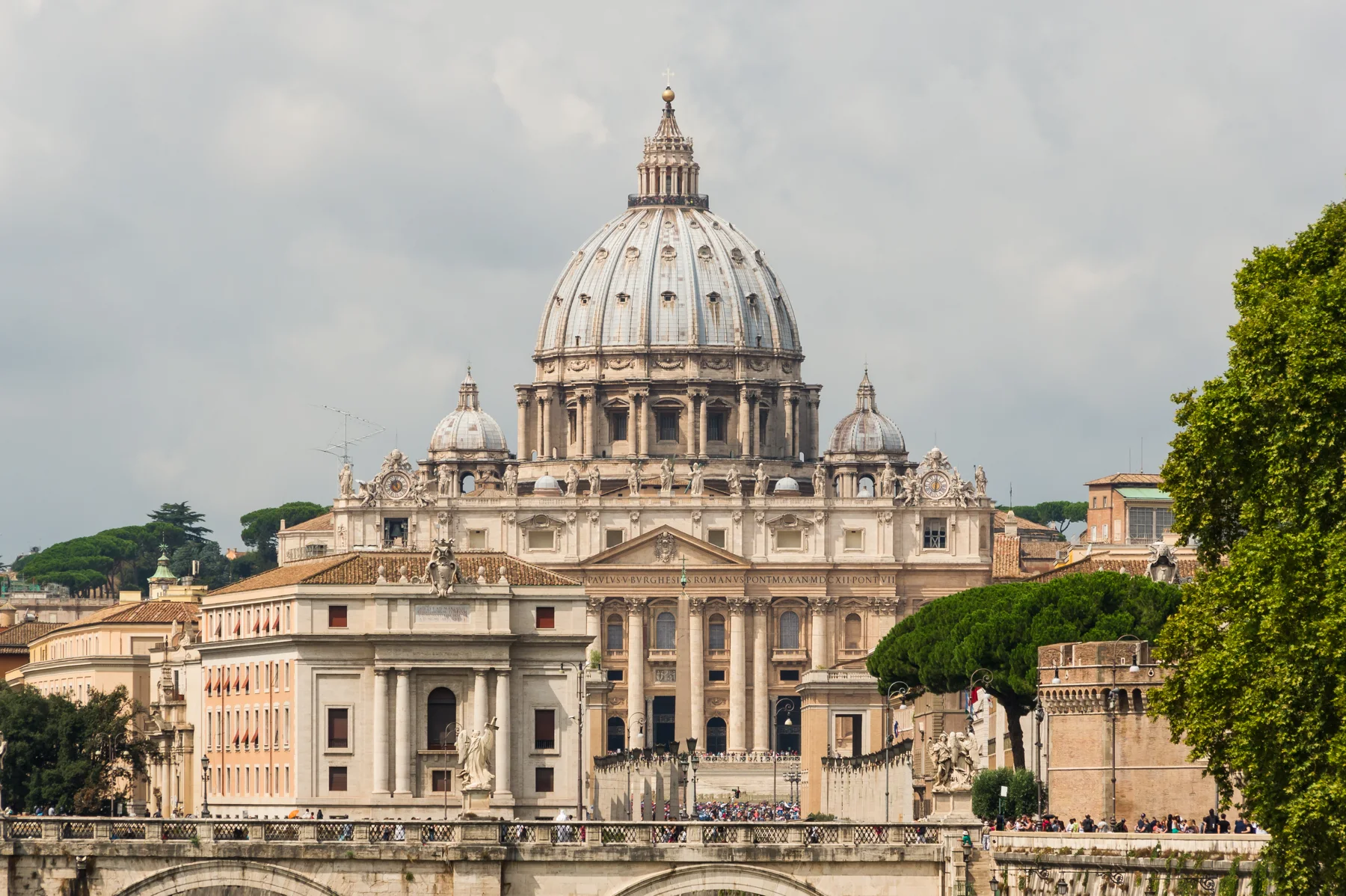
- Italy, claim by claim: Rome, Orvieto, Assisi and Lanciano. A journey that could build on the Rome & Assisi Classic and introduce each stop by its precise standing, from the tomb of St. John Paul II and the tomb of St. Carlo Acutis, whose causes included formally recognized healings, to the long-venerated Eucharistic traditions of Orvieto and Lanciano.
- Lourdes in depth. A longer stay at the one sanctuary, which could include learning how its Medical Bureau works, if the sanctuary offers that to groups at the time, alongside the ordinary prayer of the shrine.
No dated departures are currently announced. This is a journey Bold Pilgrim is considering, described so you can picture it. Dates, priest, Gateway Airport and price are published on a departure itself, and only when confirmed.
UNDERSTANDING THIS PILGRIMAGE
Yes: the Catholic Church teaches that God still acts in the world, and a miracles pilgrimage is a journey made to bring Him what you cannot fix yourself, in places where Jesus Christ worked His signs or where the Church has recognized or long venerated an extraordinary sign of God's action: the Gospel sites of the Holy Land, Lourdes, Fátima, Guadalupe, the Eucharistic miracle traditions of Italy, and the tombs of saints whose causes included examined healings. Its purpose is faith in Christ, to whom every authentic sign points. A serious one also tells the pilgrim what kind of claim each place makes, because a formally recognized miracle, an approved apparition, a Eucharistic tradition and an unjudged local custom are different things. No shrine promises a miracle, and neither does Bold Pilgrim.
The Catholic foundation: signs that point to Christ
The Gospels do not present the miracles of Jesus as displays of power. St. John calls them signs and says why he wrote them down: "that you may [come to] believe that Jesus is the Messiah, the Son of God, and that through this belief you may have life in his name" (John 20:31). The Catechism reads them the same way. His mighty works show that the Kingdom is present in Him, they invite belief, and they "are not intended to satisfy people's curiosity or desire for magic" (CCC 547-548).
The Church holds two things together here. Miracles are real and can be known: the First Vatican Council rejected the claim that no miracle is possible and that the accounts in Scripture are fables, and the Catechism counts "the miracles of Christ and the saints" among the motives of credibility that show faith is "by no means a blind impulse of the mind" (CCC 156). And miracles are not the centre. Jesus "did not come to abolish all evils here below" but to free people from sin (CCC 549), and His healings pointed to "a more radical healing: the victory over sin and death" (CCC 1505). Asked for a sign on demand, He offered only "the sign of Jonah," His own death and Resurrection (Matthew 12:39-40).
So a Catholic pilgrimage of this kind starts with Christ's own works in Galilee and Jerusalem and reads everything later in their light: a cure at Lourdes, a healing obtained through a saint's intercession, a Eucharistic tradition kept for centuries. Later signs add nothing to the Gospel. Where they are authentic, they send people back to it.
Different kinds of claim, in the Church's own words
The word "miracle" gets used for very different things, and most confusion about this subject comes from running them together. This page keeps them apart and, for each, reports what the Church herself has said.
The miracles of Scripture belong to public revelation. Catholics profess them, the Resurrection above all. Of everything later the Catechism says: "Throughout the ages, there have been so-called 'private' revelations, some of which have been recognized by the authority of the Church. They do not belong, however, to the deposit of faith" (CCC 67).
Formally recognized miracles arise in two settings. In the causes of saints, a healing attributed to a candidate's intercession is studied by physicians, then by theologians, then by cardinals and bishops, and the Pope decides. At Lourdes, the sanctuary reports that bishops have recognized 72 cures as miraculous out of more than 7,000 reported to it.
Approved apparitions are private revelation, and what was approved needs stating exactly. Of Lourdes, Pope Pius XII wrote that St. Bernadette's testimony was "wisely put to the test by episcopal authority and approved as early as 1862." At Fátima, as the Shrine's published documents record, the bishop of Leiria declared on 13 October 1930 that the visions of the three children were worthy of belief and officially permitted the cult of Our Lady of Fátima. At Guadalupe the Church venerates the image and keeps the feast, and in 2002 Pope St. John Paul II canonized Juan Diego there, speaking of "the blessed image of Our Lady imprinted on his tilma."
Medjugorje stands differently. The Holy See's 2024 Note granted a nihil obstat that recognizes spiritual fruits and permits pilgrimage and public devotion, while stating that this "does not imply a declaration of the supernatural character of the phenomenon."
Eucharistic miracle traditions are another kind again, and they do not all have the same standing. Lanciano, and the Corporal of Bolsena kept in Orvieto Cathedral, are medieval traditions around which veneration has long been permitted. Reported Eucharistic phenomena now fall under the Holy See's 2024 Norms, which say of all such phenomena that "the faithful are not obliged to give an assent of faith to them." Bold Pilgrim's Eucharistic pages treat the sites one by one.
Last come local customs and reports on which the Church has given no judgment. Bold Pilgrim describes these as traditions or reports and does not call them miracles.
How the Church weighs a claim
In a saint's cause the local bishop first conducts an inquiry into the alleged miracle. In Rome the case goes to a board of physicians, whose question is strictly medical: can this recovery be explained? Under regulations issued in 2016 at least five of seven experts, or four of six, must agree that it cannot. Only then do theologians, and after them cardinals and bishops, consider whether the healing is to be attributed to God through that person's intercession, and the Pope decides.
Lourdes has its own path. The sanctuary's Medical Bureau receives reports of cures, an international medical committee may conclude that a case is "medically unexplained in the current state of scientific knowledge," and it is then a bishop, not a doctor, who declares a miracle.
Reported apparitions, messages, weeping images and Eucharistic phenomena are handled under Norms that took effect on 19 May 2024. The diocesan bishop investigates and proposes one of six conclusions, from a nihil obstat down to a declaration that the event is not supernatural, and the Dicastery for the Doctrine of the Faith confirms it or not. The Norms state that "as a rule" neither bishop nor Dicastery will now declare a supernatural origin, although the Pope can authorize a special procedure, and they list among the warning signs "an overt pursuit of profit, power, fame, social recognition, or other personal interest." A separate answer sets out all three procedures in full.
Why someone is drawn to it, and an honest caution
People rarely come to this subject out of curiosity alone. Someone is sick. A child has left the faith. A marriage is failing. Or the question is plainer: does God do anything at all? Others come in thanksgiving, sure that a prayer was answered and wanting to say so somewhere that matters.
The Church does not scold any of this. The Congregation for the Doctrine of the Faith taught in 2000 that a sick person's desire for healing is "both good and deeply human," and observed that healings connected with places of prayer are attested throughout the Church's history, at the shrine of St. Martin of Tours, at Santiago de Compostela, and at Lourdes in our own time.
The caution is equally plain. No shrine promises a miracle, and neither does Bold Pilgrim. The Catechism says that "even the most intense prayers do not always obtain the healing of all illnesses" (CCC 1508). Faith that makes a sign its condition has the order backwards; the Lord's word to Thomas was "Blessed are those who have not seen and have believed" (John 20:29). The prayer that fits a pilgrim here is the one a desperate father made to Jesus: "I do believe, help my unbelief" (Mark 9:24). He was heard.
Questions pilgrims ask
What does the Catholic Church mean by a miracle?
A sign worked by God that points beyond itself. The Catechism says the mighty works of Jesus show that the Kingdom is present in Him, invite belief, and "are not intended to satisfy people's curiosity or desire for magic" (CCC 547-548). It counts "the miracles of Christ and the saints" among the motives of credibility for faith (CCC 156). In practice the Church uses the word strictly. For a healing to be recognized in a saint's cause, physicians must first judge it scientifically unexplained; theologians, cardinals and bishops, and finally the Pope then judge whether it is owed to God through that person's intercession.
How does the Catholic Church investigate a miracle?
By one of three procedures, depending on the claim. A healing in a saint's cause goes from the local bishop to a board of physicians in Rome, then to theologians, cardinals and bishops, and the Pope; a cure at Lourdes goes through the sanctuary's Medical Bureau and an international medical committee to a bishop; reported apparitions and similar phenomena are examined by the diocesan bishop under the Holy See's 2024 Norms. The full answer sets out each one.
Full answer: How does the Catholic Church investigate a miracle?
Do Catholics have to believe in miracles?
Catholics profess the miracles of Jesus recorded in Scripture, above all His Resurrection, and the First Vatican Council rejected the claim that miracles are impossible or can never be known. Of later private revelations the Catechism says that they "do not belong, however, to the deposit of faith" (CCC 67), and the Holy See's 2024 Norms say of reported supernatural phenomena that "the faithful are not obliged to give an assent of faith to them."
Do Catholics have to believe in approved apparitions such as Lourdes and Fátima?
No. They are private revelations, and Benedict XVI wrote that such a revelation is "a help which is proffered, but its use is not obligatory." The full answer explains what Church approval does and does not mean.
Full answer: Do Catholics have to believe in Marian apparitions?
Do miracles still happen today?
The Church holds that they do, and she keeps examining cases. The Sanctuary of Lourdes counts 72 cures recognized as miraculous among more than 7,000 reported, the most recent declared by an Italian bishop in April 2025, and the canonization of St. Carlo Acutis on 7 September 2025 followed the recognition of two healings. The Lourdes answer gives the figures and the procedure.
Full answer: How many miracles have been recognized at Lourdes?
How many miracles does it take to become a saint?
Ordinarily two: one attributed to the candidate's intercession for beatification, and a second, occurring after beatification, for canonization. A martyr can be beatified without a miracle, and the Pope may waive the requirement, as Pope Francis did for the second miracle of St. John XXIII. The answer on how the Church investigates a miracle gives the detail.
Full answer: How does the Catholic Church investigate a miracle?
Is it wrong to go on pilgrimage hoping for a miracle?
No. The Congregation for the Doctrine of the Faith calls a sick person's desire for healing "both good and deeply human," and notes that healings connected with places of prayer are attested throughout the Church's history. What the Gospel warns against is demanding a sign as a condition of faith. Jesus refused signs on demand (Matthew 12:39), yet He answered a father who prayed, "I do believe, help my unbelief" (Mark 9:24). Ask plainly for what you need and leave the answer to God. No shrine or organizer can promise an outcome, and Bold Pilgrim does not.
Does science decide whether something is a miracle?
No, and careful Catholic sources do not claim that it does. Physicians can establish that a cure was real and say whether medicine can account for it; the International Medical Committee of Lourdes uses the formula "medically unexplained in the current state of scientific knowledge." Whether an unexplained cure is a miracle is a further judgment, made by a bishop or, in a saint's cause, by theologians, cardinals and bishops, and the Pope. The Catechism counts miracles among the signs that show faith is "by no means a blind impulse of the mind" (CCC 156). Be wary of any claim that a laboratory has settled the matter.