THE JOURNEY
Come and See: Rome and Assisi for an Honest Guest
- Where
- Italy, Vatican City
- Length
- About nine days
- Status
- Under consideration
This journey would follow Bold Pilgrim's Rome & Assisi route, two bases with unhurried time in each, shaped for a guest by what surrounds it: a short plain-language explanation before each Mass and shrine, a visit to a catacomb, and an evening set aside for questions. Rome would come first because a guest's first questions are about what Catholics claim, and the city answers them in stone: the tomb the great basilica was built over, and the burial places of the first Roman Christians. Assisi would follow because, after the claims, a guest can meet the holiness they are meant to produce, in a saint almost everyone already admires and in one who died in 2006. No dated departures are currently announced.
The route, and why each place belongs
- 1
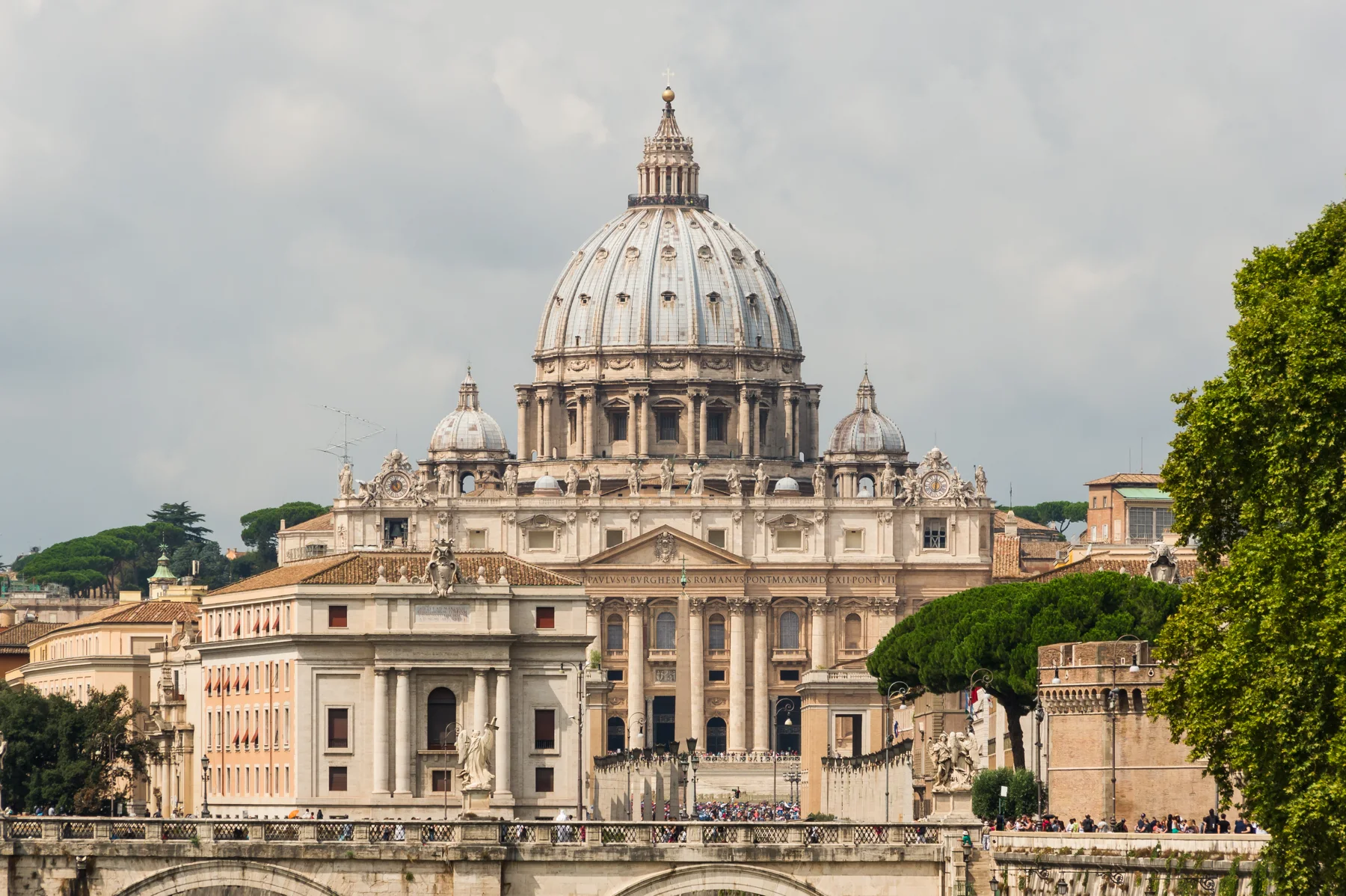
St. Peter's Basilica and the tomb of St. Peter
Vatican CityWhy it belongs
The clearest single answer to the question "Why do Catholics have a Pope?" is the tomb this basilica was built over, identified by early tradition and by the twentieth-century excavations beneath it. The basilica is open to visitors of any faith.
What you would do there
After a short explanation of what you are about to see, you would enter the basilica with protected time to pray or simply to look, and could attend a public Mass if the schedule permits. Where tickets can be had, a visit to the excavations under the basilica could be added.
- 2
St. John Lateran and St. Mary Major, Rome
ItalyWhy it belongs
These two great basilicas connect the story of the city with the Church's liturgical life, and St. Mary Major brings a guest to what is often the hardest part of Catholicism for a Protestant: Mary. It helps to begin where Scripture does, at Cana, where she says, "Do whatever he tells you" (John 2:5).
What you would do there
You would walk through both basilicas while they are in use for worship, seeing candles, images, and people waiting for confession. Each practice would be explained plainly, including that Catholics honour Mary and the saints and ask their prayers but adore God alone, and you would be free to watch, to join, or to sit quietly.
- 3
A Roman catacomb and St. Paul Outside the Walls
ItalyWhy it belongs
The catacombs are Christian burial places from the centuries before Christianity was legal. They let a guest see how the first Roman Christians buried their dead and honoured their martyrs, long before any emperor favoured the Church.
What you would do there
You would go down the steps into a catacomb and stand among the graves of the first Roman Christians, then visit the Basilica of St. Paul Outside the Walls. The rest of the day would stay open for a neighbourhood church, a meal, or rest.
- 4
Assisi: the Basilica of St. Francis and the Basilica of St. Clare
ItalyWhy it belongs
St. Francis is admired by people of every faith and none, so he gives a guest a way into Catholic holiness that needs little introduction. After Rome's scale, Assisi is a small hill town with a quieter rhythm.
What you would do there
After the transfer into Umbria and a slow introduction to the town, you would visit the Basilica of St. Francis, where his tomb is, and the Basilica of St. Clare, with space for prayer and an independent lunch.
- 5
Assisi: the Sanctuary of the Renunciation (Santa Maria Maggiore)
ItalyWhy it belongs
St. Carlo Acutis, who died in 2006 at the age of fifteen and was canonized in 2025, rests here, a short walk from the tomb of St. Francis. He taught himself computing, played football and never missed daily Mass, and he makes it hard to treat Catholic belief as a museum piece. He was not a Franciscan.
What you would do there
You would have quiet time at his tomb and would hear why he called the Eucharist his "highway to Heaven". That is the same belief that explains why Catholics kneel at Mass.
- 6
Santa Maria degli Angeli and the Porziuncola
ItalyWhy it belongs
The basilica in the valley below Assisi holds the Porziuncola and completes the Franciscan days of the route. It is placed last so that the journey would end in stillness, not in more explanation.
What you would do there
A local transfer would bring you down to the valley for the visit. The afternoon would then be kept free, before a farewell dinner where the last questions could be asked.
Prayer and the sacraments
Mass would be at the centre of the days where the schedule permits, and clergy arrangements are confirmed for each departure. A guest could stand, sit and sing with everyone else, listen to the Scripture readings, and stay in place at Communion; in the words of the U.S. bishops' guidelines, members of churches not yet fully united with the Catholic Church are ordinarily not admitted to Holy Communion, and the reason would be given honestly. The Rosary could be prayed on the road, and an evening of silent adoration could be offered where it can be arranged; a guest may join, listen, or sit quietly.
Pilgrim’s Time
Open afternoons in Rome and Assisi would be yours: to return to a church that moved you, to rest, to walk, or to talk through what bothered you with someone who can answer without defensiveness. The proposed morning at the Vatican Museums and the Sistine Chapel would be optional, with a quieter alternative available.
Pilgrim Pace
Rome means long periods on your feet, cobbles, security queues and steps down into catacombs and excavations, and Assisi is a steep hill town with some steps. Days would start early and include time standing or kneeling in churches; sitting is always acceptable.
How Pilgrim Pace worksOther ways to make this pilgrimage
- A shared Holy Land journey. For Catholics and their Protestant or Orthodox family and friends, a journey could be built around the Gospel sites all Christians hold in common, with Mass wherever it can be arranged and honest notes where traditions identify sites differently, subject to conditions at the time.
- The Camino de Santiago. The Catholic pilgrimage that people who are not Catholic already walk in large numbers could suit a guest who would prefer a road that asks for effort before it asks for belief.
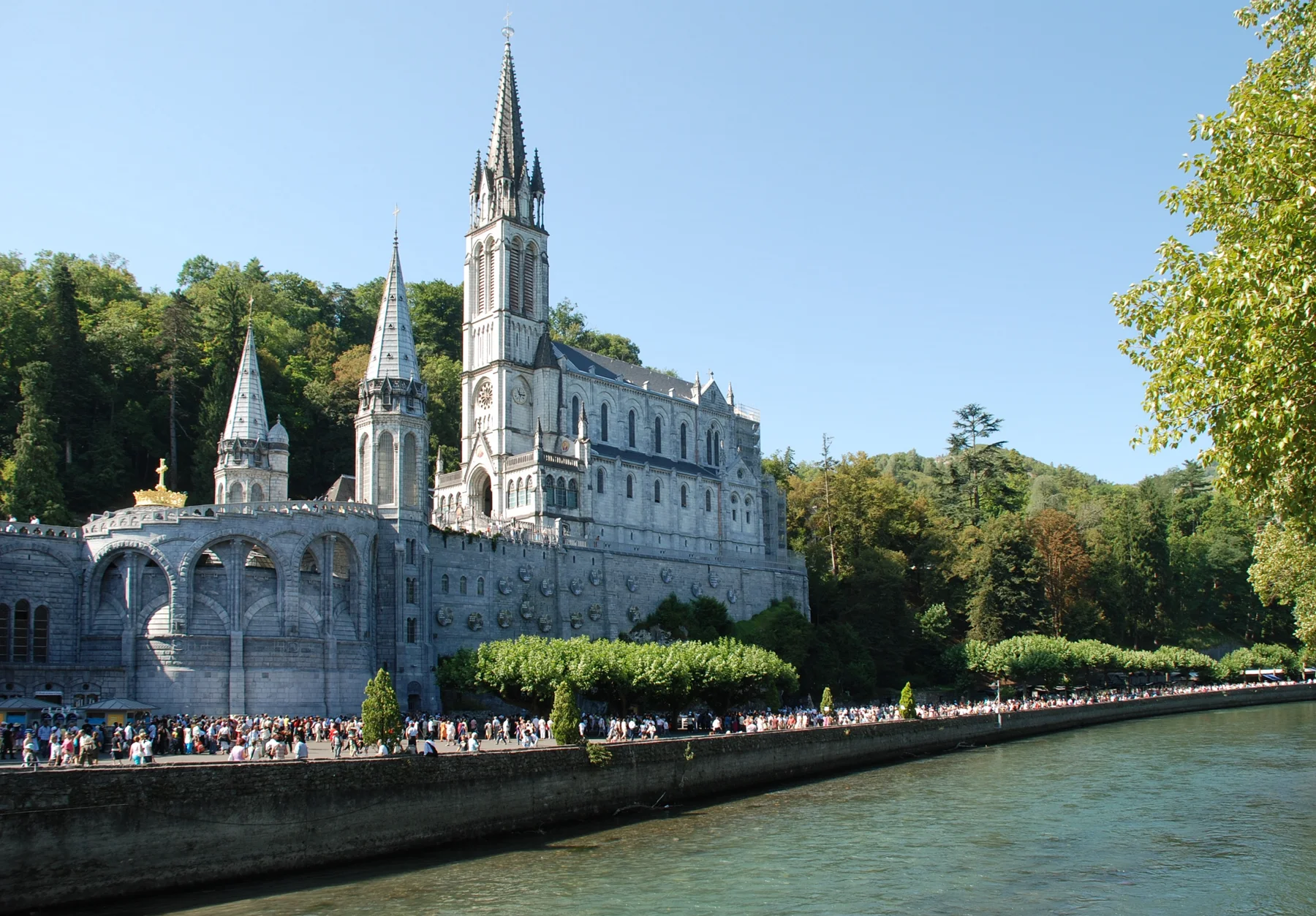
- Fátima & Lourdes, alongside a Catholic you love. Both sanctuaries are open to everyone, but the journey is strongly Marian and devotional, so it would suit a guest accompanying a Catholic better than a first look at the Church.
No dated departures are currently announced. This is a journey Bold Pilgrim is considering, described so you can picture it. Dates, priest, Gateway Airport and price are published on a departure itself, and only when confirmed.
WHAT YOU MAY EXPERIENCE
What a guest might experience
Expect to be a guest in someone else's house, and to be treated as one. The days are built around prayer: Mass where the schedule permits, time in churches that are still used for worship, perhaps the Rosary on the road, perhaps an evening of silent adoration. You may take part as far as your conscience allows. You can stand and sit with everyone else, sing, listen to the Scripture readings (which you may know better than some of the Catholics), and stay in your place at Communion. No one should ask you where you stand.
Expect some things to move you and some to bother you. The scale of St. Peter's, the bones in a reliquary, a line of people waiting for confession, a crowd praying to Mary: guests often find one of these beautiful and another hard to take. Both reactions are worth saying aloud to someone who can answer. A good Catholic Curious pilgrimage makes room for questions over dinner and does not treat a hard question as an attack.
In Assisi, a short walk from the tomb of St. Francis, a guest also meets a saint of this century. St. Carlo Acutis died in 2006 at the age of fifteen, was canonized on 7 September 2025, and rests at the Sanctuary of the Renunciation (Santa Maria Maggiore). He taught himself computing, played football, went to Mass every day and called the Eucharist his "highway to Heaven." He was not a Franciscan, and the exhibition he compiled is catechesis that gathers reported Eucharistic miracles of differing status, not a Church register. He makes it hard to treat Catholic belief as a museum piece.
Do not expect a guaranteed result. Some guests come home with more respect for Catholics and no wish to become one. Some come home with questions they did not have before. Some, in their own time, ask how a person becomes Catholic. The pilgrimage is not judged by which of these happens. If it has any purpose beyond itself, it is the one Philip had: to bring a friend to Jesus Christ and then get out of the way.
In practice
- Attending Mass as a welcome guest, with what is happening explained beforehand
- Standing at the tomb of St. Peter and in the burial places of the first Roman Christians
- Praying in Assisi at the tombs of St. Francis and of St. Carlo Acutis
- Sitting in silence during Eucharistic adoration
- Hearing the Rosary prayed and learning where its words come from
- Unhurried conversation with Catholics who can answer questions without defensiveness
Who it is for, and who it is not for
It may suit a Protestant, Anglican or Orthodox Christian who wants to understand Catholics from the inside; the non-Catholic husband, wife, fiancé or friend of a Catholic; an adult child travelling with believing parents; someone in or considering OCIA, the Church's process for adults who wish to become Catholic; and someone who is not sure there is a God and is willing to look. Catholics belong on it too, usually as the person who did the inviting.
If your husband or wife is Catholic and you are not, this page is written for you as much as for anyone. Couples in which one is Catholic and one is not often travel together. It is worth talking beforehand about how it will feel for both of you when one receives Communion and the other does not, and telling the organizer, so that no one is surprised. Going is an act of love and attention to your spouse's faith; it commits you to nothing further.
It is not a neutral cultural tour. The itinerary is Catholic, the prayer is Catholic, and the explanations are given by people who believe what they are explaining. It is not a debate, and it is not a conversion programme. A Catholic who has been away from the Church and is thinking about coming back is in a different position from a guest, with the way back through confession already open to him or her; the Return to the Faith page is written for that person.
No dated departures are currently announced. For now, a Catholic Curious pilgrimage is a way of travelling the journeys Bold Pilgrim already describes, Rome and Assisi above all. Clergy arrangements are confirmed for each departure, so nothing here promises a priest or a daily Mass.
- Protestant, Anglican and Orthodox Christians who want to understand Catholic faith from the inside
- The non-Catholic husband, wife, fiancé or friend of a Catholic
- Adults considering the Catholic Church, including those in OCIA or thinking about it
- People who are unsure what they believe and are willing to look
- Catholics who want to bring someone they love and need to know that person will be treated well
A spiritual purpose has no pace rating; the actual itinerary determines the Pilgrim Pace. The places that suit this purpose have their own demands: Rome means long periods on your feet, cobbles, security queues and steps down into catacombs and excavations, and Assisi is a steep hill town. A guest who is not used to church services should also know that pilgrimage days start early and include time standing or kneeling in churches; sitting is always acceptable.
UNDERSTANDING THIS PILGRIMAGE
Yes. A person who is not Catholic, or not sure what they believe, can make a Catholic pilgrimage as an honest guest, without pretending and without being pushed. A Catholic Curious pilgrimage is a real Catholic pilgrimage, with Mass, prayer and the tombs of the saints at its centre, made by or with someone who is not Catholic: a Protestant or Orthodox Christian, the husband, wife or friend of a Catholic, a person thinking about the Church, or someone unsure what they believe. Nothing Catholic is hidden or softened, each practice is explained in plain language, and no one is asked to convert. Guests are, in the words of the U.S. bishops' guidelines, ordinarily not admitted to Holy Communion, and the reason is given honestly.
"Come, and you will see": what this pilgrimage means
The first people who met Jesus in St. John's Gospel were curious before they were convinced. They asked him where he was staying, and he did not answer with an argument. He said, "Come, and you will see" (John 1:39). The next day Philip told his friend Nathanael about Jesus, Nathanael doubted that anything good could come from Nazareth, and Philip gave the same reply: come and see. Benedict XVI observed that Philip does not ask Nathanael simply to accept a report; he invites him to a personal experience. That is the whole method of this kind of pilgrimage.
The Church insists that faith cannot be forced. The Catechism says that "the act of faith is of its very nature a free act" and that Christ invited people to faith but "never coerced them" (160). The Second Vatican Council told Catholics to avoid, when they share their faith, anything that "might seem to carry a hint of coercion" or persuasion that is "dishonorable or unworthy" (Dignitatis Humanae 4). A pilgrimage that pressured a guest would be breaking Catholic teaching, not applying it.
The same Church speaks warmly of other Christians. Those baptized in other communities are incorporated into Christ and are rightly called Christians, and Catholics are to accept them as brothers and sisters (Catechism 818). "Elements of sanctification and of truth" are found outside the visible boundaries of the Catholic Church (819). The Catholic Church also believes that the unity Christ gave his Church is found in her, and she does not pretend otherwise (820). An honest welcome says both things: you are a brother or sister, and we are not yet one. A pilgrimage is a good place to hold both, because the Catechism calls pilgrimages "very special occasions for renewal in prayer" (2691), and prayer is something a guest and a Catholic can do side by side.
Why someone who is not Catholic is drawn to go
Usually there is a person or a question behind it. A husband whose wife has gone to Mass alone for twenty years. A Baptist or Anglican who has been reading the early Christians and wants to stand in the catacombs. Someone who walked into St. Peter's as a tourist once and has not forgotten it. A friend invited along who said yes before thinking about it. Someone who has been listening to Catholic podcasts and wants to know whether the real thing matches. Someone who simply does not know what they believe and suspects that a week of beauty, silence and old stone might help.
Many curious people never reach an inquiry class. They watch from the back of a church, or travel with a Catholic they love, and want their questions answered without a commitment attached. Catholic parishes that welcome inquirers well tend to say the same thing: explore at your own pace, and step away at any point. A pilgrimage keeps that rule and adds what a parish hall cannot: the grave of the fisherman Catholics call the first Pope, the town of a saint almost everyone already admires, and a Church at prayer in every language.
What you will see Catholics do, and what it means
Mass. The Mass is the centre of a Catholic pilgrimage, and anyone may attend it. Catholics believe that in the Eucharist "the whole Christ is truly, really, and substantially contained" (Catechism 1374). This is why they kneel, why they go quiet, and why Communion is not treated as a gesture of hospitality.
Communion, to which a guest is ordinarily not admitted. Canon 844 §1 of the Code of Canon Law says that Catholic ministers administer the sacraments licitly to Catholic members of the Christian faithful alone. The U.S. bishops' Guidelines for the Reception of Communion give the reason: "Because Catholics believe that the celebration of the Eucharist is a sign of the reality of the oneness of faith, life, and worship, members of those churches with whom we are not yet fully united are ordinarily not admitted to Holy Communion." The same Guidelines note that members of the Orthodox Churches, the Assyrian Church of the East and the Polish National Catholic Church are urged to respect the discipline of their own Churches, and that any exceptional sharing requires permission under the directives of the diocesan bishop and canon 844 §4. They encourage all who are not receiving to express in their hearts "a prayerful desire for unity with the Lord Jesus" and with one another. The division is felt as a wound on the Catholic side too: the Catechism says that the more painful these divisions at the Lord's table are, the more urgent is the prayer for unity (1398).
Prayer to the saints, relics, statues, candles and the Rosary. Catholics adore God alone. They ask the saints to pray for them as they would ask a friend, honour relics and images without worshipping them ("the honor rendered to an image passes to its prototype," Catechism 2132), and pray the Rosary as a meditation on the life of Christ built on words from St. Luke's Gospel. Several of these have their own answers on this site, written for someone who finds the practice strange. You are free to watch, to join, or to sit quietly.
Two objections come up so often among Protestant guests that each has its own answer here: whether the Rosary is the "vain repetition" Jesus warned against, and whether the emperor Constantine founded the Catholic Church. Both are answered from Scripture and from the earliest Christian writers, and Rome's catacombs let a visitor look at the second question in stone.
Questions pilgrims ask
Do I have to be Catholic to go on a Catholic pilgrimage?
No. Catholic shrines do not check belief at the door, and Protestants, Orthodox Christians, people of other religions and people of none visit Rome, Assisi, Lourdes and the Camino every day. On a group pilgrimage, expect a Catholic programme of Mass and common prayer, be comfortable being present for it, and ask the organizer beforehand what a guest is expected to take part in.
Full answer: Do I have to be Catholic to go on a Catholic pilgrimage?
Will anyone pressure me to convert?
They should not, and Catholic teaching forbids it. The Catechism says the act of faith "is of its very nature a free act" and that Christ "never coerced" anyone (160). The Second Vatican Council told Catholics to avoid anything that "might seem to carry a hint of coercion" when sharing their faith. Catholics on a pilgrimage will pray openly and may speak about what they believe with conviction; that is witness, not pressure. You are free to listen, ask, disagree, and go home unchanged.
What do I do at Mass if I am not Catholic, and do I have to go?
No one can be made to worship, and the Church's Sunday obligation binds Catholics, not their guests; most guests attend with the group and simply watch and listen. Sit and stand with everyone else, join the hymns and prayers you are comfortable with, and at Communion stay in your place. If you would rather step out sometimes, say so to the organizer beforehand.
Full answer: Can I go to Catholic Mass if I am not Catholic?
Can a non-Catholic receive Communion at a Catholic Mass?
Ordinarily, no. The U.S. bishops' Guidelines say: "Because Catholics believe that the celebration of the Eucharist is a sign of the reality of the oneness of faith, life, and worship, members of those churches with whom we are not yet fully united are ordinarily not admitted to Holy Communion." Canon 844 of the Code of Canon Law sets out the separate provisions for members of the Orthodox Churches and for exceptional cases, and a priest is the right person to ask about either. This is not a judgment on a guest's faith: the same Guidelines welcome other Christians "as our brothers and sisters."
Full answer: Can a non-Catholic receive Holy Communion?
Why do Catholics ask saints to pray for them, and is it worship?
Catholics ask the saints to pray for them for the same reason Christians ask one another for prayer: those who have died in Christ are alive with him and still belong to the one Church. It is not worship, which belongs to God alone. Of statues and images the Catechism says "the honor rendered to an image passes to its prototype" (2132).
Why do Catholics visit relics and the tombs of saints?
Because Christians have honoured the bodies of their martyrs since the second century, in the belief that these bodies were temples of the Holy Spirit and will rise again. It is veneration, not worship, and no particular devotion to relics is required of any Catholic. A guest may find it strange at first; the full answer explains the history and the Scripture behind it.
Full answer: Do Catholics worship relics?
Do I have to believe in the apparitions to visit Lourdes or Fátima?
No. Even Catholics are not obliged to believe in any apparition, including those the Church has approved; these are private revelations, which do not belong to the deposit of faith (Catechism 67). A guest can pray at Lourdes or Fátima, or simply visit, without holding any view on what happened there. What everyone is asked for is respect for people who are praying.
Full answer: Do Catholics have to believe in Marian apparitions?
What if the pilgrimage makes me want to become Catholic?
Take your time, and talk to a priest or to the person who runs adult initiation at a Catholic parish near home. The process is called OCIA, the Order of Christian Initiation of Adults. As the U.S. bishops describe it, it begins with a period of inquiry; people who have never been baptized receive Baptism, Confirmation and the Eucharist at the Easter Vigil, while already-baptized Christians "make a profession of faith but are not baptized again." A pilgrimage is not part of the process and cannot replace it, and nothing on one commits you to begin.