
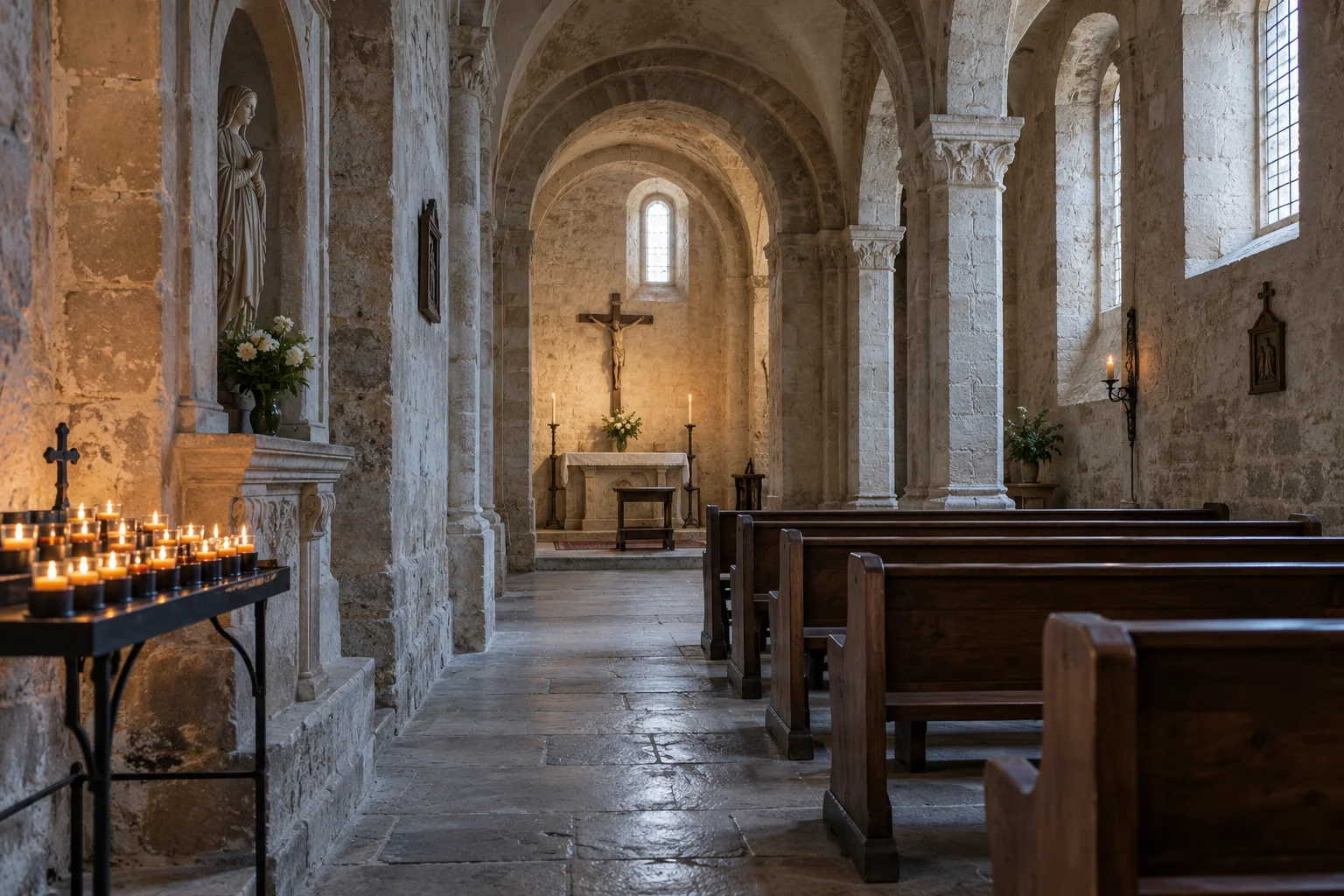
The best-known Catholic destinations are Rome, the Holy Land, Santiago de Compostela, Lourdes, Fátima, and Guadalupe. Some have formal rules: the Compostela certificate at Santiago, for example, requires at least the last 100 km on foot, with a stamped pilgrim credential.
A local shrine can also be a pilgrimage destination. You do not need an international flight or an organized tour to make a meaningful journey.
The Biblical Foundations of Pilgrimage
Abraham's journey of faith begins in Genesis 12:1–4. Hebrews 11:8–10 presents his obedience as a model of trust in God's promises.
Deuteronomy 16:16 establishes Israel's three annual pilgrimage festivals. Psalm 122:1–4 celebrates going to Jerusalem to worship the Lord.
Luke 2:41–42 records that Mary and Joseph traveled to Jerusalem each year for Passover, including when Jesus was twelve.
Hebrews 11:13–16, Hebrews 13:14, and 1 Peter 2:11 remind Christians that our ultimate destination is our heavenly homeland.
What the Catholic Church Teaches
The Catechism of the Catholic Church recognizes pilgrimages as expressions of popular piety (CCC 1674–1676). CCC 2691 describes pilgrimage as an image of our earthly journey toward heaven and an occasion for renewal in prayer.
The Vatican's Directory on Popular Piety and the Liturgy (2002), paragraphs 279–287, explains pilgrimage's biblical foundations, historical development, and spiritual significance.
Pilgrimage should lead Catholics toward deeper participation in the sacramental and liturgical life of the Church. It does not replace the Mass, confession, charity, or ordinary Christian responsibilities.
Pilgrimage in the Early Church
Christians honored the tombs of martyrs in the early centuries. Pilgrimage to places associated with the life of Christ developed substantially during the fourth century.
Egeria, a Christian traveler writing in the late fourth century, described biblical sites and the liturgical life of Jerusalem. Her surviving travel account is an important historical witness.
St. Paula traveled to the Holy Land in AD 385. St. Jerome described her journey in Letter 108 to Eustochium, written in AD 404.
What Did the Church Fathers Say?
Early Christian writers recognized the importance of sacred places while warning against treating travel as a guarantee of holiness.
St. Gregory of Nyssa, writing in the fourth century in On Pilgrimages, questioned the belief that visiting Jerusalem necessarily makes someone holier.
His warning reinforces an essential Catholic principle: God's grace is not restricted to a geographical location. A pilgrimage is valuable when it helps dispose the pilgrim toward conversion, prayer, and a deeper response to grace.
Why Make a Pilgrimage Today?
A Catholic pilgrimage can be an opportunity for thanksgiving, conversion, prayer, penance, or spiritual renewal.
The destination matters, but the intention matters more. Rome, Assisi, Lourdes, Medjugorje, Guadalupe, and other sacred places offer different opportunities to encounter the history and living faith of the Church.
A pilgrimage cannot guarantee spiritual transformation. What matters is how the pilgrim responds to God's grace.
Always consult a Catholic priest who is in communion with the Holy Father for real spiritual guidance.
The journey should continue after returning home—in prayer, family life, parish participation, and works of charity.