Why make this pilgrimage
Most people who think about a pilgrimage like this already believe. What draws them is the sense that something has gone lukewarm, or that one habit, resentment or compromise has outlasted every private resolution. Some come for another person: a son, a daughter, a husband or wife they have prayed for over many years, as St. Monica prayed for Augustine.
This pilgrimage seeks one thing: to turn your life more fully toward Jesus Christ. It would do that by going to the places where other lives turned, slowly or suddenly, and by giving real room to prayer, the Mass, silence and the sacrament of Confession. Nothing can be promised about what you would bring home. The journey simply places you where conversion has been lived, prayed for and offered in the sacraments.
THE JOURNEY
The Great Converts in Italy: Milan, Pavia, Assisi and Rome
- Where
- Italy
- Length
- About eight to ten days
- Status
- Under consideration
This journey would travel the length of Italy from north to south, following three conversions and one mother's prayer: Augustine at the font in Milan and at his relics in Pavia, Francis before the crucifix in Assisi, Monica at her tomb in Rome, and Paul at his. The order is the order of travel, and it also tells one story. It would begin at a baptism, pass through the long work of a converted life, and end at the tomb of the Apostle whose Letter to the Romans Augustine took up in a Milan garden. Each conversion is different, and that is the reason to visit more than one.
The route, and why each place belongs
- 1
Milan: the Baptistery of San Giovanni alle Fonti, beneath the Duomo
Why it belongs
St. Augustine is the Church's fullest witness to conversion because he wrote it down in the Confessions. Archaeologists identify this excavated fourth-century baptistery as the one where St. Ambrose baptized him at the Easter Vigil of 387.
What you would do there
Pilgrims would go down into the cathedral's archaeological area and stand at the octagonal font, which can still be seen. The garden of his conversion in Milan has no identified location, so the font is where his story could be read aloud and prayed with, perhaps with a renewal of baptismal promises where it can be arranged.
- 2
Pavia: the Basilica of San Pietro in Ciel d'Oro
Why it belongs
The relics of St. Augustine are venerated here; tradition holds that they were taken from Hippo to Sardinia and brought to Pavia in the early eighth century. Benedict XVI, who came as a pilgrim in 2007, preached here that Augustine's conversion was "not an event of a single moment but, precisely, a journey."
What you would do there
A short journey south of Milan, pilgrims would pray before the carved marble Arca that holds the relics, with unhurried time to sit in the basilica with a few pages of the Confessions. Pope Leo XIV, an Augustinian, came here in 2026.
- 3
Assisi: San Damiano and the Basilica of St. Clare
Why it belongs
San Damiano is the chapel where St. Francis prayed before the crucifix at the start of his conversion. According to the early Franciscan sources, he heard Christ ask him there to repair his house.
What you would do there
Pilgrims would walk down the steep lane from the old town to the quiet chapel of San Damiano, then return to the Basilica of St. Clare, where the original crucifix is now kept, for time in prayer before it. Assisi's slower rhythm would make this the natural place for a day of silence and for Confession where confessors are available.
- 4
Rome: the Basilica of Sant'Agostino in Campo Marzio
Why it belongs
The relics of St. Monica, brought from Ostia to Rome in the fifteenth century, rest in a side chapel here. She prayed for her son's conversion for years, and many pilgrims come to pray for a family member who has drifted from the faith.
What you would do there
A short visit to her chapel, where each pilgrim could name before God the person they are carrying. Those making the pilgrimage for someone else's conversion would find that this is their stop.
- 5
Rome: the Basilica of St. Paul Outside the Walls
Why it belongs
The persecutor who became an Apostle is the New Testament's pattern of a life turned around by Christ. His burial here is ancient and constant Roman tradition.
What you would do there
Pilgrims would pray at the Apostle's tomb and could read Acts 9, the account of the Damascus road, in the basilica. As the last stop, it would be the place to gather what the days have shown and to pray about the return home.
Prayer and the sacraments
Mass would be sought each day where the schedule permits, at the shrines themselves when a public celebration fits; clergy arrangements are confirmed for each departure. Time for Confession would be kept open in Assisi and Rome where confessors are available, prepared for by a short daily examination of conscience, and the days could be prayed with Psalm 51, Luke 15, Acts 9 and Romans 13, the Scriptures behind these conversions.
Pilgrim’s Time
Pilgrim's Time would be protected in Assisi and again in Rome: unscheduled hours with no visit planned. On this journey it could be used to go back alone to the crucifix or a tomb, to read the Confessions, to prepare for Confession, to have an honest conversation with a priest where one is available, or simply to rest.
Pilgrim Pace
Milan, Pavia and the Roman basilicas involve city walking on level or cobbled ground, with some steps down to the excavations beneath the Duomo. Assisi is the demanding part: San Damiano lies downhill from the old town on a steep lane that must be climbed again, and the route includes a long transfer from the north of Italy into Umbria.
How Pilgrim Pace worksOther ways to make this pilgrimage
- Rome and Assisi alone. The Rome & Assisi Classic already visits St. Paul Outside the Walls and the Basilica of St. Clare from two bases, and could be made with this purpose by adding San Damiano and St. Monica's tomb to its free time.
- Loyola to Manresa. In Spain, a journey could go from the room where St. Ignatius was converted in 1521, now the Chapel of the Conversion in his family's tower house, to Manresa, where he prayed and began the Spiritual Exercises, by vehicle or on sections of the Ignatian Way.
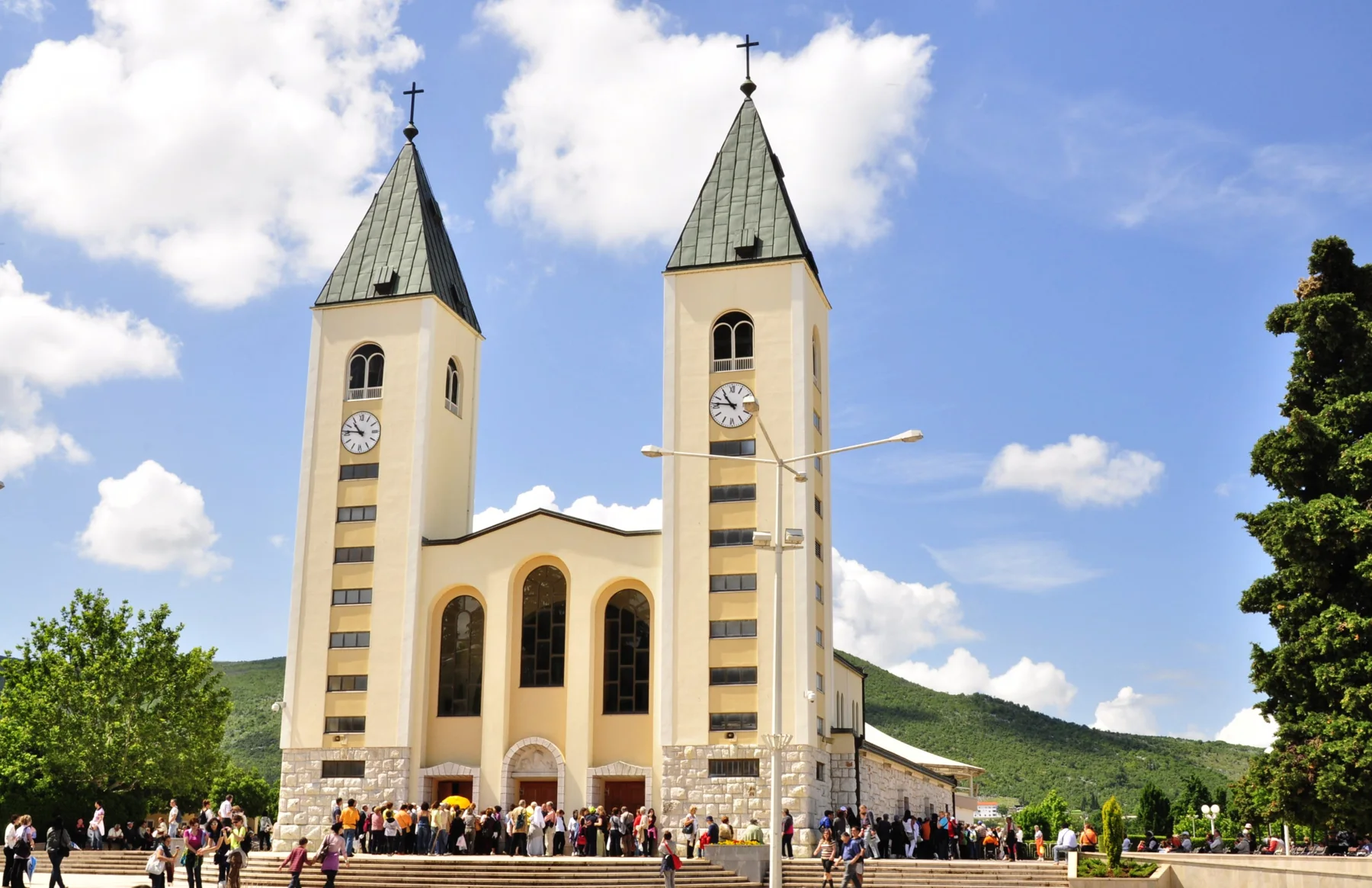
- A parish known for Confession. The Medjugorje & Croatia Classic keeps a quieter day for Confession, adoration or personal prayer in a parish where the Holy See's 2024 Note recognizes abundant conversions among the spiritual fruits and permits pilgrimage, without judging the reported apparitions to be supernatural.
No dated departures are currently announced. This is a journey Bold Pilgrim is considering, described so you can picture it. Dates, priest, Gateway Airport and price are published on a departure itself, and only when confirmed.
Who a conversion pilgrimage is for
It is for the practising Catholic who goes to Mass and knows that something has gone lukewarm. It is for the person facing a particular habit, resentment or compromise that has resisted every private resolution. It is for the new Catholic who wants to stand where the Church's great converts stood, and for the pilgrim who wants to pray for someone else's conversion, as St. Monica did for her son.
It is not a test you must pass before you set out, and no one on a pilgrimage has the right to ask what you are carrying. If you have been away from the Church for years, or are not Catholic and are simply looking, Bold Pilgrim treats those as their own purposes with their own pages, linked below. This one is about conversion of life, which the Church asks of everyone, including the people who seem least to need it.
- Practising Catholics who sense their faith has become routine
- Pilgrims facing a specific habit, resentment or decision they have not been able to change alone
- New Catholics who want to stand where the Church's great converts stood
- Parents, spouses and friends praying for someone else's conversion
- Readers of the Confessions and admirers of Paul, Francis or Ignatius
- Parish groups preparing for Lent, a mission or a year of renewal
A spiritual purpose has no Pilgrim Pace of its own; the actual itinerary determines the pace. As a guide to the places named here: the Roman basilicas, Pavia and the Milan baptistery involve city walking on level or cobbled ground, with some steps down to the excavations beneath the Duomo; San Damiano lies downhill from Assisi's old town on a steep lane; Loyola is level, while reaching Manresa and its cave involves slopes; in Medjugorje the hills are optional and rocky.
UNDERSTANDING THIS PILGRIMAGE
A conversion pilgrimage is a Catholic pilgrimage made for one purpose: to turn your life more fully toward Jesus Christ. It follows the great converts of the Church, such as St. Paul, St. Augustine, St. Francis of Assisi and St. Ignatius of Loyola, to the places where their lives turned, and it gives a central place to prayer, the Mass and the sacrament of Confession. It is for any pilgrim, because the Church teaches that conversion is not a single event for newcomers but the work of a whole Christian life.
What the Church means by conversion
In everyday English, "conversion" usually means changing religion. The Church uses the word more widely. The Greek word in the Gospels is metanoia, a change of heart, which Pope Paul VI described as an "intimate and total change and renewal of the entire man." Jesus' first words in Mark's Gospel are a call to it: "Repent, and believe in the gospel."
The Catechism speaks of two conversions. Baptism, it says, is "the principal place for the first and fundamental conversion." The second is the one that continues afterward, for the whole of life: St. Ambrose called them "the water of Baptism and the tears of repentance." The Catechism's example of the second conversion is St. Peter, who denied Christ three times, wept, and was asked three times, "Do you love me?"
Two points keep this honest. Conversion is first God's work, not a self-improvement project: "God must give man a new heart." And it aims at the heart before it aims at outward acts. A pilgrimage is a way of placing yourself where the grace of conversion is prayed for, preached and offered in the sacraments.
Why pilgrimage and conversion belong together
The Catechism lists "pilgrimages as signs of penance" among the practices that express conversion. The Holy See's 1998 document on pilgrimage goes further: a pilgrimage to a shrine "must be an itinerary of conversion," and conversion is "the most profound element" of every person's pilgrimage through life. It describes the pilgrim as someone who repeats the road of the prodigal son: leaving, coming to himself, and returning to a Father who is already watching for him.
The practical reason is simpler. At home, the habits that need to change are held in place by routine. A pilgrimage removes the routine for a few days and replaces it with a rhythm of prayer, Mass and silence, often at a shrine where confessions are regularly heard. Pope Benedict XVI put it this way in Santiago de Compostela: to go on pilgrimage "really means to step out of ourselves in order to encounter God."
The converts and their places
St. Paul met the risen Christ on the road to Damascus, an event the Latin Church keeps as a feast on 25 January. Most pilgrims meet him at the other end of his life, at his tomb in the Basilica of St. Paul Outside the Walls in Rome.
St. Augustine is the Church's fullest witness to conversion because he wrote it down. The Confessions record a restless search, his mother Monica's years of prayer, the moment in a Milan garden when he took up St. Paul's Letter to the Romans, and his baptism by St. Ambrose at the Easter Vigil of 387. The baptistery identified with that night can be visited beneath Milan's cathedral, and his relics are venerated in Pavia. Benedict XVI, preaching in Pavia, insisted that Augustine's conversion "was not an event of a single moment but, precisely, a journey," one that "did not end at the baptismal font."
St. Francis of Assisi prayed before a crucifix in the ruined chapel of San Damiano and, according to the early Franciscan sources, heard Christ ask him to repair his house. St. Ignatius of Loyola, wounded in battle in 1521, was changed during months in a sickroom in his family's tower house. That room is now the Chapel of the Conversion, and the beam above its altar reads, in translation, "Here Íñigo of Loyola surrendered to God."
None of these stories is the same. One was sudden, one took years, one turned on a crucifix, one began with a book read in boredom. That is the point of visiting more than one of them.
Questions pilgrims ask
What is a conversion pilgrimage?
A conversion pilgrimage is a Catholic pilgrimage made in order to turn your life more fully toward Jesus Christ. It usually follows saints whose lives changed direction, such as St. Paul, St. Augustine, St. Francis and St. Ignatius, to the places where that happened, and it gives priority to prayer, the Mass and Confession over sightseeing. The Catechism lists pilgrimages among the signs of penance, and the Holy See's 1998 document on pilgrimage says that a pilgrimage to a shrine "must be an itinerary of conversion."
I am already Catholic. Why would I need conversion?
Because in Catholic teaching conversion is not only the step of becoming a Christian. The Catechism describes a first conversion in Baptism and a second conversion that continues for the rest of life, and gives St. Peter, who denied Christ and wept, as its example. Pope Benedict XVI said of St. Augustine that his conversion was "a journey" that "did not end at the baptismal font." A conversion pilgrimage is for that second, ongoing conversion, which the Church asks of every baptized person.
Can a pilgrimage really change your life, and what if I feel nothing?
It can be the occasion of real change, but it cannot guarantee it. The Church teaches that conversion is first a work of God's grace, not of travel or effort. What a pilgrimage offers is the conditions: distance from routine, days ordered around prayer and the Mass, the chance of Confession, and the example of saints who changed. Nor is conversion measured by emotion. St. Paul's turning was sudden, St. Augustine's took years, and Pope Benedict XVI noted that each person's conversion "has its own form." A pilgrim who feels little at a shrine but prays honestly and goes to Confession has done what the pilgrimage was for. The honest test comes afterward, in daily life at home.
Who is the patron saint of conversion?
The Church has not formally assigned one patron of conversion. St. Augustine of Hippo is the saint most often associated with it, because his Confessions are the Church's classic account of a life turned to God, and Benedict XVI devoted a catechesis to his conversions. St. Paul, whose conversion has its own feast on 25 January, and St. Monica, who prayed for her son for years, are also invoked. Bold Pilgrim asks St. Augustine's prayers for this pilgrimage as its own devotional choice, not as a title the Church has given him.
Where was St. Augustine converted and baptized, and can pilgrims visit?
Both happened in Milan. The garden where he took up St. Paul's Letter to the Romans has never been identified, but the baptistery identified with his baptism by St. Ambrose at the Easter Vigil of 387 can be visited in the archaeological area beneath the Duomo. His relics are venerated in Pavia, a short train ride to the south.
Full answer: Where was St. Augustine baptized?
Can I make a pilgrimage for someone else's conversion?
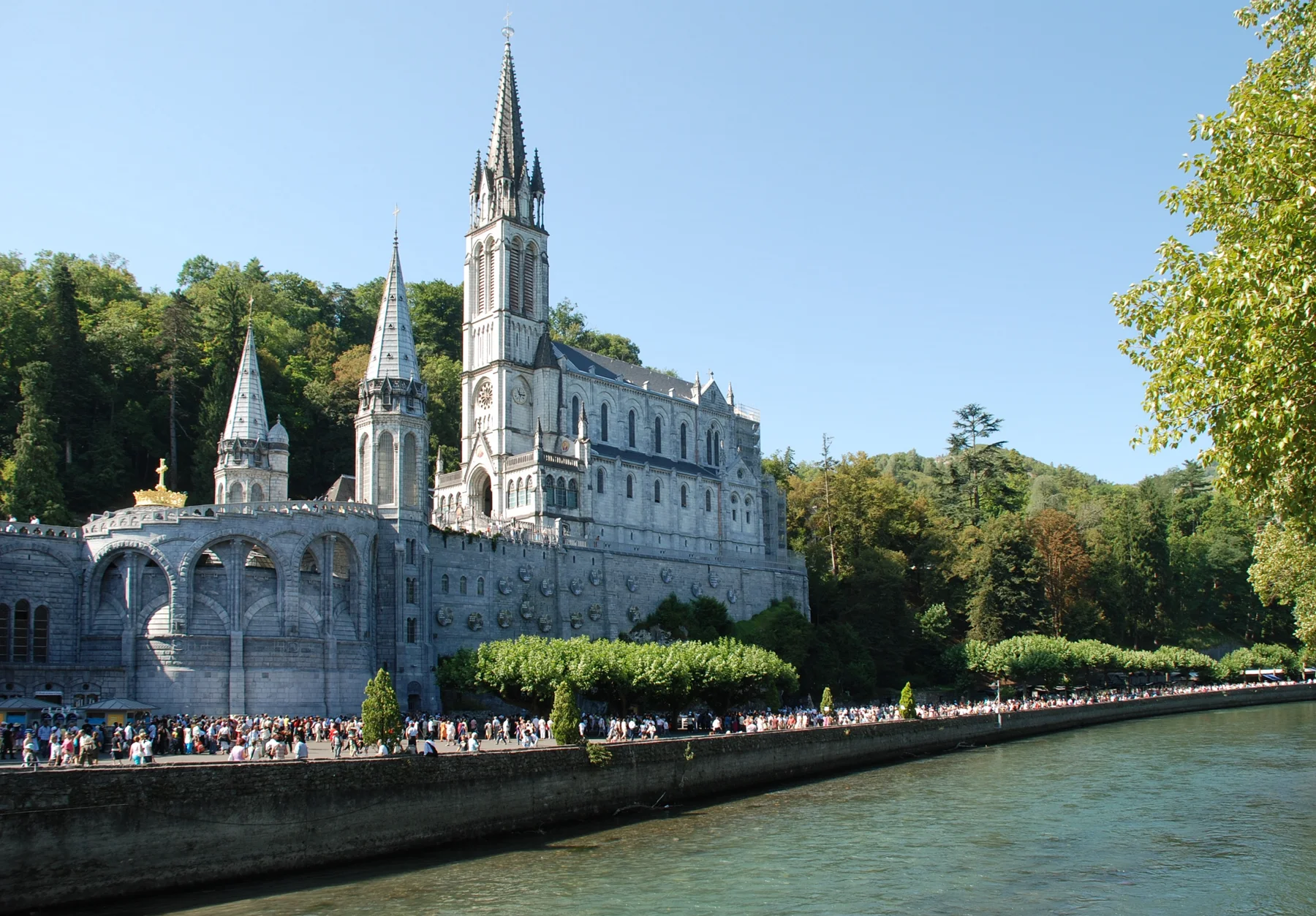
Yes. Praying for someone's conversion is one of the oldest intentions a pilgrim can carry. St. Monica prayed for her son Augustine for years before his baptism, and at Lourdes Bernadette reported the request to "pray for sinners." No outcome is promised, but you can carry the person in prayer at Mass and at the shrines you visit.
How do I keep a conversion going after I come home?
Decide before you leave the shrine what will be different, and keep it small enough to do. The Catechism says conversion is carried out in daily life: regular Confession, the Eucharist, Scripture, reconciliation with the people you have wronged, and concern for the poor. Tell a priest or a trusted friend what you resolved. As Bishop Joseph Kopacz wrote of pilgrimage, the arrival is not the end of the journey but a new beginning. Bold Pilgrim's guide on what to do after a pilgrimage goes further.