THE JOURNEY
Two Shrines of Our Lady: Fátima and Lourdes
- Where
- Portugal, France
- Length
- About ten days
- Status
- Under consideration
This journey would give unhurried days to the two great European apparition shrines, staying first at Fátima in Portugal and then at Lourdes in France, with one travel day between them. It is the route of our Fátima & Lourdes Classic, read here for what it is: a Marian pilgrimage in the plainest sense. The order makes sense in prayer as well as in travel. Fátima's call to prayer, penance and conversion would come first, and Lourdes, the sanctuary that keeps the sick at its center, would follow, so that the journey ends in intercession and thanksgiving. Two bases, and no more, would leave room to return to the same chapel and the same grotto more than once.
The route, and why each place belongs
- 1
Sanctuary of Our Lady of Fátima
PortugalWhy it belongs
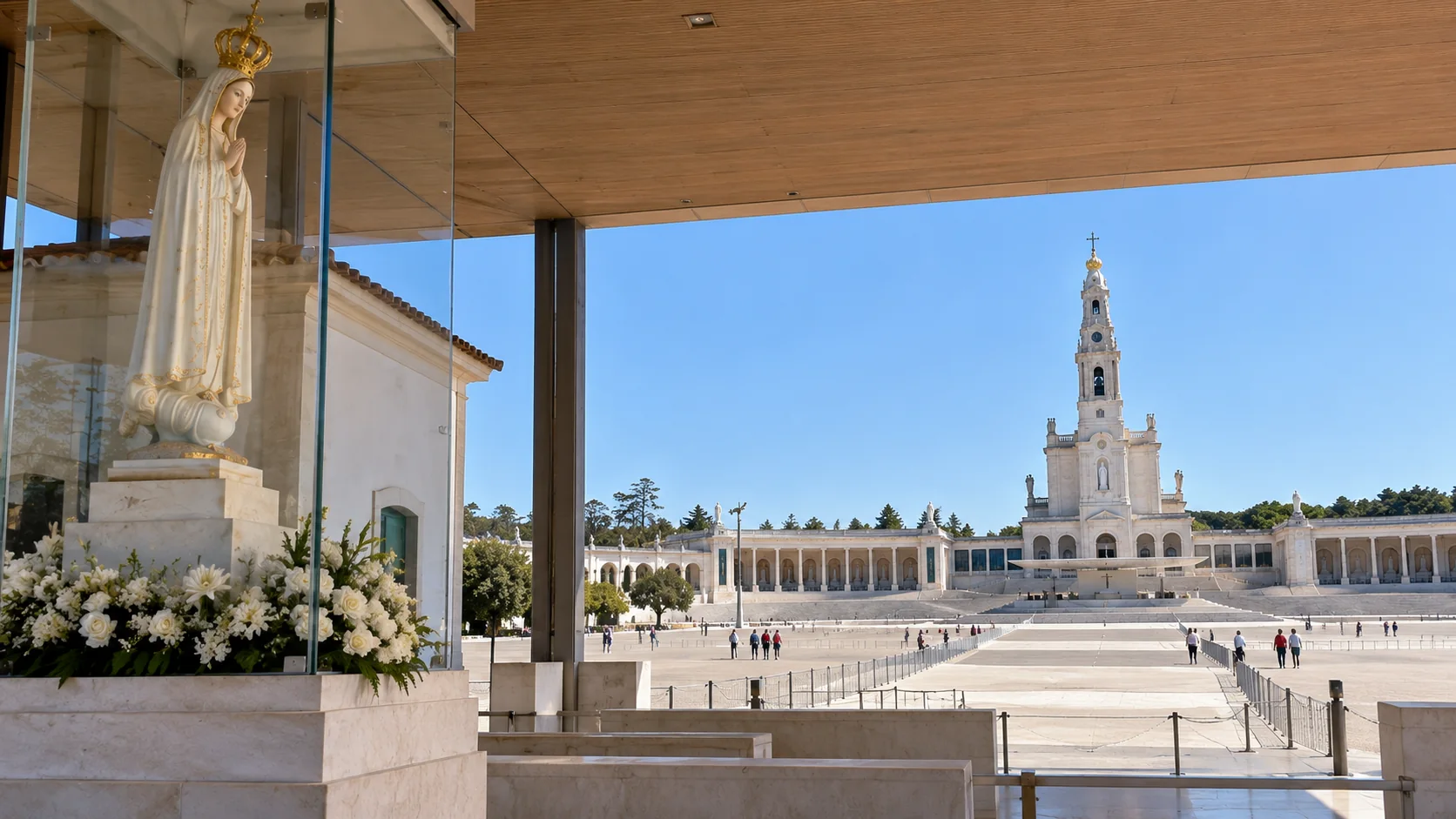
This is the Cova da Iria, where three shepherd children reported six apparitions of Our Lady from May to October 1917. The Bishop of Leiria declared the visions worthy of belief in 1930; they remain a private revelation.
What you would do there
After a day to arrive and rest, the pilgrim would pray at the Chapel of the Apparitions and visit the sanctuary's basilicas, including the Basilica of Our Lady of the Rosary, where the remains of Sts. Francisco and Jacinta Marto rest. The Rosary could be prayed with pilgrims from many countries, and an evening candlelight procession joined where the sanctuary holds one.
- 2
Aljustrel and Valinhos
PortugalWhy it belongs
Aljustrel is the shepherds' village, the home of the children whose witness shaped the whole sanctuary. Going there keeps the pilgrimage close to the plain, poor beginnings of Fátima.
What you would do there
A day out from the sanctuary would take in the village and Valinhos, with a transport plan suited to those travelling and an optional longer walk for those who want it. Time would be left for private prayer along the way.
- 3
Fátima, a day at your own rhythm
PortugalWhy it belongs
A Marian pilgrimage is made by staying as much as by seeing. A last full day at Fátima would let its call to prayer, penance and conversion be answered personally and without hurry.
What you would do there
The pilgrim could return to a favourite place of prayer, attend Mass in the sanctuary, go to Confession where the shrine offers it in a language the pilgrim can use, or simply rest. Evening participation would depend on the sanctuary's own program.
- 4
The Grotto of Massabielle, Lourdes
FranceWhy it belongs
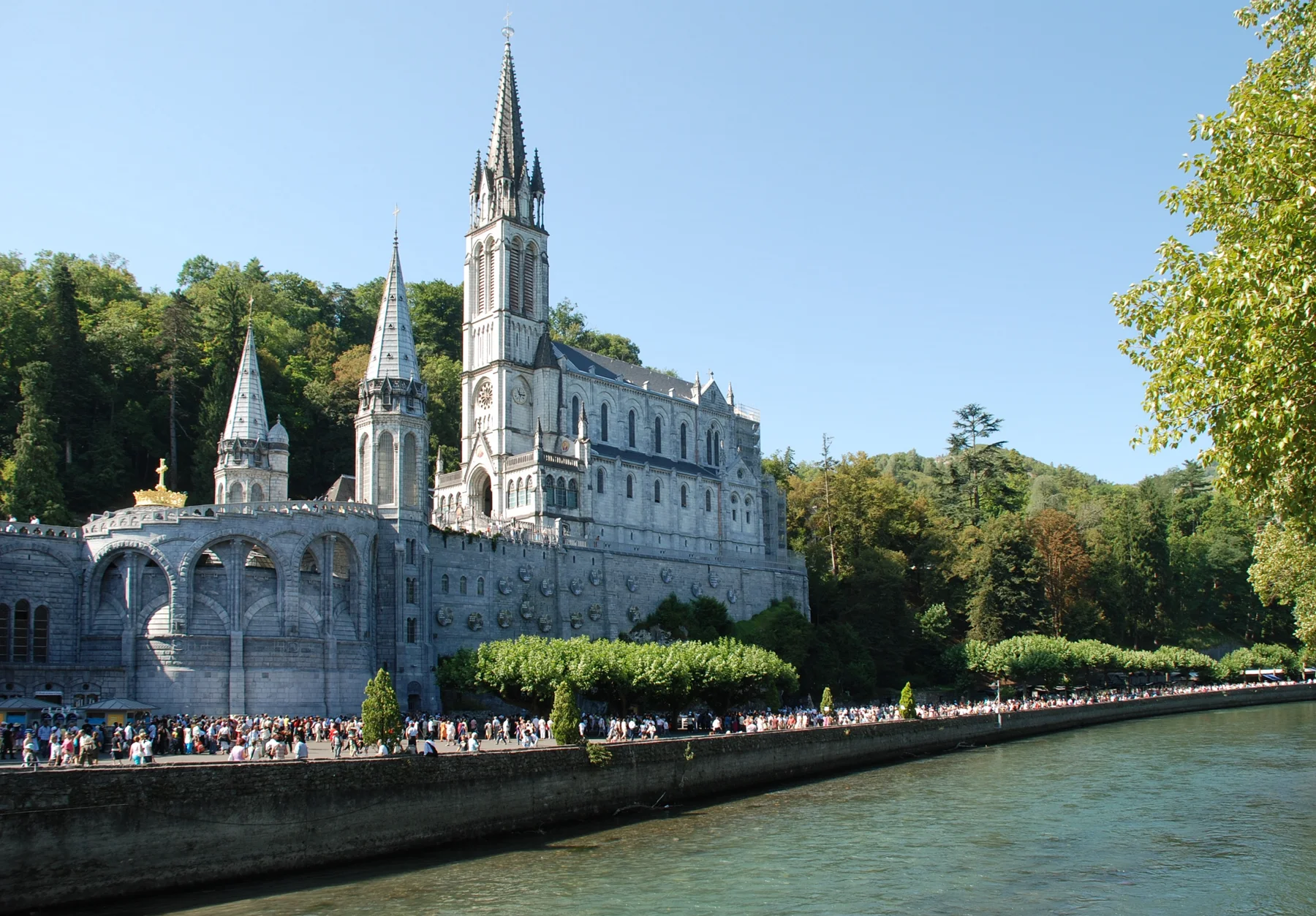
Here St. Bernadette Soubirous reported eighteen apparitions between 11 February and 16 July 1858. The sanctuary states that Mgr Laurence, Bishop of Tarbes, authenticated them; they remain a private revelation.
What you would do there
After a full travel day from Portugal, the stay would begin with an orientation to the sanctuary and quiet time at the Grotto, and with the story of Bernadette's life told plainly, including what the Church has and has not said about the events.
- 5
Sanctuary of Our Lady of Lourdes
FranceWhy it belongs
The 1858 apparitions gave the Church a sanctuary that keeps the sick at its center. To pray here is to pray beside them and for them, though praying for healing at Lourdes is never a promise of healing.
What you would do there
The pilgrim could take part in the water gesture as the sanctuary makes it available and join its public liturgies. A slower day would follow for adoration, reflection or a return to the Grotto, with the evening Rosary procession by candlelight where the sanctuary's program includes it, and a final day for thanksgiving.
Prayer and the sacraments
Mass would be sought at each sanctuary where the schedule permits, and clergy arrangements are confirmed for each departure. The Rosary would be the shared prayer of the journey, prayed together at the Chapel of the Apparitions and at the Grotto, with Confession where confessors are available and silent time before the Blessed Sacrament in the sanctuaries' adoration chapels.
Pilgrim’s Time
Pilgrim's Time would be protected at both shrines: a whole day at your own rhythm in Fátima and a slower day in Lourdes. It is time to go back alone to the chapel or the Grotto, to stay in an adoration chapel, to make a Confession that has been waiting, or to rest.
Pilgrim Pace
The sanctuaries at Lourdes and Fátima are largely level and well adapted to wheelchairs, though the precincts are large and there can be queues. The day at Aljustrel and Valinhos involves village walking with an optional longer route, and the journey between the two shrines would be a full travel day by air and road, with routing that depends on actual flight schedules.
How Pilgrim Pace worksOther ways to make this pilgrimage
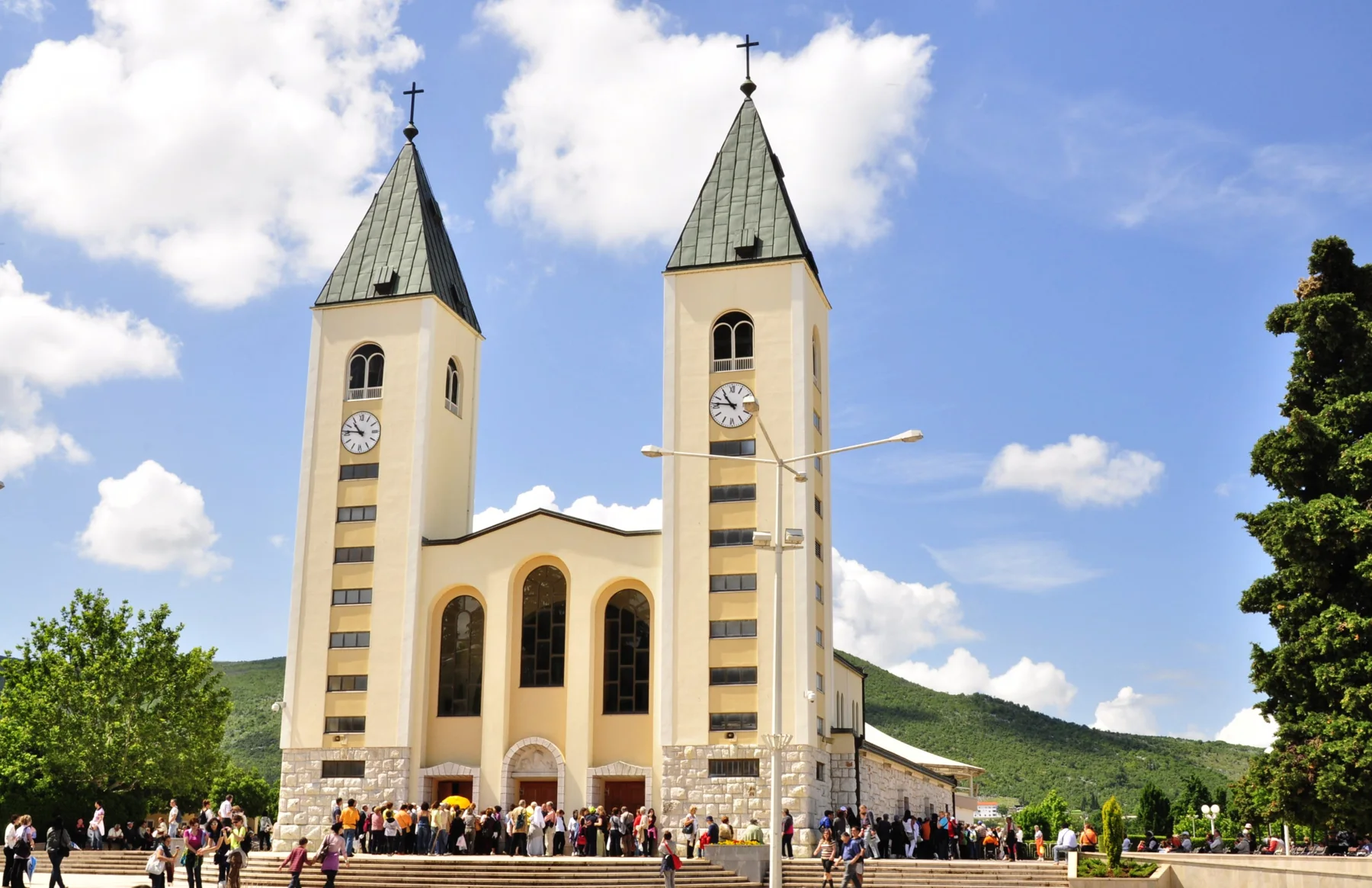
- Medjugorje and Croatia. Our Medjugorje & Croatia Classic would settle into the parish prayer life of St. James, the pastoral pilgrimage the Holy See's 2024 nihil obstat permits, without any claim that the alleged apparitions are supernatural.
- Our Lady of Guadalupe, Mexico City. A short pilgrimage centered on Tepeyac and St. Juan Diego could bring pilgrims to the nearest of the great shrines for most U.S. Catholics.
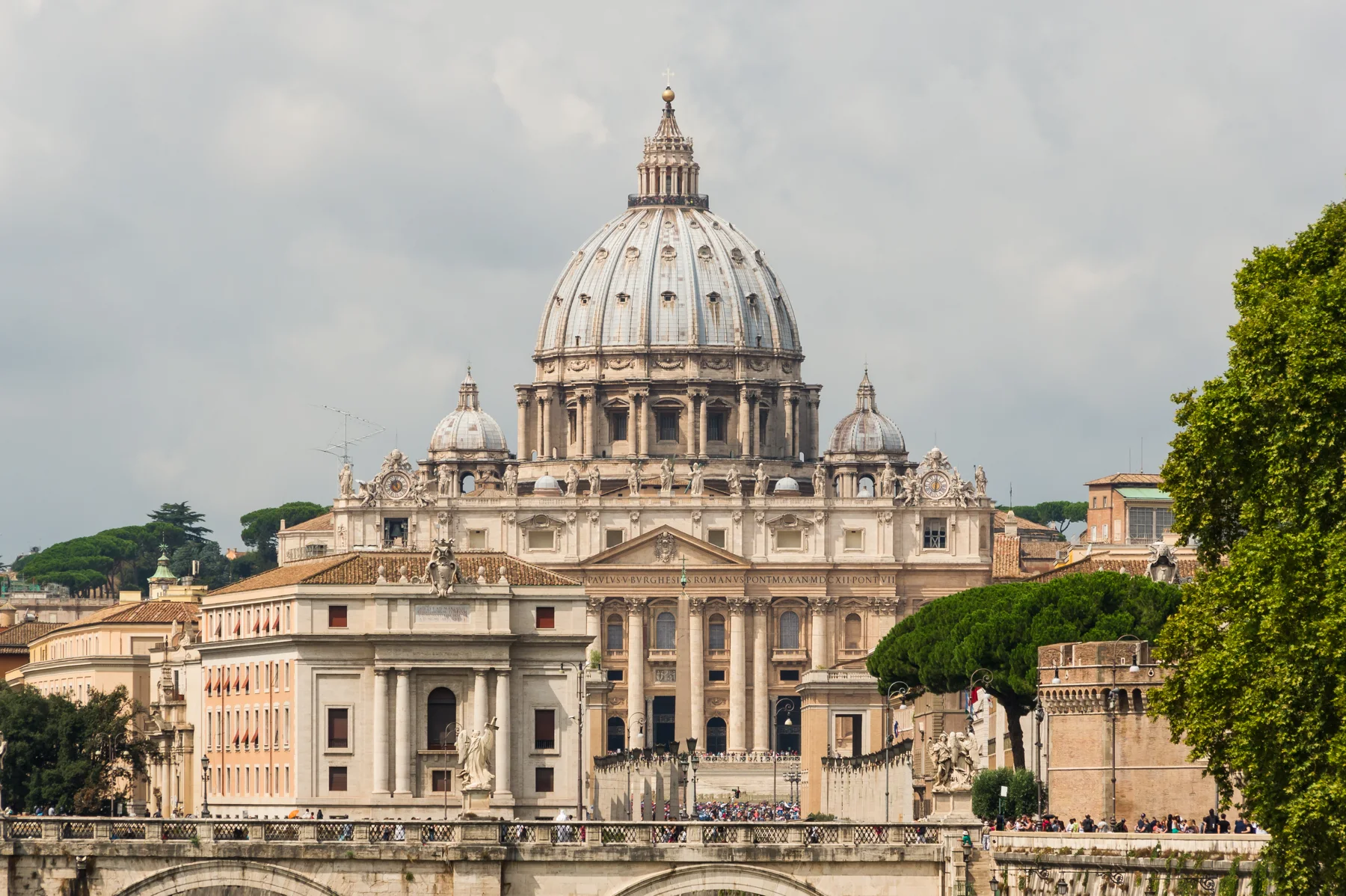
- St. Mary Major in Rome. Our Rome & Assisi Classic includes the basilica the Holy See's Jubilee office calls the oldest and most important Marian sanctuary in Western Christendom, with the icon Salus Populi Romani, for those drawn to a Marian shrine that has nothing to do with an apparition.
No dated departures are currently announced. This is a journey Bold Pilgrim is considering, described so you can picture it. Dates, priest, Gateway Airport and price are published on a departure itself, and only when confirmed.
UNDERSTANDING THIS PILGRIMAGE
A Marian pilgrimage is a journey of prayer to one or more shrines of the Blessed Virgin Mary, made so that she may lead the pilgrim to her Son. Some of these shrines mark an apparition the Church has approved or long recognized, such as Guadalupe, Lourdes or Fátima; others keep an ancient image, church or tradition, such as St. Mary Major in Rome or Jasna Góra in Poland. Catholics go to honor Mary, to ask her prayers, and to do what she asked at Cana: “Do whatever he tells you.” The shrine is hers, and the Mass, Confession and adoration celebrated there belong to her Son.
The Catholic foundation: why the Church goes to Mary
Marian pilgrimage rests on what the Church believes about Mary, and that belief is about Christ first. She is the Mother of God, the title confessed at the Council of Ephesus in 431, and from the cross Jesus gave her to the beloved disciple with the words “Behold your mother.” The Catechism teaches that her motherhood “in the order of grace” continues, and that the Church therefore calls on her as Advocate and Helper.
The same teaching sets the boundary. Mary’s care for us “in no way obscures or diminishes” the unique mediation of Christ; her influence depends entirely on his and draws all its power from it. Devotion to her, the Catechism says, is intrinsic to Christian worship and yet differs essentially from the adoration given to the Father, the Son and the Holy Spirit. Catholics venerate Mary and ask her prayers. They adore God alone.
St. Paul VI put the rule in one sentence in Marialis Cultus: in the Virgin Mary everything is relative to Christ and dependent upon him. He asked that Marian devotion be biblical, in harmony with the liturgy, and free of the two distortions the Second Vatican Council named, credulity that leans on externals and sentiment that changes nothing. In its 2025 note Mater Populi Fidelis the Dicastery for the Doctrine of the Faith said, with the Second Vatican Council, that Mary’s motherly help neither takes anything from nor adds anything to the dignity and efficacy of Christ, the one Mediator.
Two kinds of Marian places
It helps to know what kind of place you are going to. Some shrines stand where Mary is reported to have appeared and where the Church has judged the reports worthy of belief or has long approved the devotion that grew from them: Guadalupe (1531), the Rue du Bac in Paris (1830), Lourdes (1858), Knock (1879), Fátima (1917), and others. These are private revelations. Even when the Church approves one, it adds nothing to the faith, and no Catholic is obliged to believe it; approval means the message contains nothing contrary to faith and morals and that the faithful may accept it prudently.
Other great Marian shrines have nothing to do with an apparition. St. Mary Major in Rome, which the Holy See’s Jubilee office calls the oldest and most important Marian sanctuary in Western Christendom, honors the Mother of God and keeps the icon called Salus Populi Romani. Jasna Góra in Częstochowa keeps the icon of Our Lady that Poland has venerated for centuries. Loreto keeps the house that a long tradition identifies with Mary’s home in Nazareth.
Medjugorje is in a category of its own, and we describe it carefully. In 2024 the Holy See granted a nihil obstat for the spiritual experience connected with Medjugorje, recognizing its fruits and permitting public devotion and pilgrimage. It did not declare the alleged apparitions supernatural and did not authenticate the alleged messages. A pilgrim goes there, in the Holy See’s words, not to meet alleged visionaries but to encounter Mary, Queen of Peace, and through her, Christ.
Why people are drawn to it
People rarely explain a Marian pilgrimage with an argument. They say their mother prayed the Rosary, or that they have carried an intention for years and want to place it in someone’s hands, or that they find it easier to begin again with Mary than to begin alone. Some come with gratitude, some with grief, some because a marriage, a child or a diagnosis has brought them to the end of their own strength.
The Church takes that instinct seriously. St. John Paul II wrote of a “geography” of faith and Marian devotion, naming Guadalupe, Lourdes, Fátima and Jasna Góra, places where people look for the one who believed first so that their own faith may be strengthened. The bishops of Latin America, quoted in Mater Populi Fidelis, said that the decision to set out toward a shrine is already a confession of faith.
Questions pilgrims ask
What is a Marian pilgrimage?
A Marian pilgrimage is a journey of prayer to a shrine of the Blessed Virgin Mary, such as Guadalupe, Lourdes, Fátima, Knock or Jasna Góra. Pilgrims honor Mary, ask her prayers, and take part in the Mass, Confession and the Rosary celebrated there. It is a pilgrimage to Jesus, made in his mother’s company.
Do Catholics worship Mary when they visit her shrines?
No. Catholics adore God alone. The Catechism says devotion to the Blessed Virgin “differs essentially” from the adoration given to the Father, the Son and the Holy Spirit, and that Mary’s role “in no way obscures or diminishes” the unique mediation of Christ. The central act at every shrine is the Mass, which is offered to God.
Are all Marian shrines apparition sites?
No. Some shrines mark an apparition the Church has approved or long recognized, such as Guadalupe, Lourdes, Fátima and Knock. Others do not. St. Mary Major in Rome, which the Holy See’s Jubilee office calls the oldest and most important Marian sanctuary in Western Christendom, honors the Mother of God and keeps an ancient icon. Jasna Góra in Poland keeps a venerated icon. Loreto keeps a house that tradition links to Nazareth, and Our Lady of Loreto has been in the General Roman Calendar since 2019. Medjugorje is different again: the Holy See permits pilgrimage there without having declared the alleged apparitions supernatural. Each rests on a different kind of claim, and it is worth knowing which before you go.
Do I have to believe in the apparitions to go on a Marian pilgrimage?
No. Apparitions are private revelations, and even when the Church approves one, Catholics are not obliged to believe it; Benedict XVI called such a revelation “a help which is proffered, but its use is not obligatory.” You can pray at Lourdes or Fátima, go to Mass and Confession there, and remain undecided about the events themselves.
Full answer: Do Catholics have to believe in Marian apparitions?
Which Marian apparitions has the Church approved?
“Approved” covers two things: a bishop’s formal judgment, as at Lourdes, Fátima and Champion in Wisconsin, and long recognition in the Church’s liturgy and by popes without one decree on the apparitions, as at Guadalupe, the Rue du Bac and Knock. There is no single official Vatican list, so published counts differ. Since 2024 the Holy See ordinarily grants a nihil obstat instead of declaring an event supernatural.
Is Medjugorje an approved Marian apparition?
The Holy See has not declared the alleged apparitions at Medjugorje supernatural. In September 2024 the Dicastery for the Doctrine of the Faith granted a nihil obstat for the spiritual experience connected with Medjugorje, which recognizes its spiritual fruits and permits public devotion and pilgrimage. No Catholic is required to believe in the alleged apparitions, and the Holy See adds that pilgrims go there to encounter Mary, Queen of Peace, not to meet alleged visionaries.
Full answer: Is Medjugorje approved by the Catholic Church?
Which Marian shrine should I visit first?
It depends on what you are bringing. Lourdes suits those praying for the sick or traveling with them; Fátima suits those drawn to prayer, penance and the Rosary; Guadalupe is the nearest great shrine for most Americans; Częstochowa belongs with Kraków and St. John Paul II; Medjugorje offers a settled parish rhythm of prayer under the terms the Holy See set in 2024. Our comparison answer and guide go through each.
Full answer: What are the best Marian pilgrimage destinations?
When is the best time for a Marian pilgrimage?
May is kept as a month of Mary, and many shrines are at their fullest then and around their own feasts, such as December 12 at Guadalupe or the 13th of the month from May to October at Fátima, the days on which the children reported the apparitions. Feast days bring large liturgies and large crowds. If you want quiet at the grotto or the chapel, choose ordinary weeks in spring or autumn. Sanctuary programs, including processions, change by season, so check the shrine’s own calendar before you travel.