
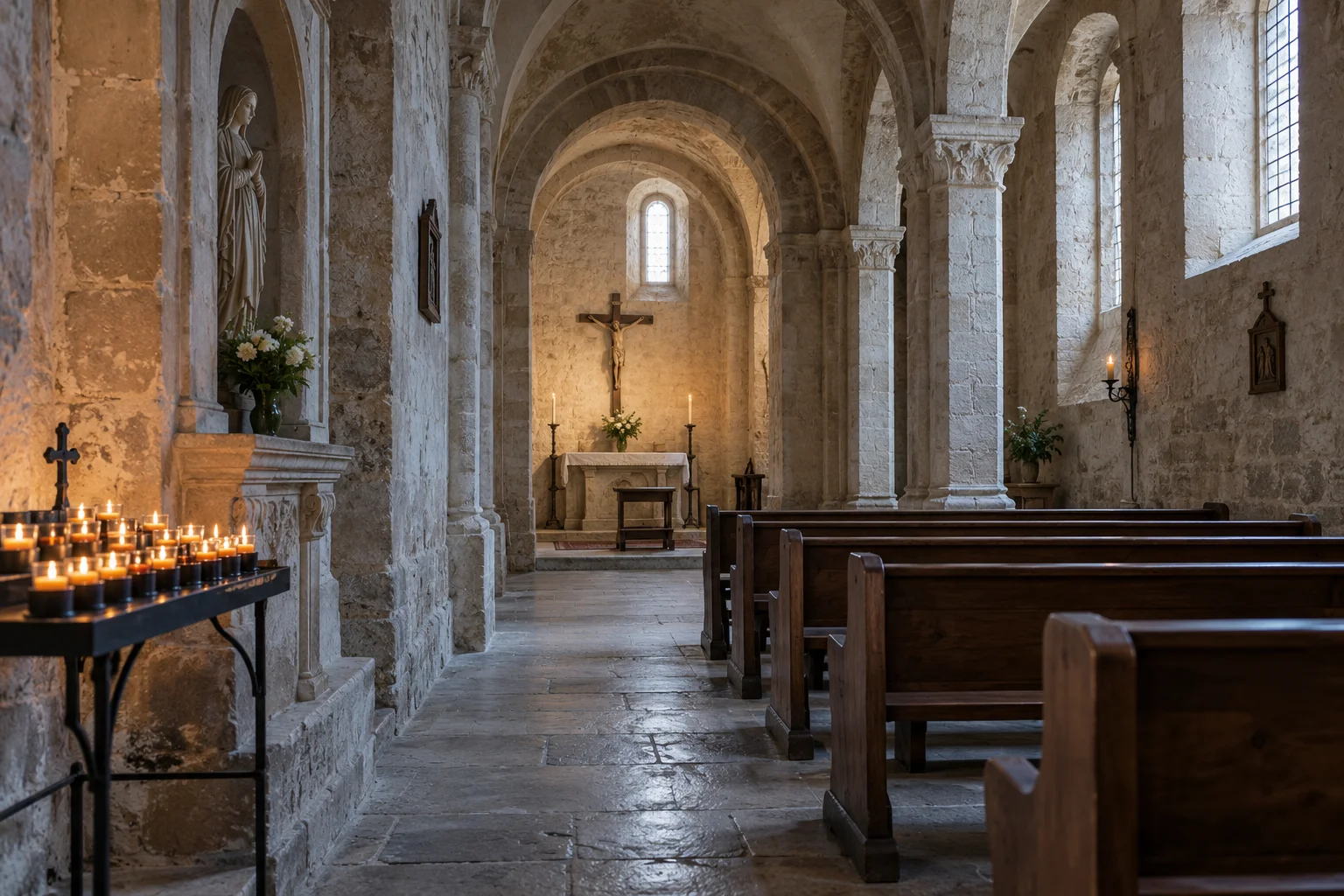
The house was discovered, or rediscovered, in 1891 in the wake of the visions of Blessed Anne Catherine Emmerich, a nineteenth-century German mystic. Private revelations of that kind do not belong to the deposit of faith, so the site rests on tradition and devotion, not on a doctrine. The dogma of the Assumption teaches that Mary was taken body and soul into heaven when the course of her earthly life was finished; it does not say where.
Ephesus has a firmer place in Marian history for another reason: the Council held there in 431 confessed Mary as Mother of God, as Benedict XVI recalled in his homily at the shrine. He also noted that Mary is loved and venerated by Muslims, and Muslim visitors come to the house as well as Christians. Tradition also places the tomb of St. John at Ephesus.
Good to know before you go: the house is in Türkiye, in the hills near Selçuk, and is usually visited together with the ruins of Ephesus by those following St. Paul or the early Church. It is a small place, and people come to it to pray. We could not confirm the shrine's current opening hours, entrance fee or Mass times from an official source, so none are given here; get them from the shrine itself before you fix a day.