Why make this pilgrimage
You are carrying something you cannot fix: a diagnosis, a grief that has not eased, an old wound, or the illness of someone you love. A healing pilgrimage is a journey made to place that before Jesus Christ, to ask plainly for healing, and to leave the answer to Him. The Church encourages the asking and promises no particular outcome; the Catechism says that even the most intense prayers do not always obtain the healing of all illnesses (CCC 1508).
What draws people is less a hope of spectacle than the need for a place to set the burden down, among others who are carrying something too. Some come for themselves, some for a person who cannot travel, some as caregivers who have run out of strength. This journey is prayer made with the body. It is not a treatment, and it would accompany your medical care, never replace it.
THE JOURNEY
Lourdes, Unhurried: A Single-Base Pilgrimage of Prayer for Healing
- Where
- France
- Length
- About a week
- Status
- Under consideration
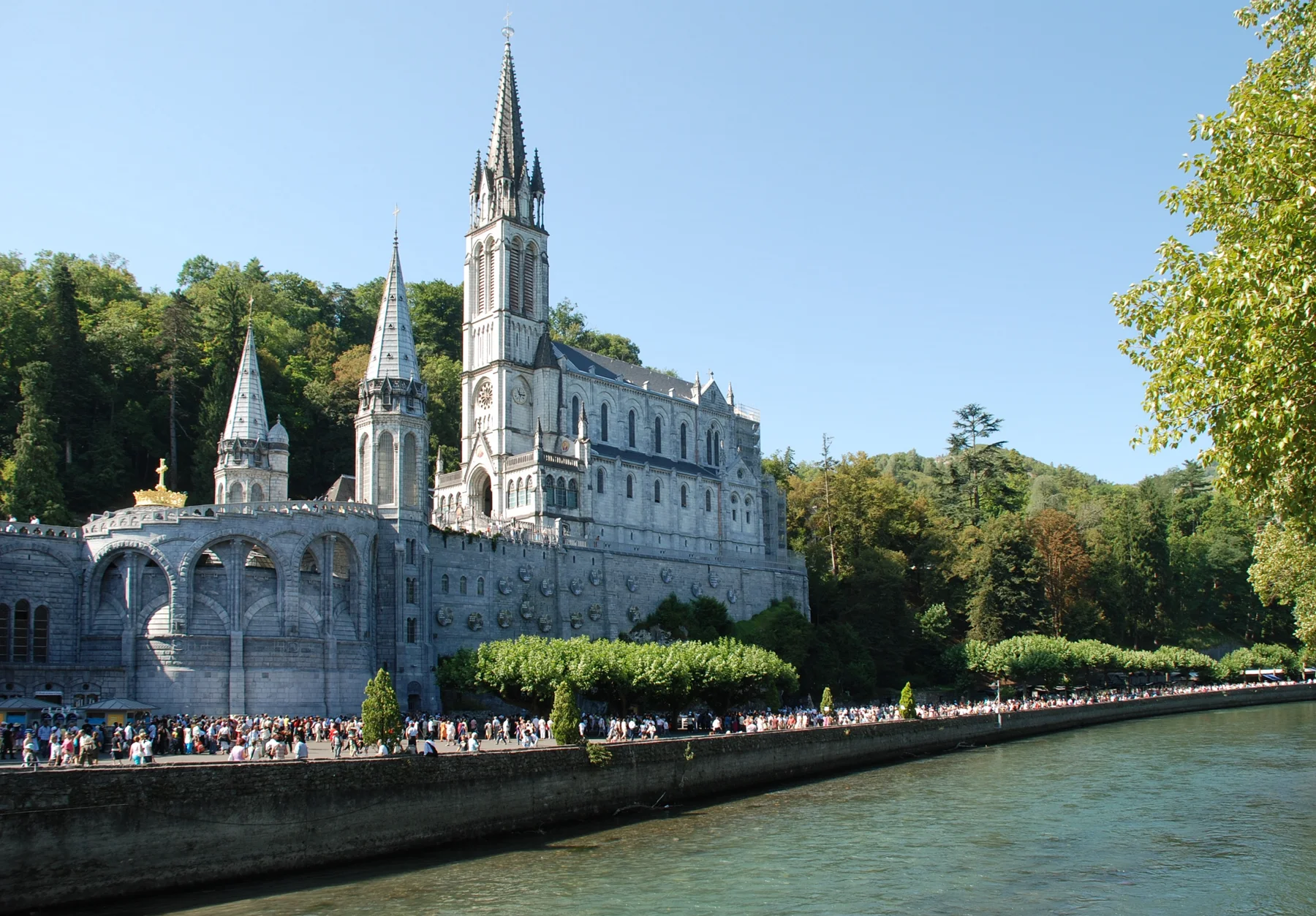
This journey would go to one place and stay there: the Sanctuary of Our Lady of Lourdes, the best-known Catholic shrine of prayer for the sick, where the sanctuary itself says the poor and the sick take precedence. Instead of moving between cities, the days would circle the same few places: the Grotto, the spring, and the sanctuary's own liturgies. Staying put is the point. Travel is often the hardest part for someone who is unwell, so a single base would spare the packing and the coach days and give the time to prayer, rest and return visits. The order would be simple: first the Grotto and the story of Bernadette, then the water gesture, then the sacraments and the prayer of the whole sanctuary, with the final days left open. No cure is promised to any pilgrim, here or anywhere.
The route, and why each place belongs
- 1
Lourdes: the Grotto of Massabielle
Why it belongs
The apparitions of 1858 to St. Bernadette Soubirous took place here, and they gave the Church the shrine where the sick are given the first place. Bernadette herself lived with chronic illness and died at 35; Our Lady had told her, "I do not promise to make you happy in this world but in the other."
What you would do there
The first days would begin with an orientation to the sanctuary and unhurried time at the Grotto: sitting or standing in silence before the niche, lighting a candle, and leaving the written intentions carried from home for people who could not come. A pilgrim could return here as often as strength allows, at different parts of the day.
- 2
Lourdes: the spring and the water gesture
Why it belongs
Washing and drinking at the spring Our Lady pointed out to Bernadette is the gesture most associated with prayer for healing at Lourdes. The sanctuary attributes no power to the water itself; the gesture is a sign of prayer and conversion.
What you would do there
A pilgrim would take part in the water gesture as the sanctuary makes it available, washing the hands and face and drinking as an act of prayer. Queues are possible, so this would be given a day of its own, with nothing else pressing after it.
- 3
Lourdes: the sanctuary's liturgies and the blessing of the sick
Why it belongs
The centre of the prayer at Lourdes is Christ present in the Eucharist, not the water. During the sanctuary's Eucharistic procession the sick are blessed with the Blessed Sacrament, and the Rosary is prayed in the candlelight procession, where the sick are among the intentions.
What you would do there
The middle days would join the public worship the sanctuary itself offers: Mass, Eucharistic adoration, the Eucharistic procession with the blessing of the sick, and the candlelight Rosary procession, each as the sanctuary's programme allows. There would be time for Confession, and a pilgrim who is seriously ill could ask a priest about the Anointing of the Sick. The last full day would be left free for whatever a pilgrim wishes to revisit.
Prayer and the sacraments
Mass would be joined at the sanctuary where the schedule permits, with time kept for Eucharistic adoration, the Rosary and silence at the Grotto; clergy arrangements are confirmed for each departure. Confession would be possible where confessors are available. The Anointing of the Sick depends on a priest and on the pilgrim's own situation, so it could be asked about but never assumed, and prayer for healing here is a request, never a guarantee.
Pilgrim’s Time
Pilgrim's Time, the protected free time inside a pilgrimage, would matter more than usual on this journey: part of every day would be left unscheduled for rest, for a return to the Grotto, or for sitting quietly with the person you came with or came for. A caregiver could use it simply to pray and to rest.
Pilgrim Pace
The sanctuary describes its main places of worship as accessible and lends wheelchairs, but distances inside it are long, queues are possible, and processions involve standing or sitting outdoors in changeable weather. The long flight and the transfer to Lourdes would be the most tiring part. This would be an ordinary group pilgrimage: Bold Pilgrim provides no nursing or medical care, any assistance an individual needs has to be arranged before travel, and anyone who is ill should speak with a physician before committing.
How Pilgrim Pace worksOther ways to make this pilgrimage
- Fátima & Lourdes. The existing Classic gives its Lourdes days to the Grotto, the water gesture and the sanctuary's public liturgies after several days at Fátima, for a pilgrim who can manage a longer route with a travel day between the two shrines.
- Grief and forgiveness at Kraków-Łagiewniki. For a pilgrim whose wound is guilt, grief or an inability to forgive, a journey could instead centre on the Divine Mercy Sanctuary, with the tomb of St. Faustina and the confessionals of Łagiewniki, and without any language of guaranteed consolation.
- A pilgrimage of the sick, or one close to home. Someone who needs nursing care would be better served by an organized pilgrimage of the sick to Lourdes, such as those of the Order of Malta or a diocese, which travel with doctors, nurses and volunteers; and a local shrine or a day's journey can be a real pilgrimage too.
No dated departures are currently announced. This is a journey Bold Pilgrim is considering, described so you can picture it. Dates, priest, Gateway Airport and price are published on a departure itself, and only when confirmed.
WHAT YOU MAY EXPERIENCE
What a pilgrim might experience
At a shrine shaped by prayer for the sick, the usual order of the world is reversed. At Lourdes those who are ill or disabled are given the first place, can be received within the sanctuary itself when they travel with an organized pilgrimage, and are accompanied by volunteers who come to serve them. Some pilgrims say the first relief is simply not having to hide what they carry.
The prayer itself is plain: Mass, Confession, the Rosary, Eucharistic adoration and the blessing of the sick, time in silence at the Grotto, the gesture of washing and drinking at the spring. A pilgrim who is seriously ill may also ask a priest about the Anointing of the Sick. The Catechism names among its effects "the strengthening, peace, and courage to endure in a Christian manner the sufferings of illness or old age" and "the restoration of health, if it is conducive to the salvation of his soul" (CCC 1532).
People who serve at Lourdes for years describe what they see most often. A few pilgrims report physical improvement, and a very small number of cures have been investigated and recognized. Far more common is a change in how a person carries the illness: a Confession after decades, a reconciliation, the end of a long anger at God, a peace about what is coming. Some pilgrims go home with nothing they can name, and that too is an honest outcome. Nothing here can be promised or scheduled.
In practice
- Praying in silence at a place where the sick are given the first place
- Mass, Confession and adoration at the heart of the pilgrimage, as the shrine and the priests present allow
- The blessing of the sick, and the Anointing of the Sick for those the Catechism describes (CCC 1514-1515), where a priest is available
- The water gesture at Lourdes, as an act of prayer
- Carrying written intentions for people at home
- Being helped without embarrassment, or helping someone else
- For some, coming home with the same diagnosis and a different way of carrying it
Who a healing pilgrimage may be for
It may be for someone living with serious or chronic illness or disability who is able to travel with the right support; for someone recovering after treatment; for a caregiver; for a family praying for a member who is too ill to come; for someone in grief; and for someone whose wound is interior, including a need to forgive or be forgiven. It is also for the healthy person who wants to serve the sick.
It may not be the right time if travel itself would endanger you, or if you are hoping a journey will replace care you need at home. Speak with your physician before committing, and tell the organizer exactly what you need. A local shrine, Mass in your own parish, or a day's journey can be a real pilgrimage. Christ is no less present to the person who cannot leave a bed.
- People living with serious or chronic illness or disability who can travel with support
- Caregivers, spouses and adult children of someone who is ill
- Families praying for a member who cannot make the journey
- People in grief, including after miscarriage or the death of a spouse or child
- People carrying an interior wound: guilt, estrangement, an injury done to them
- Those who want to serve the sick as helpers
- Doctors, nurses and others who work in health care
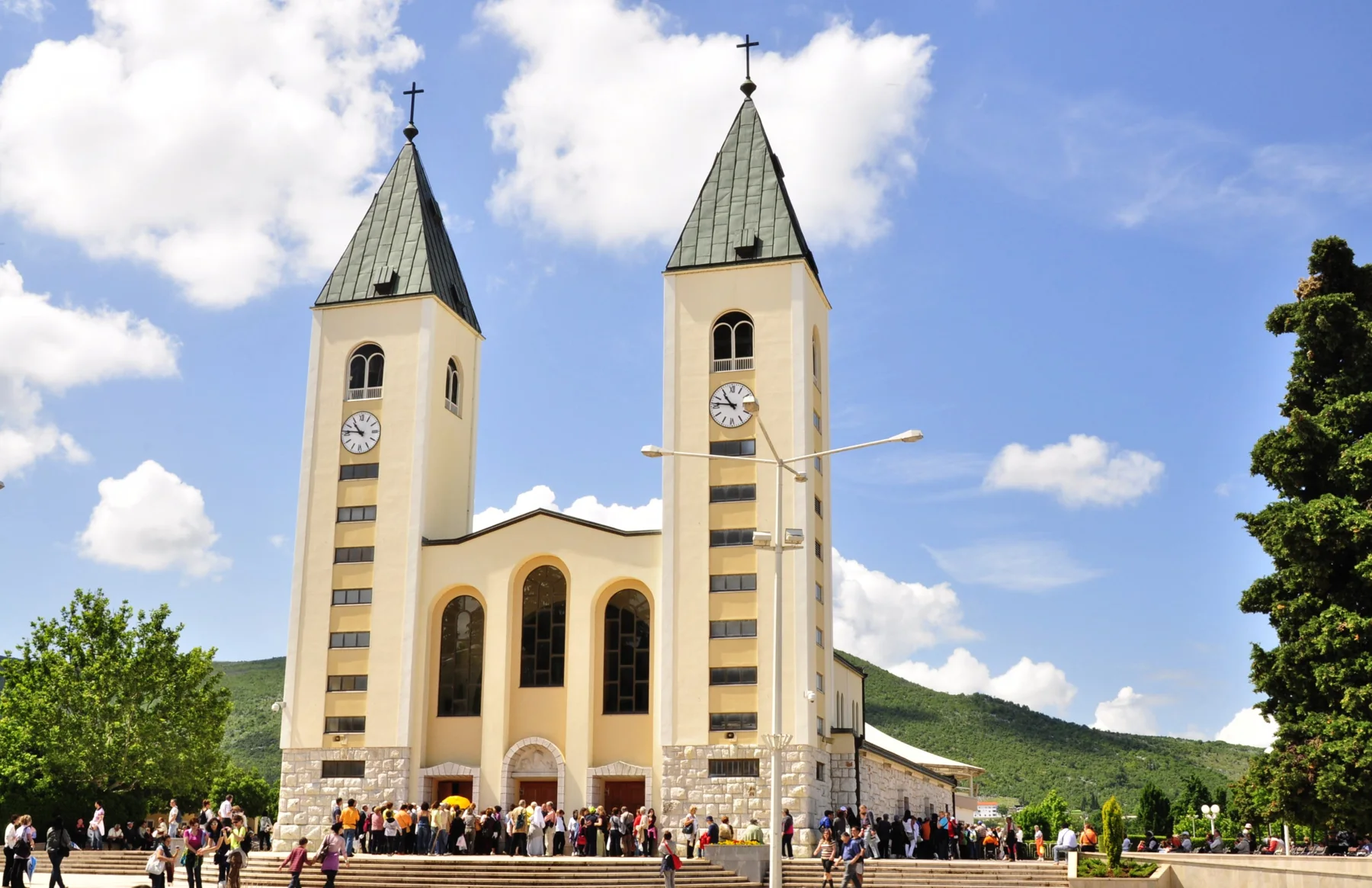
A spiritual purpose has no Pilgrim Pace rating; the actual itinerary determines the pace. Typical considerations: the Sanctuary of Lourdes describes its main places of worship as accessible and lends wheelchairs, but distances inside it are long and processions involve standing or sitting outdoors in changeable weather. Medjugorje's two hills are rocky and optional. Long flights and coach transfers are often the hardest part for someone who is unwell. Pilgrim's Time, the protected free time inside a pilgrimage, matters more than usual here, and any individual assistance must be arranged before travel.
UNDERSTANDING THIS PILGRIMAGE
Yes: you can bring it to Jesus Christ on a healing pilgrimage, a journey to a shrine or holy place made in order to pray for healing of the body, of the heart, or of someone you love. Catholics have made such journeys since the first centuries, and the Church encourages the prayer while promising no particular outcome; the Catechism says plainly that even the most intense prayers do not always obtain the healing of all illnesses (CCC 1508). What the Church holds out to every pilgrim is Christ Himself, who is met in the sacraments, in the prayer of the Church, and in the company of others who are carrying something too.
The Catholic foundation: Christ, physician of souls and bodies
The Gospels are full of sick people being carried to Jesus. He does not send them away for asking. The Catechism reads His compassion for the sick as a sign that God has come close, and says He came to heal the whole person, soul and body (CCC 1503). When four friends lower a paralyzed man through a roof, Jesus first says, "Child, your sins are forgiven," and only then, "Rise, pick up your mat, and go home" (Mark 2).
The Church has kept praying for the sick ever since. The Letter of James tells the sick to call for the priests of the Church to pray over them and anoint them with oil, and that practice is the sacrament of the Anointing of the Sick. In 2000 the Congregation for the Doctrine of the Faith taught that the desire of a sick person to be healed is "both good and deeply human," especially when it takes the form of trusting prayer. It also noted that healings at places of prayer have been attested throughout the Church's history, and named Lourdes as an example in our own time.
The same teaching is honest about the limit. Illness remains an evil, and it is right to ask to be delivered from it. Yet the Catechism states that even the most intense prayers do not always obtain the healing of all illnesses (CCC 1508). St. Paul begged three times for his own affliction to be removed and was told, "My grace is sufficient for you." Pope St. John Paul II, in Salvifici Doloris, wrote that in the Cross human suffering itself has been redeemed, so that a person who suffers can be united to Christ in a way that bears fruit for others. A healing pilgrimage holds both truths together: you ask boldly, and you entrust the answer to God.
Why people are drawn to a healing pilgrimage
Some come with a diagnosis. Some come for a child, a spouse or a parent who cannot travel. Some come years after a death, a divorce, a miscarriage or an injury done to them, because ordinary life never gave them a place to set it down. Others are caregivers who have run out of strength. None of these people needs to qualify. The Sanctuary of Lourdes describes its own purpose in a sentence: the poor and the sick take precedence there.
It helps to be clear about what the journey is. A pilgrimage is prayer made with the body. It is not a treatment and not a substitute for medical or psychological care; the Church herself runs hospitals, and Lourdes keeps a medical office precisely because it takes medicine seriously. Nor is it a transaction in which enough faith or enough miles earns a cure. Jesus rejected the idea that sickness is a verdict on the sick person: of the man born blind He said, "Neither he nor his parents sinned" (John 9). The Congregation for the Doctrine of the Faith says as plainly that "not even the most intense prayer obtains the healing of all sicknesses."
What the Church means by a cure
The word "miracle" is used loosely; the Church uses it sparingly. As of October 2026, the Sanctuary of Lourdes reports that of more than 7,000 healings reported there since 1858, 72 have so far been recognized as miraculous. A reported cure is examined by physicians of the sanctuary's Medical Bureau and then by the International Medical Committee of Lourdes, which can conclude only that a healing is medically unexplained in the present state of scientific knowledge. The judgment that it is a sign from God belongs to the bishop of the diocese where the healed person lives.
Two things follow for a pilgrim. First, the small number is the result of deliberate caution and says nothing about how many graces are received; most of what happens in a human heart at a shrine is never submitted to a committee. Second, belief in any particular cure is not required of a Catholic. The Faith rests on Christ's Resurrection, and a recognized cure is at most a sign pointing to it.
Questions pilgrims ask
What is a healing pilgrimage?
A healing pilgrimage is a journey to a shrine or holy place made to pray for healing of body, mind or spirit, for yourself or for someone else. In Catholic practice it centres on Mass, Confession and prayer. The Church encourages asking God for healing and teaches that the desire to be well is good. She does not promise a cure: the Catechism says even the most intense prayers do not always obtain the healing of all illnesses (CCC 1508). The pilgrim asks, and entrusts the answer to Christ.
Will I be healed if I go on a pilgrimage to Lourdes?
No one can promise that, and the Sanctuary of Lourdes does not. Praying for healing is good and encouraged; it is a request, never a guarantee. Continue your medical care, and go to ask and to entrust yourself to Christ.
Full answer: Does Lourdes water heal?
Is it right for a Catholic to pray for physical healing, or should I simply accept my suffering?
You may do both. The Church teaches that a sick person's desire to be healed is "both good and deeply human," and Jesus never rebuked anyone for asking. Pope St. John Paul II wrote in Salvifici Doloris that in the Cross of Christ "human suffering itself has been redeemed." St. Paul asked three times to be delivered and was answered, "My grace is sufficient for you." So pray plainly for healing, keep using medicine, and add, as Jesus did in Gethsemane, "not my will but yours."
Is a healing pilgrimage only for people who are physically ill?
No. Pilgrims come with grief, guilt, estrangement, the after-effects of harm done to them, and exhaustion from caring for someone else, as well as with illness. When a paralyzed man was brought to Jesus, He forgave his sins before He told him to rise (Mark 2). A pilgrimage is prayer, not therapy or treatment. If you are living with depression, trauma or another mental illness, a pilgrimage can accompany professional care but should never replace it.
Can I go on a pilgrimage if I am seriously ill?
Often yes, with your physician's advice and the right kind of pilgrimage. An ordinary group pilgrimage cannot provide nursing care; organized pilgrimages of the sick to Lourdes travel with doctors, nurses and volunteers. If travel is not possible now, that is not a spiritual failure.
Full answer: Can I go on a pilgrimage if I am seriously ill?
Can I receive the Anointing of the Sick on a pilgrimage?
Possibly; it depends on a priest and on your situation. The Catechism says the Anointing of the Sick "is not a sacrament for those only who are at the point of death," and that the fitting time to receive it has arrived "as soon as anyone of the faithful begins to be in danger of death from sickness or old age" (CCC 1514). It may be repeated if the illness grows more serious, and "only priests (bishops and presbyters) are ministers of the Anointing of the Sick" (CCC 1515-1516). Ask before you travel instead of assuming, and consider speaking with your own parish priest before you leave.
Is a healing pilgrimage also for caregivers?
Yes. At Lourdes the person who pushes the wheelchair is a pilgrim too. Organized pilgrimages of the sick, such as those of the Order of Malta, usually allow a caregiver to accompany each sick pilgrim, and volunteers share the work so that the caregiver can pray and rest. Pope St. John Paul II wrote that everyone who stops beside the suffering of another is a Good Samaritan. If you are the only helper for someone with heavy needs, ask the organizer what assistance is provided before you commit, because an ordinary group tour will not supply it.
Can a pilgrimage help with grief?
It can give grief a place to go; it will not remove it. Some who have walked or travelled after a death say the sorrow came with them and surfaced on the road, and that prayer, the company of others who had also lost someone, and a place to entrust the person to God helped them carry it. Catholics also pray for the dead, so a pilgrimage can be offered for the one you mourn. Go without a deadline for feeling better, and keep whatever support you already have at home.