Why make this pilgrimage
You have prayed, and nothing has moved: a marriage near its end, a child who no longer speaks to you, an illness, a debt, an addiction in the family, a grief with no visible way through. This pilgrimage is for the intention that looks hopeless. You would carry it to the places of two saints Catholics have long turned to in such cases, St. Rita of Cascia and the Apostle St. Jude, and ask them to pray with you to God.
What it seeks is somewhere to bring the weight before Christ, in the company of saints who knew that kind of weight. No shrine, saint or novena guarantees an outcome, and this journey does not either. It would be a way of asking with the whole Church, of entrusting the answer to God, and of giving thanks before you know what the answer is. It is also for those who come to pray for someone else, and for the grateful.
THE JOURNEY
Rita and Jude: Cascia, Roccaporena and St. Peter's in Rome
- Where
- Italy, Vatican City
- Length
- About a week
- Status
- Under consideration
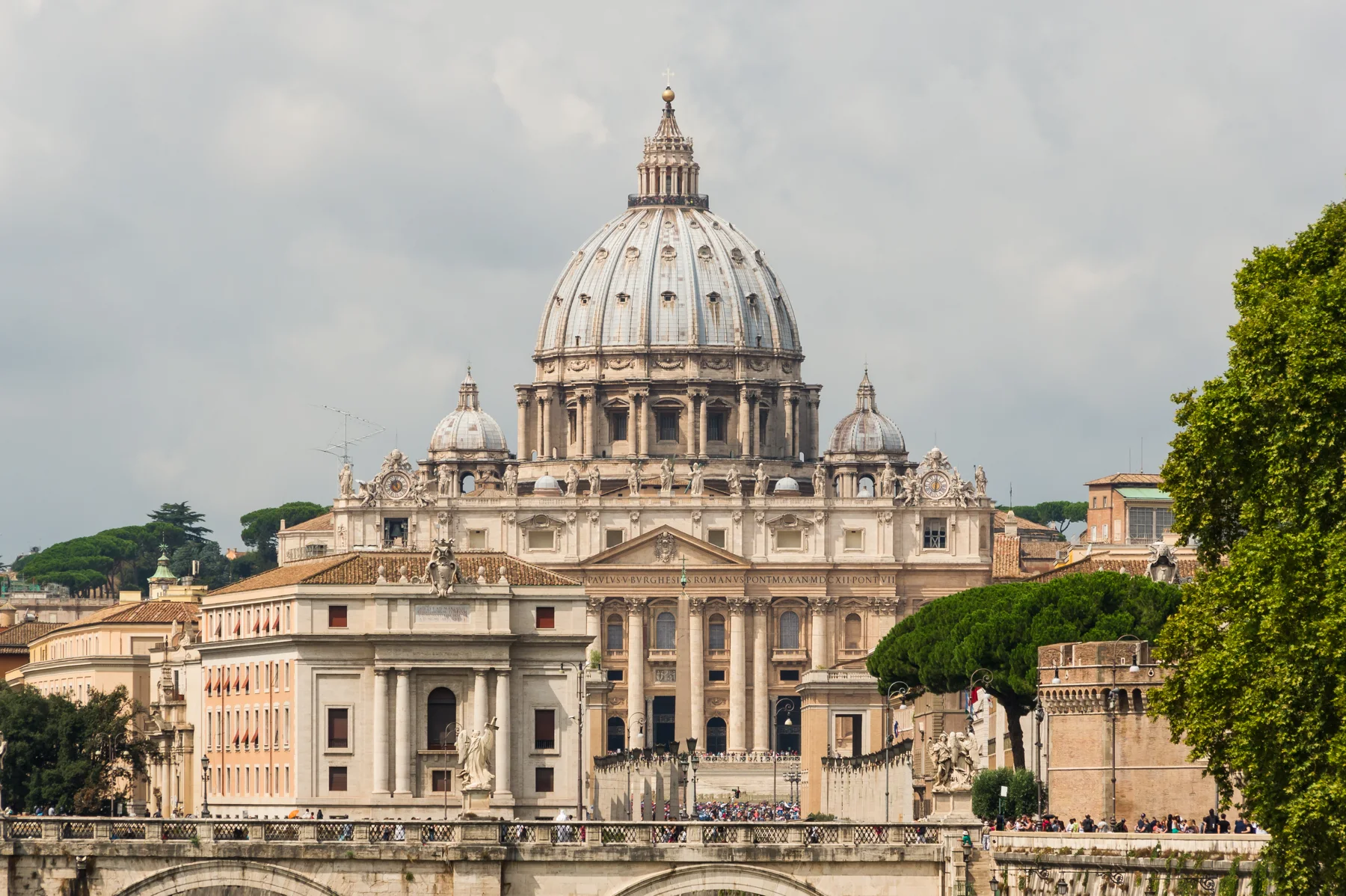
This journey would go first into the mountains of southeastern Umbria and stay there, at Cascia, where St. Rita's body rests, and at Roccaporena, the village where she was born, married and widowed. Only then would it come down to Rome, to the altar in St. Peter's Basilica where the relics venerated as those of St. Jude lie, near the tomb of Peter. The order is deliberate. Cascia is a hill town reached only by road, and a hurried day visit leaves little room to pray, so the first days would be given to staying: time before the urn, in the monastery, at Confession and at Mass. Rome would come last, so that the intention carried through Rita's own country is finally placed at the altar, at the heart of the Church.
The route, and why each place belongs
- 1
Cascia: the Basilica of St. Rita
ItalyWhy it belongs
This is the centre of the pilgrimage. St. Rita's body rests in a silver and crystal urn in the basilica built for her between 1937 and 1947; the sanctuary says the face, hands and feet are mummified and the whole skeleton lies beneath her Augustinian habit. Her own sanctuary calls her "the saint of impossible cases," a popular title and not a decree of the Church, and St. John Paul II described her as "the advocate of the poor and the despairing."
What you would do there
The journey would begin here, with unhurried time before the urn: naming the intention honestly and asking St. Rita to pray with you. A pilgrim could leave a written intention, including those carried from home for others, and could return to the chapel more than once over the days in Cascia.
- 2
Roccaporena
ItalyWhy it belongs
A few kilometers from Cascia is the village where Rita lived the part of her life most pilgrims recognise in their own: wife, mother and widow. Her husband was murdered, she forgave his killers, and her two sons died, all before she entered the monastery.
What you would do there
A pilgrim would walk through the small village to the house where she was born, the house of her married life and the Garden of the Miracle associated with the rose, her emblem. Those who are able could climb to the Scoglio, the rock of prayer above the village where tradition says she prayed; those who are not could keep the same time in prayer below.
- 3
Cascia: the Monastery of St. Rita
ItalyWhy it belongs
Beside the basilica stands the monastery where Rita lived for some forty years as an Augustinian nun, and where she died. It at first refused her, and admitted her only after the feuding families had made peace. Augustinian nuns still live there in enclosure.
What you would do there
The parts of the old monastery open to visitors could be seen without haste: her cell, the wooden casket that first held her body, her wedding ring and rosary, the old choir, the vine and the rose garden. This would also be the day for Confession at the sanctuary where confessors are available, for Mass at the basilica where the schedule permits, and for an act of thanksgiving made before leaving Umbria.
- 4
St. Peter's Basilica: the altar of St. Joseph
Vatican CityWhy it belongs
St. Jude Thaddeus, one of the Twelve Apostles, is invoked in desperate cases by long custom, not by any decree. The relics venerated by ancient tradition as his rest with those of St. Simon beneath the altar of St. Joseph in the left transept of St. Peter's.
What you would do there
The journey would end in Rome with a visit to the basilica and protected time for prayer, asking St. Jude to pray with you as St. Rita was asked in Cascia. A pilgrim could attend a public Mass in the basilica if the schedule permits, since a pilgrimage to the saints leads to the altar, and could close with thanksgiving near the tomb of Peter.
Prayer and the sacraments
Mass would be sought at the basilica in Cascia and in St. Peter's where the schedule permits; clergy arrangements are confirmed for each departure. Confession would be possible at the sanctuary in Cascia where confessors are available, and its current arrangements would be checked beforehand. A pilgrim who wishes could pray a novena for the one intention across the days of the journey, with trust and without any claim that a prayer cannot fail, and there would be silence before the urn and at the altar in Rome.
Pilgrim’s Time
Pilgrim's Time, the protected free time inside a pilgrimage, would fall mostly in Cascia, where the basilica is close at hand: time to go back to the urn alone, to write the intention down, to sit in the quiet of a mountain town, or simply to rest. In Rome an open afternoon would follow the visit to St. Peter's.
Pilgrim Pace
Cascia is a hill town with no rail service, reached on winding mountain roads; the regional tourism board notes escalators and lifts from the main car park toward the sanctuary. Roccaporena is small, but the path up the Scoglio is a climb with steps and is optional. St. Peter's Basilica involves security queues and long distances on stone floors, and any individual assistance should be arranged before travel.
How Pilgrim Pace worksIf you can stay longer
Assisi could be added between Cascia and Rome for those who want the towns of St. Francis and St. Clare as well; it is the usual base from which pilgrims reach Cascia by road.
Other ways to make this pilgrimage
- Rome & Assisi, with a day for St. Rita. The existing Classic already visits St. Peter's on its Rome days and uses Assisi as its second base; Cascia is not part of its sample itinerary and would be an added day by road from Assisi.
- A United States pilgrimage of petition: Chicago and Philadelphia. For those who cannot travel abroad, a journey could visit the National Shrine of St. Jude, founded by the Claretian Missionaries in 1929 in South Chicago, and the Augustinians' National Shrine of St. Rita of Cascia in Philadelphia, and would depend on each shrine's own program.
No dated departures are currently announced. This is a journey Bold Pilgrim is considering, described so you can picture it. Dates, priest, Gateway Airport and price are published on a departure itself, and only when confirmed.
WHAT YOU MAY EXPERIENCE
What a pilgrim might experience
At Cascia, in the mountains of southeastern Umbria, pilgrims pray before the silver and crystal urn that holds St. Rita's body in the basilica built for her between 1937 and 1947. Beside it is the monastery where she lived for some forty years and where Augustinian nuns still live in enclosure. Parts of the old monastery can be visited: her cell, the wooden casket that first held her body, her wedding ring and rosary, the vine and the rose garden. The basilica has its own place for Confession; check the sanctuary's current arrangements.
A few kilometers away is Roccaporena, the village where she was born, married and widowed. Pilgrims visit the house where she was born, the house of her married life, the Garden of the Miracle associated with the rose, and the Scoglio, the 'rock of prayer' above the village where tradition says she prayed. The rose is her emblem: John Paul II said that the worldwide devotion to St. Rita is symbolized by the rose.
In Rome, the relics venerated as those of St. Jude lie with those of St. Simon beneath the altar of St. Joseph in the left transept of St. Peter's Basilica. For Americans who cannot travel abroad, the National Shrine of St. Jude in Chicago and the National Shrine of St. Rita of Cascia in Philadelphia are places of pilgrimage in their own right.
Whatever the shrine, the pattern is the same: name the intention honestly, ask the saint to pray with you, go to Confession, take part in the Mass, and give thanks before you know the answer.
In practice
- Praying before the urn of St. Rita in the basilica at Cascia
- Visiting her cell, the old choir, the vine and the rose garden in the monastery
- Walking through Roccaporena and, for those able, climbing to the Scoglio
- Confession, and Mass at the shrine where the schedule permits
- Praying at the altar of Sts. Simon and Jude in St. Peter's Basilica
- Leaving a written intention and making an act of thanksgiving
Who this pilgrimage may be for
It is for the person carrying something that has not moved: a marriage near its end, a child who will not speak to you, an illness, a debt, an addiction in the family, a grief with no visible way through. It is also for those who pray on someone else's behalf, as the people in the Gospels did who brought the paralyzed and the dying to Jesus.
It suits someone who can hold two things together: that God can do what you cannot, and that He may answer differently than you ask. If you are looking for a method that is sure to work, this is the wrong pilgrimage. If you are looking for somewhere to bring the weight before God, in the company of saints who knew that kind of weight, it may be the right one.
It is also for the grateful. Thanksgiving belongs to this devotion as much as petition does.
- People carrying an intention that seems to have no human solution
- Spouses and parents praying for a marriage or a child
- Those praying for someone else who cannot or will not pray
- Pilgrims returning to give thanks
- Catholics who love St. Rita or St. Jude and want to understand the devotion rightly
A spiritual purpose has no Pilgrim Pace rating; the actual itinerary determines the pace. Typical considerations: Cascia is a hill town reached only by road, with no rail service, on winding mountain routes; the regional tourism board notes escalators and lifts from the main car park toward the sanctuary. Roccaporena is small, but the path up the Scoglio is a climb with steps and is optional. St. Peter's Basilica involves security queues and long distances on stone floors. Any individual assistance should be arranged before travel.
UNDERSTANDING THIS PILGRIMAGE
Yes. When a situation seems beyond repair, Catholics have long carried it to the shrines of the saints they turn to in such cases, above all St. Rita at Cascia and Roccaporena in Umbria and the Apostle St. Jude, whose relics are venerated in St. Peter's Basilica; that journey is what a Saints of the Impossible pilgrimage is. The pilgrim asks these saints to pray with him or her to God. No shrine, saint or novena guarantees an outcome. The pilgrimage offers a place to ask with the whole Church, and to entrust the answer to Christ.
What a Saints of the Impossible pilgrimage is
'Saints of the impossible' is a name from popular devotion, not an official category of the Church. The devotion is real and old, and it is strongest around two saints.
St. Rita of Cascia was a wife, a mother, a widow and then an Augustinian nun in fifteenth-century Umbria. Her husband was murdered; she forgave his killers; her two sons died; the monastery at Cascia at first refused her and admitted her only after the feuding families had made peace. Tradition, recorded in the inscription on her fifteenth-century casket, says that for fifteen years she bore a wound on her forehead, understood as a share in Christ's crown of thorns. Pope Leo XIII canonized her on 24 May 1900. 'Saint of the impossible' is a popular title, not a decree of the Church. Her own sanctuary uses it ("the saint of impossible cases"), and the old Catholic Encyclopedia records that so many favors were reported through her prayers that in Spain she was called 'La Santa de los Imposibles.' St. John Paul II described her in 2000 as "the advocate of the poor and the despairing."
St. Jude Thaddeus is one of the Twelve Apostles. Benedict XVI noted how little is known about him: he asks Jesus a question at the Last Supper, and the short New Testament Letter of Jude is attributed to him. He is invoked in desperate cases by long custom, not by any decree. In the United States the devotion spread from the National Shrine of St. Jude, founded by the Claretian Missionaries in 1929 in a South Chicago parish whose people depended on the steel mills.
Popular lists add other names, among them St. Philomena, whose relics, according to the Catholic Encyclopedia, have been venerated at Mugnano del Cardinale near Naples since 1805. This page is built on St. Rita and St. Jude.
The Catholic foundation: nothing is impossible for God, and the saints pray with us
The word 'impossible' in this pilgrimage's name comes from the Gospel before it comes from any saint. The angel tells Mary that nothing will be impossible for God (Luke 1:37). Jesus tells a desperate father, "Everything is possible to one who has faith," and the father answers, "I do believe, help my unbelief" (Mark 9:23-24). In Gethsemane Jesus himself prays, "Abba, Father, all things are possible to you. Take this cup away from me, but not what I will but what you will" (Mark 14:36). A bold request and a surrender are held together in the same prayer.
Catholics do not make that prayer alone. The Catechism teaches that those who are in heaven "do not cease to intercede with the Father for us" (CCC 956), that their intercession is "their most exalted service to God's plan," and that "we can and should ask them to intercede for us and for the whole world" (CCC 2683). To ask St. Rita or St. Jude for help is, in the Catechism's own word, to ask them to intercede: to pray to the Father with us and for us. The Catechism adds that "our communion with the saints joins us to Christ" (CCC 957).
So a pilgrimage to a saint's shrine is not a detour around Jesus. It leads to the altar and the Mass, and the Catechism says of Christ that He "also prays for us" (CCC 2741).
Asking without bargaining: what the Church says
A desperate intention can tempt anyone to look for a formula, and the Church addresses this directly. The Catechism states: "To attribute the efficacy of prayers or of sacramental signs to their mere external performance, apart from the interior dispositions that they demand, is to fall into superstition" (CCC 2111). The Holy See's Directory on Popular Piety and the Liturgy asks that devotion to Mary and the saints never obscure Christ, "the one Mediator" (n. 57). The Church attaches no guarantee to any prayer, novena or shrine, and neither does this page.
A novena is nine days of prayer for one intention, a custom traditionally traced to the days the Apostles and Mary spent in prayer between the Ascension and Pentecost (Acts 1:14).
On prayer that seems to go unanswered, the Catechism asks what image of God moves our petition: "an instrument to be used," or the Father of our Lord Jesus Christ (CCC 2735). St. Paul writes that he begged the Lord three times to be freed of his affliction and received the answer, "My grace is sufficient for you, for power is made perfect in weakness" (2 Corinthians 12:8-9). The Gospel shape of the prayer is the one Jesus prayed in Gethsemane: ask for everything, and add, "not what I will but what you will."
Questions pilgrims ask
What is a Saints of the Impossible pilgrimage?
It is a pilgrimage made for an intention that seems hopeless, to the shrines of the saints Catholics traditionally invoke in such cases: above all St. Rita at Cascia and Roccaporena in Umbria, and the Apostle St. Jude, whose relics are venerated in St. Peter's Basilica. Pilgrims ask these saints to pray with them to God, go to Confession, take part in the Mass and give thanks. The name comes from popular devotion. Nothing is guaranteed by the journey; the pilgrim asks boldly and leaves the answer to Christ.
Who are the saints Catholics turn to in impossible causes?
Two saints above all. St. Rita of Cascia, an Augustinian nun canonized in 1900, is popularly called the saint of the impossible, a name her own sanctuary also uses. St. Jude Thaddeus, one of the Twelve Apostles, is invoked in desperate or hopeless cases. Popular lists add other names. These are titles of devotion, not formal designations of the Church. The Catechism describes what the saints do as intercession: they pray to the Father for us.
Why is St. Rita called the saint of the impossible?
It is a popular title, not a decree of the Church. It grew from the many favors people reported after asking her prayers; the old Catholic Encyclopedia says that for this reason she was called in Spain 'La Santa de los Imposibles,' and the sanctuary at Cascia uses the name too. Her life explains why people in trouble trust her. She was widowed by a murder, forgave the killers, lost both sons, was refused by the monastery and then admitted, and, by tradition, carried a wound on her forehead for fifteen years. St. John Paul II called her "the advocate of the poor and the despairing."
Why do Catholics turn to St. Jude in hopeless causes?
By long devotional custom. No Church document that we could cite assigns him the title, and the official sources consulted for this page (Benedict XVI's catechesis on him, Vatican News, the National Shrine of St. Jude) do not say how the custom began. Benedict XVI observed how little the Gospels record of him and noted that he is not to be confused with Judas Iscariot. In the United States the devotion spread from the National Shrine of St. Jude, founded by the Claretians in 1929 in a South Chicago parish whose people depended on the steel mills.
When I ask St. Rita or St. Jude to pray for me, to whom is the prayer addressed?
The Catechism of the Catholic Church says that those in heaven "do not cease to intercede with the Father for us" (CCC 956) and that "we can and should ask them to intercede for us and for the whole world" (CCC 2683). In the Catechism's words, the saints intercede with the Father; the pilgrim asks for their prayers. The Directory on Popular Piety calls Christ "the one Mediator" (n. 57).
Is there a novena that never fails?
The Church attaches no such guarantee to any novena. A novena is nine days of prayer for one intention. The Catechism of the Catholic Church states: "To attribute the efficacy of prayers or of sacramental signs to their mere external performance, apart from the interior dispositions that they demand, is to fall into superstition" (CCC 2111).
Where is St. Rita's body, and can pilgrims see it?
St. Rita's body rests in a silver and crystal urn in the Chapel of St. Rita in her basilica at Cascia, Umbria, where pilgrims may pray before it. The sanctuary says the face, hands and feet are mummified, with the whole skeleton beneath her habit.
Full answer: Where is St. Rita of Cascia's body, and is it incorrupt?
Where are the relics of St. Jude?
The relics venerated as those of St. Jude rest with those of St. Simon beneath the altar of St. Joseph in the left transept of St. Peter's Basilica. An arm relic is kept in the Roman church of San Salvatore in Lauro. The identification rests on tradition.
Full answer: Where is St. Jude buried, and can you visit his tomb?