Why make this pilgrimage
You promised each other everything at the altar, and then life got busy. An anniversary is coming and a party does not seem like enough, or the children are old enough to remember a journey, or the marriage has been through a hard season and you are both still willing to pray. This pilgrimage is for a husband and wife, or a whole household, who want to step out of the ordinary week and stand together in front of Christ, who joined them.
It helps to go somewhere a marriage like yours was actually lived. Sts. Louis and Zélie Martin kept a shop, raised their children and prayed at home, and the Church canonized them together. In their two towns in Normandy a couple can thank God for their own home, ask forgiveness and help, and carry every member of the family by name, including the ones who are not there.
THE JOURNEY
In the Home of Sts. Louis and Zélie Martin: Alençon and Lisieux
- Where
- France
- Length
- About four to five days
- Status
- Under consideration
This journey would stay in two towns of Normandy and follow one marriage from beginning to end. It would begin in Alençon, where Louis and Zélie Martin married, worked and raised their family, and where the sanctuary's whole mission is couples and families. It would then move to Lisieux, where Louis brought his daughters after Zélie's death and where the couple's principal reliquary is kept. The order is the order of their life: the wedding church, the family home, the house of widowhood, and the place where the Church now honors them as the first spouses canonized together.
The route, and why each place belongs
- 1
Alençon: Basilica of Notre-Dame
Why it belongs
This is the church where Louis and Zélie Martin married in 1858 and where their youngest daughter, Thérèse, was baptized. A pilgrimage for a marriage would begin where a holy marriage began.
What you would do there
Couples would pray in the church of the Martins' wedding and call to mind their own wedding day. A blessing of spouses or a renewal of commitment could take place here only where it can be arranged with the accompanying priest and the sanctuary.
- 2
Alençon: the Martin family home and the Sanctuary of Louis and Zélie
Why it belongs
The house where the Martins lived as a family stands at the center of a sanctuary that receives couples and families and marks wedding anniversaries. It shows holiness lived in rooms, at work and at table.
What you would do there
Pilgrims would stand in the rooms where a married couple became saints, and could follow the sanctuary's own route through the town to places tied to the family, such as Louis's watch shop. Each couple could leave written intentions for every member of their household.
- 3
Lisieux: Les Buissonnets
Why it belongs
This is the house where Louis raised his daughters after Zélie's death. It belongs to this pilgrimage because marriage and family life include loss, and a widowed father kept a home of faith here.
What you would do there
A quiet visit to the family house, with time to pray for the widowed, for parents raising children alone, and for the dead of one's own family. Children could light a candle and choose whom to pray for.
- 4
Lisieux: Basilica of St. Thérèse
Why it belongs
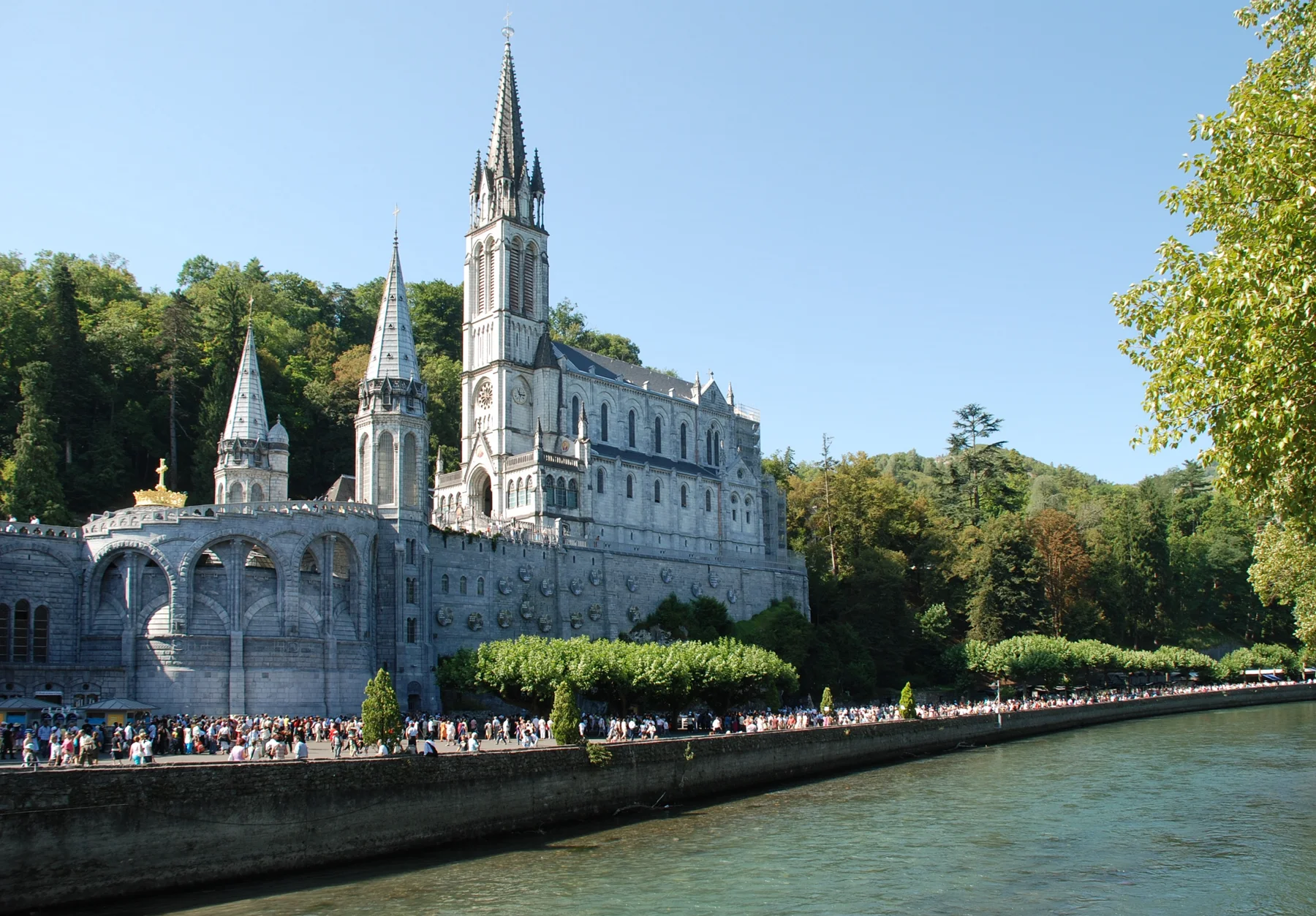
The principal reliquary of Sts. Louis and Zélie Martin is kept beside the crypt of the basilica built in honor of their daughter. The journey would end where the Church honors husband and wife together.
What you would do there
Couples would pray side by side before the reliquary of the two saints, giving thanks for their own marriage and entrusting their home to Christ. Mass in the basilica could be attended where the schedule permits.
Prayer and the sacraments
Mass would be attended side by side where the schedule permits, and clergy arrangements are confirmed for each departure. Confession could be made on the same day by both spouses where confessors are available, and the Rosary could be prayed as a couple or a family, perhaps for the first time. The Church's anniversary blessing of spouses is a blessing and a thanksgiving, not a second wedding, and could be asked for only where it can be arranged.
Pilgrim’s Time
Pilgrim's Time, the protected free time inside the pilgrimage, would be kept in both towns for unhurried meals, a walk, and the conversation a husband and wife do not usually have time for. A couple could use it to choose one intention for the whole journey and one for each other.
Pilgrim Pace
Alençon and Lisieux involve modest walking, and the route has only two bases, which suits children, grandparents and expectant mothers. Families generally do better with one site per half-day, and this journey could be planned that way.
How Pilgrim Pace worksOther ways to make this pilgrimage
- Cana and Nazareth for married couples. A Galilee journey could center on the shrine of the first miracle at Cana and the home of the Holy Family at Nazareth, subject to conditions in the Holy Land at the time.
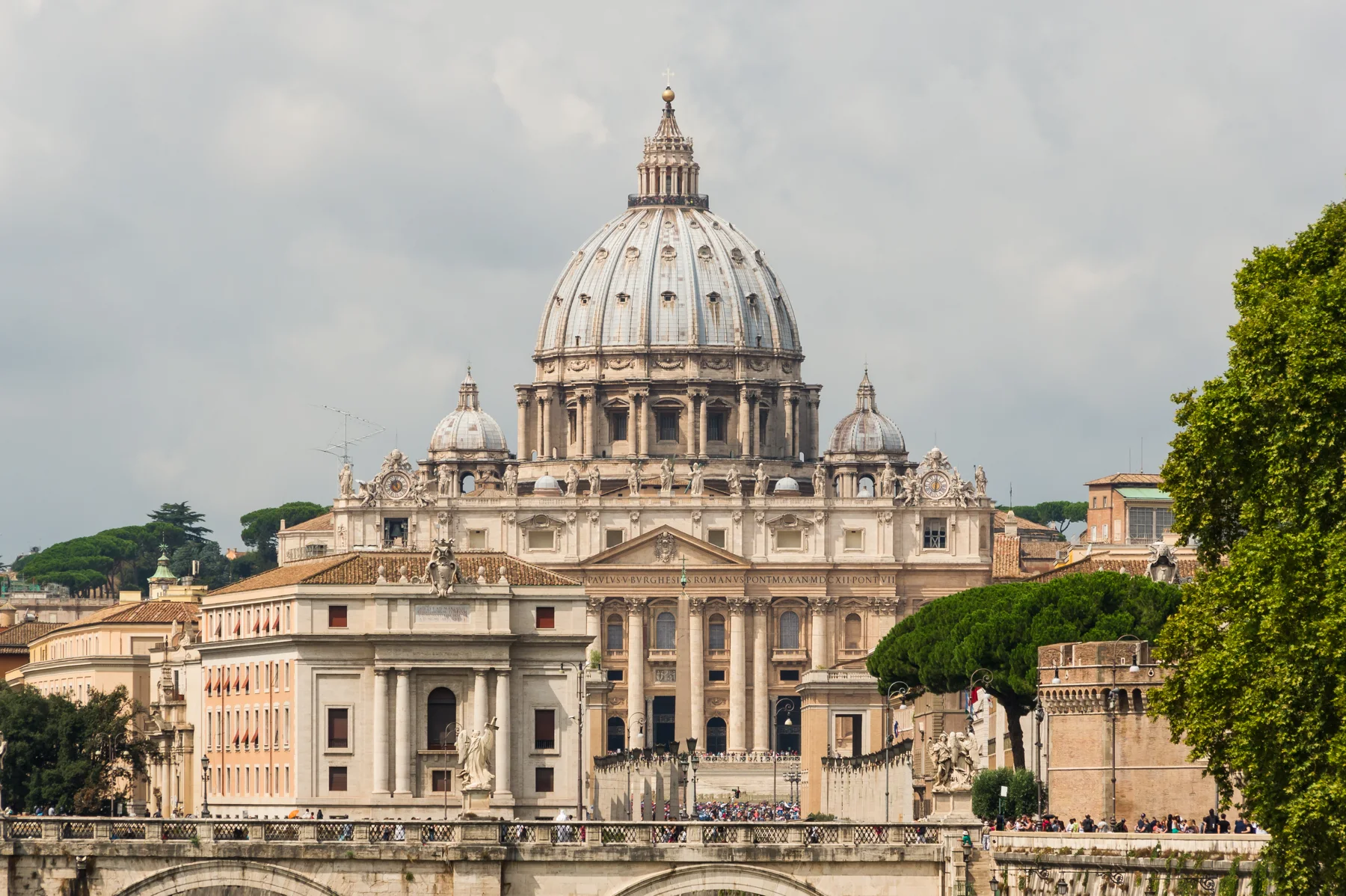
- Loreto and Rome for families. The Holy House of Loreto, St. Mary Major, where Bl. Luigi and Maria Beltrame Quattrocchi married in 1905, and the tomb of St. John Paul II in St. Peter's could form a family journey with short days.
- The Rome & Assisi Classic with an anniversary in mind. Its Rome days already include St. Peter's and St. Mary Major, and a couple marking a milestone could ask in advance whether an anniversary blessing can be arranged.
No dated departures are currently announced. This is a journey Bold Pilgrim is considering, described so you can picture it. Dates, priest, Gateway Airport and price are published on a departure itself, and only when confirmed.
Who it may be for
Couples at a milestone: an engagement, the first year, a tenth, twenty-fifth or fiftieth anniversary. Couples in a dry or difficult season who are still willing to walk beside each other. Parents with children, and grandparents who want to give their grandchildren a memory of faith instead of another holiday. Couples carrying the grief of infertility or the loss of a child. A widow or widower making the journey the two of them had planned.
It is also for households that do not look tidy. A spouse who is not Catholic, or not sure what he believes, is welcome on a Catholic pilgrimage and is never obliged to do more than he can do honestly.
And it is worth saying who might wait. If one spouse is being pressed into going, or the journey is meant to settle an argument, a pilgrimage is the wrong tool. Go when both of you can say, even reluctantly, that you are willing to pray.
- Married couples marking an anniversary or simply wanting several days of prayer together
- Engaged couples and newlyweds who want to begin their marriage on pilgrimage
- Parents traveling with children or teenagers
- Grandparents traveling with grandchildren, and three-generation families
- Couples in a difficult season who are both willing to pray
- Couples hoping for a child, or grieving one
- Couples in which one spouse is not Catholic or not practicing
- Widows and widowers making a journey in thanksgiving for a marriage
- Parish marriage and family ministries
A spiritual purpose has no Pilgrim Pace of its own; the actual itinerary determines the pace. Physically, Galilee, Loreto, Alençon and Lisieux involve modest walking, while Rome involves long days on foot and queues, which matters for young children, strollers, pregnancy and grandparents. Families generally do better with one site per half-day and a fixed base.
UNDERSTANDING THIS PILGRIMAGE
A marriage and family pilgrimage is a pilgrimage made as a couple or as a household, for the sake of the marriage and the home: to thank God for it, to pray for one another, and to ask Christ to strengthen what He joined. It usually leads to places tied to the wedding at Cana, the Holy Family of Nazareth, and married saints such as Sts. Louis and Zélie Martin. It is not a second honeymoon with churches added; the sacraments and shared prayer are the point, and everything leads back to Jesus Christ.
What a marriage and family pilgrimage is
A pilgrimage does not add anything to the sacrament. A couple married once, and that consent does not need repeating. What a pilgrimage offers is time and place: husband and wife, or parents and children, step out of the ordinary week and go together toward the One who is already present in their marriage. St. Paul compares the love of husband and wife to Christ's love for the Church and calls it a great mystery (Ephesians 5; Catechism, n. 1616). A marriage pilgrimage is a way of standing inside that mystery on purpose for a few days.
The Catholic foundation: Christ at a wedding, Christ in a home
The Church teaches that marriage is a covenant by which a man and a woman establish a partnership of the whole of life, and that Christ raised marriage between the baptized to a sacrament (Catechism, n. 1601). She also notices where Jesus began. The Catechism points out that He worked His first sign, at His mother's request, during a wedding feast, and that the Church sees in His presence at Cana a confirmation of the goodness of marriage and a proclamation that marriage will be an efficacious sign of His presence (n. 1613).
The second foundation is the home itself. Christ chose to be born and to grow up within the Holy Family of Joseph and Mary, and the Church calls the Christian family a domestic church, the place where children first hear the faith and where every member lives out his or her baptism through the sacraments, prayer and thanksgiving (Catechism, nn. 1655-1657; Familiaris Consortio, n. 21).
Why couples and families are drawn to it
Most people come for one of a handful of honest reasons. An anniversary is approaching and a party does not seem like enough. A wedding is close, or just past, and the couple wants to begin with prayer. The children are finally old enough to remember a journey, or are about to leave home. Sometimes the reason is harder: a marriage that has grown distant, a long wait for a child, a son or daughter who has stopped practicing, a spouse who does not share the faith, a death in the family.
What these have in common is that the intention belongs to more than one person. That is the difference from most other pilgrimages. You are not only bringing your own prayer; you are bringing your household, including the members who are not there. Often the most valuable thing is simple and unplanned: several days of praying side by side, with no one needing to be driven anywhere.
The places and saints that authentically serve it
Three kinds of place serve this pilgrimage. The first are the Gospel places: Cana in Galilee, where the Franciscans keep the shrine of the first miracle and where couples have long renewed their commitment to each other, and Nazareth, where the Basilica of the Annunciation and the Church of St. Joseph hold the memory of the Holy Family's home. The exact location of first-century Cana is debated by archaeologists; the Church's liturgical memory of the sign is kept at Kafr Kanna, and that is where pilgrims go.
The second are the houses of holy families. Loreto, in Italy, keeps the Holy House, venerated since the Middle Ages as the house of Mary from Nazareth. In 2019 Pope Francis placed the memorial of Our Lady of Loreto on the universal calendar and called the shrine the house of the family; the Church has not defined how the house came to be there. In France, Alençon and Lisieux hold the homes and the relics of Sts. Louis and Zélie Martin, the first spouses canonized together, in 2015. In Rome, the Basilica of St. Mary Major is where Blesseds Luigi and Maria Beltrame Quattrocchi, the first married couple beatified together, were wed in 1905.
The third are the shrines of St. Joseph, spouse of Mary and guardian of the Holy Family, such as St. Joseph's Oratory in Montreal. None of these places replaces the others, and no single route is the correct one. What matters is that each can be explained in one sentence: Christ was here at a wedding, the Holy Family lived here, or a married couple became saints here.
Questions pilgrims ask
What is a Catholic marriage pilgrimage?
A Catholic marriage pilgrimage is a journey a husband and wife make together to a holy place in order to pray for their marriage: to thank God for it, to ask forgiveness and help, and to entrust their family to Christ. It centers on Mass, Confession and shared prayer and, where a priest arranges it, the Church's anniversary blessing of spouses. Common destinations are Cana and Nazareth in the Holy Land, the Holy House of Loreto, and the shrines of married saints such as Sts. Louis and Zélie Martin in France.
Where should a Catholic couple go on pilgrimage?
It depends on what you are praying for. Cana and Nazareth place a couple where Christ blessed a wedding and where the Holy Family lived; Alençon and Lisieux are the home of Sts. Louis and Zélie Martin, the first spouses canonized together; Loreto honors the house of Mary. Choose the place whose story is closest to your own intention, not the longest list of sites.
Full answer: What is the best Catholic pilgrimage for couples?
Can we renew our wedding vows on a pilgrimage?
Often, yes, but it helps to be precise. The Church's ritual offers a blessing of a married couple on their anniversary, in which spouses may renew their commitment silently or aloud and have their rings blessed. It is a blessing and an act of thanksgiving, not a sacrament and not a second wedding, because the consent you gave on your wedding day is permanent. On pilgrimage it depends on the priest accompanying the group and, at a shrine such as Cana, on arrangement in advance. Ask before you travel; do not assume it is included.
Is a pilgrimage a good way to mark a wedding anniversary?
Yes. The Church's own anniversary rite singles out the twenty-fifth, fiftieth and sixtieth anniversaries for a special Mass and blessing of the couple, and couples often choose a place connected to marriage itself, such as Cana, Loreto or the Martin family shrines in Normandy. Tell the organizer and the priest about the anniversary well ahead so that a blessing can be planned.
Can a pilgrimage help a struggling marriage?
It can help, and it cannot promise. A pilgrimage gives a couple what daily life rarely does: days together, the sacraments, Confession, and prayer for each other in a place set apart. Some couples find that this reopens a conversation. But a pilgrimage is not marriage counseling and will not by itself resolve serious hurt, addiction or abuse. Programs of Catholic origin such as Retrouvaille exist specifically for marriages in crisis, and a priest or a qualified counselor should be part of the picture. Go only if both of you are willing.
Is a pilgrimage realistic with children?
Yes, with modest goals. Families who do it well plan one holy place per half-day, keep a single base, and give children something to do: an intention to carry, a candle to light, a saint to learn. Parents of very young children often begin with a shrine a few hours from home before attempting Rome or the Holy Land.
Full answer: What is the best Catholic pilgrimage for families with children?