
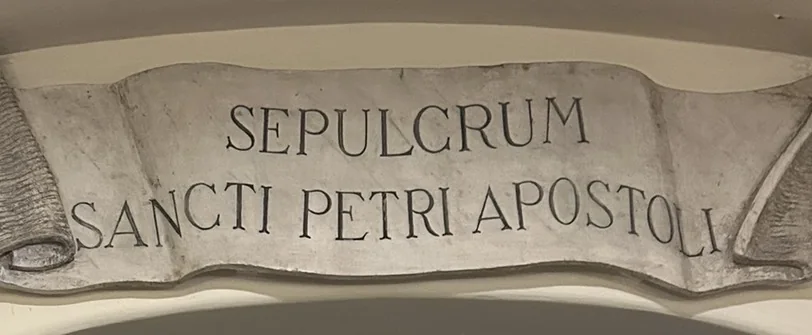
In Rome, Peter is beneath the high altar of St. Peter's Basilica, and the Scavi tour visits the excavated tomb; booking is mandatory and no one under 10 is admitted. Paul is beneath the papal altar of St. Paul Outside the Walls. Simon and Jude are venerated at the altar of St. Joseph in the left transept of St. Peter's, and Philip and James the Less at the Basilica of the Twelve Holy Apostles. San Bartolomeo all'Isola on Tiber Island claims the relics of Bartholomew, a claim it shares with Benevento.
Elsewhere in Italy, tradition venerates Matthew in Salerno Cathedral, Andrew at Amalfi Cathedral, where his relics arrived in the early thirteenth century, and Thomas at Ortona, where relics have been kept since 1258. Beyond Italy, James the Greater is venerated at Santiago de Compostela in Spain, Thomas at San Thome Basilica in Chennai, India, and Matthias, who took the place of Judas, at St. Matthias' Abbey in Trier, Germany, with a rival claim at Santa Giustina in Padua. The head venerated as Andrew's was returned in 1964 to Patras in Greece, where the Orthodox Church keeps it. The traditional tomb of John is at Selçuk, beside ancient Ephesus in Turkey, where the ruined basilica holds no relics. St. Mark the Evangelist, venerated in Venice, was not one of the Twelve.
How firm is the evidence? Pius XII announced in 1950 that Peter's tomb had been found; Paul VI said in 1968 that the relics had been identified in a way that "we can hold to be convincing", and Pope Francis wrote in 2019 that they "can quite reasonably be considered" the Apostle's. Benedict XVI reported in 2009 that carbon-14 tests dated bone fragments from Paul's sarcophagus to the first or second century. Science can also count against a relic: a 2021 study dated the femur attributed to James the Less to AD 214-340, too late to be his.