THE JOURNEY
Rome of the Martyrs: the Apostles' tombs, the catacombs and the shrine of the new martyrs
- Where
- Italy, Vatican City
- Length
- About five or six days
- Status
- Under consideration
This journey would stay in one city, Rome, and follow the Church's memory of her martyrs in the order it was laid down. It would begin at the tombs of the Apostles Peter and Paul, go down into the third-century cemetery of the Church of Rome on the Appian Way, walk among the ancient martyrs' churches on and around the Caelian Hill, pause at the Colosseum as the memorial the popes have made it, and end on the Tiber Island at the shrine of the martyrs of our own time. A single base would mean no long transfers and room to return to a tomb and pray there a second time.
The route, and why each place belongs
- 1
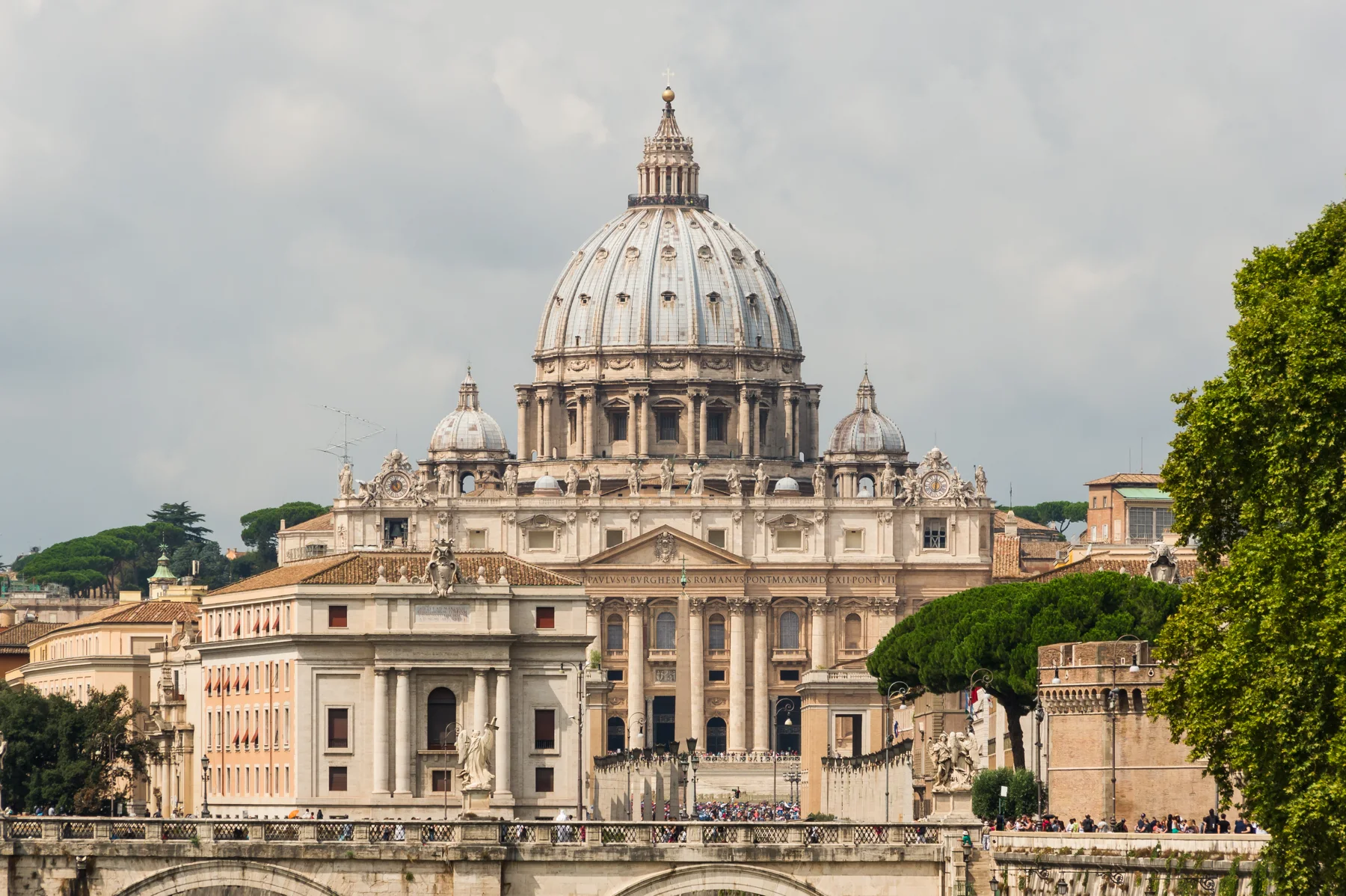
St. Peter's Basilica and the tomb of St. Peter
Vatican CityWhy it belongs
The basilica stands over the grave of the Apostle, martyred nearby, by ancient tradition in the Circus of Nero. Pilgrimage to the tombs of the martyrs has its root here.
What you would do there
The pilgrim would pray in the basilica above the Apostle's grave and could attend a public Mass where the schedule permits. The excavations beneath the basilica, the Scavi, are visited by advance reservation only and could be included where places can be obtained.
- 2
Basilica of St. Paul Outside the Walls and the Abbey of Tre Fontane
ItalyWhy it belongs
Paul's tomb lies beneath the papal altar of the basilica, an ancient and well-attested burial, and Tre Fontane is honored by tradition as the place of his beheading. Together they would set the second Apostle's death and burial beside the first.
What you would do there
The pilgrim would pray at the tomb beneath the papal altar, then go on to the abbey to pray at the place tradition gives for his death. It was also at St. Paul's, as the National Catholic Register reported, that Pope Leo XIV led an ecumenical commemoration of the martyrs of the twenty-first century in September 2025.
- 3
Catacombs of St. Callixtus on the Appian Way
ItalyWhy it belongs
This was the official cemetery of the Church of Rome in the third century, where by the custodians' count sixteen popes and many martyrs were buried. The catacombs were cemeteries, not dwellings, and most remains were later moved to churches in the city.
What you would do there
Visits are guided, with the Salesians receiving pilgrims at St. Callixtus. The pilgrim would walk down with a guide into the galleries where the early Church buried her dead, and the Litany of the Saints could be prayed there.
- 4
Churches of the Roman martyrs on and around the Caelian Hill
ItalyWhy it belongs
These ancient churches keep the memory of early martyrs, several of them within a short walk of one another. Early veneration is the secure part; many details in the written legends are later, and an honest pilgrimage would say so.
What you would do there
This could be a half-day on foot from church to church, with time to sit and pray in each. It would be a fitting place to read aloud from the authentic early accounts the Church has preserved, such as the letters of St. Ignatius of Antioch.
- 5
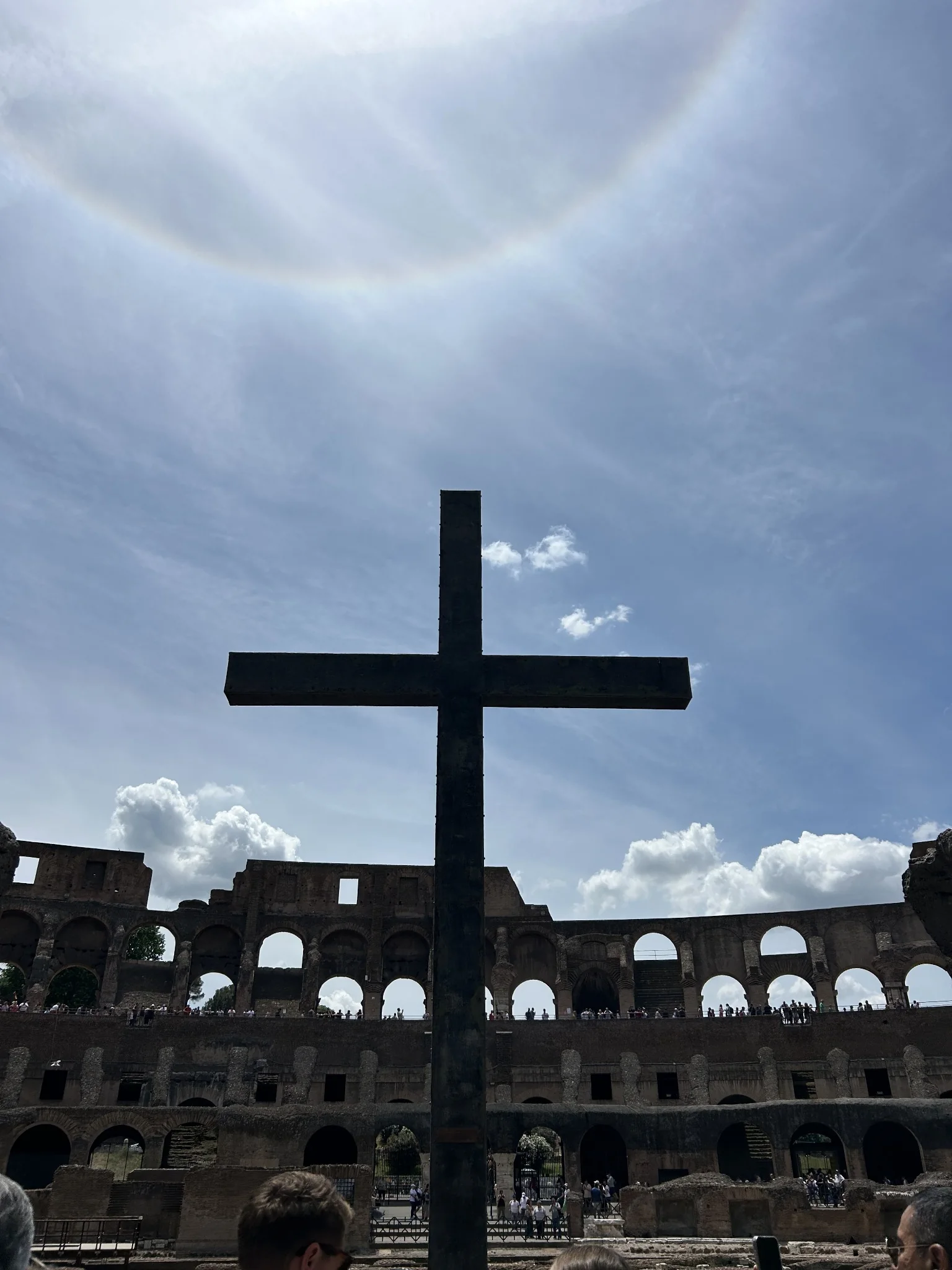
The Colosseum
ItalyWhy it belongs
The arena has been honored as a memorial of the martyrs since the seventeenth and eighteenth centuries, when Benedict XIV erected Stations of the Cross there, and it is the customary setting of the papal Way of the Cross on Good Friday. It is a symbolic memorial: the Catholic Encyclopedia and the pontifical archaeologist Fabrizio Bisconti alike find no solid evidence that Christians were killed in this particular arena.
What you would do there
The pilgrim would come here to pray, not to be told a legend. It was at the Colosseum in May 2000 that St. John Paul II led an ecumenical commemoration of the witnesses to the faith of the twentieth century, and a station of the Way of the Cross could be prayed nearby in the same spirit.
- 6
Basilica of San Bartolomeo all'Isola
ItalyWhy it belongs
Entrusted to the Community of Sant'Egidio, this basilica on the Tiber Island is the shrine of the new martyrs of the twentieth and twenty-first centuries. It remembers people not beatified or canonized and Christians of other confessions, so a place there is not a canonical declaration of martyrdom.
What you would do there
Six chapels hold memorial objects arranged by region and by the Nazi and communist persecutions, among them a murdered priest's breviary. The journey would end here in prayer for Christians persecuted today, and for their persecutors, after the example of St. Stephen.
Prayer and the sacraments
Mass at or near a martyr's tomb is the oldest way Christians have honored these witnesses, and it would be sought where a priest accompanies the group and the site and schedule permit; clergy arrangements are confirmed for each departure. Confession, where confessors are available, would be a fitting response to people who preferred death to denying Christ, and each day could close with a short reading from a martyr's own words.
Pilgrim’s Time
Pilgrim's Time would be protected on this journey for going back alone: to an Apostle's tomb, to a chapel at San Bartolomeo, or to a quiet church on the Caelian Hill. It could equally be used for rest, for writing, or for the conversation that a hard story sometimes opens.
Pilgrim Pace
Rome's martyr churches are spread across the city on cobbled streets, and the days would involve steady walking and standing. Catacombs involve stairs, narrow uneven passages and cool damp air, and are difficult or impossible for wheelchair users; the Vatican Scavi are confined and humid. An alternative for each of these would need to be agreed before anyone commits.
How Pilgrim Pace worksOther ways to make this pilgrimage
- Poland: Kolbe, Edith Stein and the witnesses of the twentieth century. A separate journey could join Niepokalanów and Kraków to a properly prepared day at the Auschwitz Memorial, a state memorial on a site of mass murder and not a Catholic shrine, entered in silence, under the Memorial's rules, with prayer for all who were murdered there.
- Rome & Assisi, with the martyrs in view. The Rome & Assisi Classic already visits St. Peter's and St. Paul Outside the Walls and keeps the rest of St. Paul's day flexible, so a catacomb or the Caelian Hill churches could fill it.
- Close to home: Auriesville, New York. The National Shrine of Our Lady of Martyrs stands on the site honored as the Mohawk village of Ossernenon, where St. René Goupil and Sts. Isaac Jogues and John de Lalande were killed; the shrine keeps a seasonal calendar, which would need to be checked.
No dated departures are currently announced. This is a journey Bold Pilgrim is considering, described so you can picture it. Dates, priest, Gateway Airport and price are published on a departure itself, and only when confirmed.
Who it may be for
It suits Catholics who want substance: history readers, converts and those newly received into the Church, parents and godparents who want to hand on something sturdy, teachers and catechists, young adults weighing what their faith will cost them, and priests and seminarians. It suits people who carry a quiet fear that their faith would not hold under pressure and would like to bring that fear to those who have been there.
It asks for some emotional readiness. Sites of execution and a concentration camp are not suitable for every child or every season of grief, and nobody should feel obliged to enter a place he or she is not ready for. This pilgrimage can also be made close to home: the United States has a national shrine of the North American martyrs at Auriesville, New York. The pilgrimage begins wherever you first take one of these witnesses seriously.
- Catholics who want their faith to be serious again
- History readers who want the documented story, not the legend
- Converts and the newly received
- Parents, godparents and sponsors handing on the faith to teenagers and young adults
- Teachers and catechists
- Priests, deacons and seminarians
- Those who pray for persecuted Christians
A spiritual purpose has no pace rating; the actual itinerary determines the Pilgrim Pace. The places themselves make real demands. Catacombs involve stairs, narrow uneven passages and cool damp air, and are difficult or impossible for wheelchair users. The Vatican Scavi are confined and humid. A visit to both parts of the Auschwitz Memorial means several hours on foot, largely outdoors on uneven ground, and is emotionally taxing. Rome's martyr churches are spread across the city on cobbled streets. Ask how each site would be reached and what the alternative is before committing.
UNDERSTANDING THIS PILGRIMAGE
A Catholic martyrs pilgrimage is a journey of prayer to the places where Christians were killed for their faith or where they are buried and honored: the tombs of the Apostles and the catacombs of Rome, the sites of the English, Korean and North American martyrs, and the places of twentieth-century witnesses such as St. Maximilian Kolbe at Auschwitz. Pilgrims go to pray at these graves and shrines, to learn the stories as history actually records them, and to ask for a share of the same fidelity. The martyrs are honored because of the One for whom they died: every martyr's shrine points to Jesus Christ, crucified and risen.
The Catholic foundation: the supreme witness
The Catechism calls martyrdom "the supreme witness given to the truth of the faith," a witness borne even unto death (CCC 2473). The martyr does not seek death and is not honored for suffering as such. He or she is honored for remaining united to Christ, who died and rose, when the price of that union was life itself. Benedict XVI put the foundation simply: martyrdom rests on the death of Jesus, His sacrifice of love on the Cross, and the strength to face it comes from deep union with Christ. It is a gift of grace before it is a human achievement.
Scripture's first example is St. Stephen, stoned outside Jerusalem while praying for those who killed him (Acts 6-7). From the beginning Christians gathered at the graves of people like him. The Church's Directory on Popular Piety notes that local churches kept the anniversary of a martyr's death as a dies natalis, a birthday into eternal life, and that pilgrimage to the tombs of the Apostles and martyrs became one of the characteristic devotions of Christian history. The custom of placing relics beneath an altar, which the Roman Missal still retains, is closely tied to the early practice of celebrating the Eucharist at such tombs.
This is why a martyrs pilgrimage is not a tour of sad places. The Church has, in the Catechism's words, "painstakingly collected the records" of those who persevered to the end, and it calls those records "the archives of truth written in letters of blood" (CCC 2474). Pilgrims go to read those archives where they were written.
History and legend: telling the truth about the martyrs
Honoring the martyrs means being honest about what we know. Some accounts are among the best-attested documents of the early Church, such as the eyewitness letter on the death of St. Polycarp and the prison diary preserved in the Passion of Sts. Perpetua and Felicity. Others were written centuries later and embroidered freely. The Catholic Encyclopedia says plainly that much of the later Roman legendary can claim no higher standing than historical romance, built around a few real facts preserved in tradition.
The distinction matters on the ground. That a martyr was venerated early and is buried in a particular place is often well founded even where the colorful details of the story are not. The Colosseum is the best-known case: the popes have made it a place of prayer for the martyrs, yet the Catholic Encyclopedia and the pontifical archaeologist Fabrizio Bisconti alike find no solid evidence that Christians were killed in that particular arena. A good pilgrimage says so, and loses nothing by it. With modern martyrs the situation is different. For the English martyrs, the Korean martyrs, the Jesuits of North America, St. Maximilian Kolbe or St. Teresa Benedicta of the Cross, we have trial records, letters, camp registers and living memory.
Why someone is drawn to the martyrs
Few people set out wanting to think about death. They come to the martyrs by another road: a faith that has grown comfortable and wants to be serious again; a workplace, a family or a culture where belief costs something; a child or grandchild who needs to see that Christianity is worth more than convenience; a patron saint whose story will not leave them alone. Some come because the news keeps reporting Christians killed for their faith and they do not know what to do with it except pray.
The martyrs answer by being concrete. They were bishops and teenagers, mothers, soldiers, lawyers, catechists and farm boys. Benedict XVI was careful to say that most of us are probably not called to martyrdom, but that no one is excluded from the call to holiness. That is the real subject of this pilgrimage: daily fidelity, of which martyrdom is the extreme case and the clearest picture.
A Church of martyrs still
Martyrdom is not confined to antiquity. St. John Paul II wrote before the Great Jubilee that at the end of the second millennium the Church had once again become a Church of martyrs, and he asked that their witness be documented and not forgotten. In May 2000 he led an ecumenical commemoration of the witnesses to the faith of the twentieth century at the Colosseum, remembering those "sacrificed by Communism, Nazism, by the idolatry of State or race." He also observed that this witness is shared across the Christian confessions, and wrote that perhaps the most convincing form of ecumenism is that of the saints and of the martyrs. In September 2025, as the National Catholic Register reported, Pope Leo XIV led an ecumenical commemoration of the martyrs of the twenty-first century at St. Paul Outside the Walls.
That memory has a home a pilgrim can visit: the Basilica of San Bartolomeo all'Isola in Rome, entrusted to the Community of Sant'Egidio and arranged as a shrine of the new martyrs of the twentieth and twenty-first centuries. A martyrs pilgrimage that ends there, or that includes prayer for Christians persecuted today, has understood its subject.
Questions pilgrims ask
What is a Catholic martyrs pilgrimage?
It is a journey of prayer to places where Christians died for their faith, or where they are buried and honored, beginning for most pilgrims with the tombs of Sts. Peter and Paul and the catacombs in Rome. Pilgrims pray at the graves, learn the documented history, and ask for the grace to be faithful to Christ in their own lives.
What makes someone a martyr in the Catholic Church?
A martyr is a person who is killed for the faith and accepts death rather than deny Christ or His teaching. The Catechism calls martyrdom "the supreme witness given to the truth of the faith" and says the martyr bears witness to Christ, who died and rose, to whom he is united by charity (CCC 2473). Suffering or dying bravely is not enough by itself; the death must be for the faith. The Church recognizes a martyr formally only after investigating the life and death in a cause for beatification.
Do martyrs need a miracle to be declared saints?
Not for beatification. According to the U.S. bishops' summary of the process, a miracle is not required before a martyr is beatified; the Pope's recognition of the martyrdom is sufficient. A miracle attributed to the martyr's intercession is then ordinarily required for canonization. Since 2017 the Church has also recognized a separate path, the "offer of life," for those who freely accept a certain and early death out of charity. It is distinct from martyrdom and does require a miracle for beatification.
Where can I go on a pilgrimage to honor the martyrs?
Rome is the first choice: the tombs of Sts. Peter and Paul, the catacombs, the early martyrs' churches, and the shrine of the new martyrs at San Bartolomeo all'Isola. Poland holds Auschwitz, where St. Maximilian Kolbe and St. Teresa Benedicta of the Cross died. London has Tyburn and the Tower. In the United States there is the national shrine at Auriesville, New York. Seoul has recognized pilgrimage routes of the Korean martyrs. These are Catholic pilgrimage places; no dated Bold Pilgrim departures are currently announced.
Are the stories of the early martyrs historically true?
Some are among the most reliable documents of the early Church, such as the account of St. Polycarp's death and the Passion of Sts. Perpetua and Felicity, which preserves Perpetua's own notes. Others were written long afterward and embellished; the Catholic Encyclopedia classes much of the later Roman legendary as historical romance built around a few real facts. A martyr's early veneration can be well founded even when the details of the story are not. A sound pilgrimage keeps the two apart.
Which saints died at Auschwitz?
Two canonized saints are most closely associated with the camp. St. Maximilian Kolbe, a Polish Conventual Franciscan priest, offered his life in place of another prisoner and died there on August 14, 1941; he was canonized in 1982. St. Teresa Benedicta of the Cross (Edith Stein), a Carmelite nun born into a Jewish family, was arrested on August 2, 1942 and, according to the Holy See's biography, gassed there, probably on August 9. Auschwitz is a memorial to more than a million victims, most of them Jews, and is visited as such.
Where can I honor the Korean martyrs?
In Seoul. The Church in Korea began in 1784 among laypeople, before any priest arrived, and within a century counted some ten thousand martyrs; St. John Paul II canonized 103 of them in Seoul in 1984, including St. Andrew Kim Taegon. In 2018, as AsiaNews reported, the Holy See recognized three pilgrimage routes through the city as an international pilgrimage site. They include the Seosomun shrine, on an execution ground where 44 of the canonized martyrs died. World Youth Day Seoul 2027 will bring many pilgrims to these places.
Are Christians still martyred today?
Yes. St. John Paul II wrote that by the end of the twentieth century the Church had once again become a Church of martyrs, and in 2000 he commemorated at the Colosseum those killed under Communism, Nazism and other persecutions. The commission he established gathered thousands of dossiers. Their memory is kept in Rome at the Basilica of San Bartolomeo all'Isola, the shrine of the new martyrs of the twentieth and twenty-first centuries, which also remembers Christians of other confessions killed for their faith. In September 2025 Pope Leo XIV led an ecumenical commemoration of the martyrs of the present century at St. Paul Outside the Walls, as the National Catholic Register reported.