
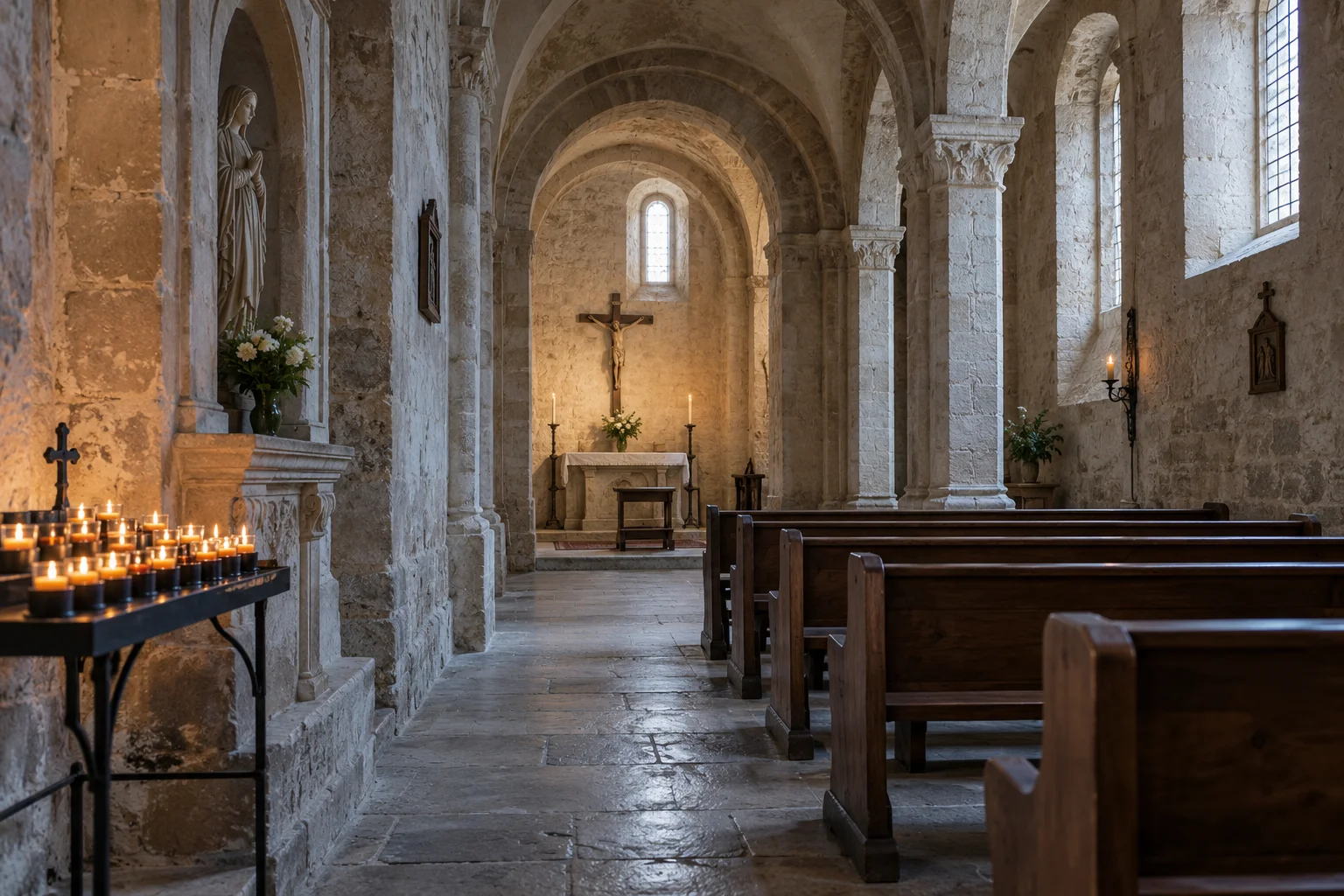
Daily Mass is the spine of a Catholic pilgrimage, and the priest's first task is to celebrate it and to offer it for the intentions the pilgrims carry. The organizer requests the altar and the time from each shrine; the priest brings his celebret, the letter of introduction from his bishop or religious superior that canon 903 expects to have been issued within the past year. St. Peter's Basilica, for example, asks visiting priests who wish to concelebrate to write ahead to its celebrations office and to bring a valid celebret, and the Shrine of Fátima asks groups to register in writing with its pilgrims' service, naming their priest.
Confession is the second task, and often the one pilgrims remember longest. Away from the parish, in a place where generations have confessed before them, people say things they have carried for years, and a priest on pilgrimage keeps time for it. The rest is the ordinary work of a pastor: a few words before the group enters a holy place, the Rosary on a long drive, a blessing at the tomb of a saint, a conversation over dinner.
Good to know before you go: the chaplain does not replace the guide, and he is not the organizer, the treasurer or the person who finds a lost suitcase. Before you book any pilgrimage advertised with a priest, ask the organizer to confirm in writing who the priest is and what happens if he cannot travel or if the group turns out smaller than planned.