Why make this pilgrimage
You spend your life leading other people to the altar. You carry their intentions, hear their confessions and plan their pilgrimages. The question behind this one is simpler and harder: where do you go, and with whom, to be a pilgrim yourself? Not as the chaplain to a group, with a homily to prepare and a bus to count, but as a priest among brother priests, with nothing to manage.
This pilgrimage seeks what St. Paul asked of Timothy: to rekindle the gift of God received through the laying on of hands. It would go to a parish, the one small village where St. John Vianney served for forty-one years, and it would stay there long enough to pray, to rest, to go to confession as a penitent and to sit at one table with other priests. No one can promise what a priest would receive there. The days can only be kept clear for it.
THE JOURNEY
Ars and Paray-le-Monial: A Retreat and Pilgrimage for Priests
- Where
- France
- Length
- About a week
- Status
- Under consideration
This journey would be made by priests as priests, arranged privately with a bishop, a vicar for clergy or a priests' fraternity, and it would be more a stay than a tour. It would begin with several unhurried days at Ars, the parish of St. John Vianney, where the sanctuary keeps a house for priests, and it could then go on to Paray-le-Monial in Burgundy, the shrine of the Sacred Heart that priests' groups have often visited together with Ars. The order follows the Curé's own saying that the priesthood is the love of the Heart of Jesus: first the parish priest at his altar and in his confessional, then the Heart from which his priesthood comes. Where a diocese wants a preached retreat, it would choose the retreat director and set the content; Bold Pilgrim would see to travel, lodging and altar requests.
The route, and why each place belongs
- 1
Ars: the days of retreat
Why it belongs
Ars is the parish. St. John Vianney served this one village for forty-one years, and Pius XI declared him patron of parish priests in 1929. The sanctuary keeps a house for priests and says it welcomes them for stays of a few days, a week or longer, and one diocese is reported to have held its priests' retreat here with its bishop.
What you would do there
The group would settle in for several days and let the village set the rhythm: Lauds and Vespers prayed in common, concelebrated Mass in the basilica where it can be arranged, an unhurried hour before the Blessed Sacrament, shared meals. If the diocese wants a preached retreat, its own retreat director would give the conferences and periods of silence would be kept; if it wants a pilgrimage of the presbyterate, there would be more conversation and time with the bishop outside a meeting room.
- 2
Ars: the basilica, the presbytery and the Chapel of the Heart
Why it belongs
These are the places of the Curé's daily fidelity. Benedict XVI recalled that the crowds of penitents kept him in the confessional for up to sixteen hours a day, and the basilica was built onto the small parish church where he served.
What you would do there
Each priest would have time to pray at his shrine in the basilica and at his confessional, to visit the presbytery, kept with his belongings, and to pray in the Chapel of the Heart, where the relic of his heart is kept. This would also be the place to go to confession himself, where confessors are available, and to speak without hurry with a spiritual director or an older brother priest.
- 3
Paray-le-Monial
Why it belongs
Paray-le-Monial is the shrine of the Sacred Heart and of St. Margaret Mary, often visited together with Ars because of the link between the Heart of Christ and the priesthood. The Solemnity of the Sacred Heart has been kept as the World Day of Prayer for the Sanctification of Priests since St. John Paul II instituted it in 1995. The apparitions St. Margaret Mary reported here are private revelation, received by the Church with great favor.
What you would do there
The sanctuary is four places within a short walk in a small Burgundian town: the Romanesque Basilica of the Sacred Heart, the Chapel of the Apparitions in the Visitation monastery, where the relics of St. Margaret Mary are kept, the Chapel of St. John and the Chapel of La Colombière. A day of recollection could be kept here, with Mass where it can be arranged, silent adoration and a last evening together before the journey home.
Prayer and the sacraments
The altar would be the center of each day: concelebration where it can be arranged, with each priest free to celebrate individually, as canon 902 provides, and every priest carrying his celebret. Altars would be requested in advance and cannot be promised. The Liturgy of the Hours would be prayed in common, with time for Eucharistic adoration, the Rosary and silence, and Confession where confessors are available. Bold Pilgrim never states that a journey fulfils a priest's retreat; that question goes to his own diocese or institute.
Pilgrim’s Time
Pilgrim's Time would be protected every day and filled by no one: hours for rest, a walk through the village, a long conversation with a brother priest, or simply sleep. For men who are usually in charge of everything, the unscheduled hours would be a large part of the point.
Pilgrim Pace
This would be a gentle route in distance and a still one in character. Ars is a compact village, and Paray-le-Monial is a small, mostly level town whose chapels stand within a short walk of one another, so most of the time would be spent seated or kneeling in prayer, with one road transfer between the two. A group of priests often spans several decades in age, and the days would be set for its oldest members.
How Pilgrim Pace worksIf you can stay longer
Paray-le-Monial is often joined to other French shrines, and a group with more days could add one or two. Any independent days of rest afterward would be separate from the pilgrimage; how they are reckoned is for each priest and his diocese.
Other ways to make this pilgrimage
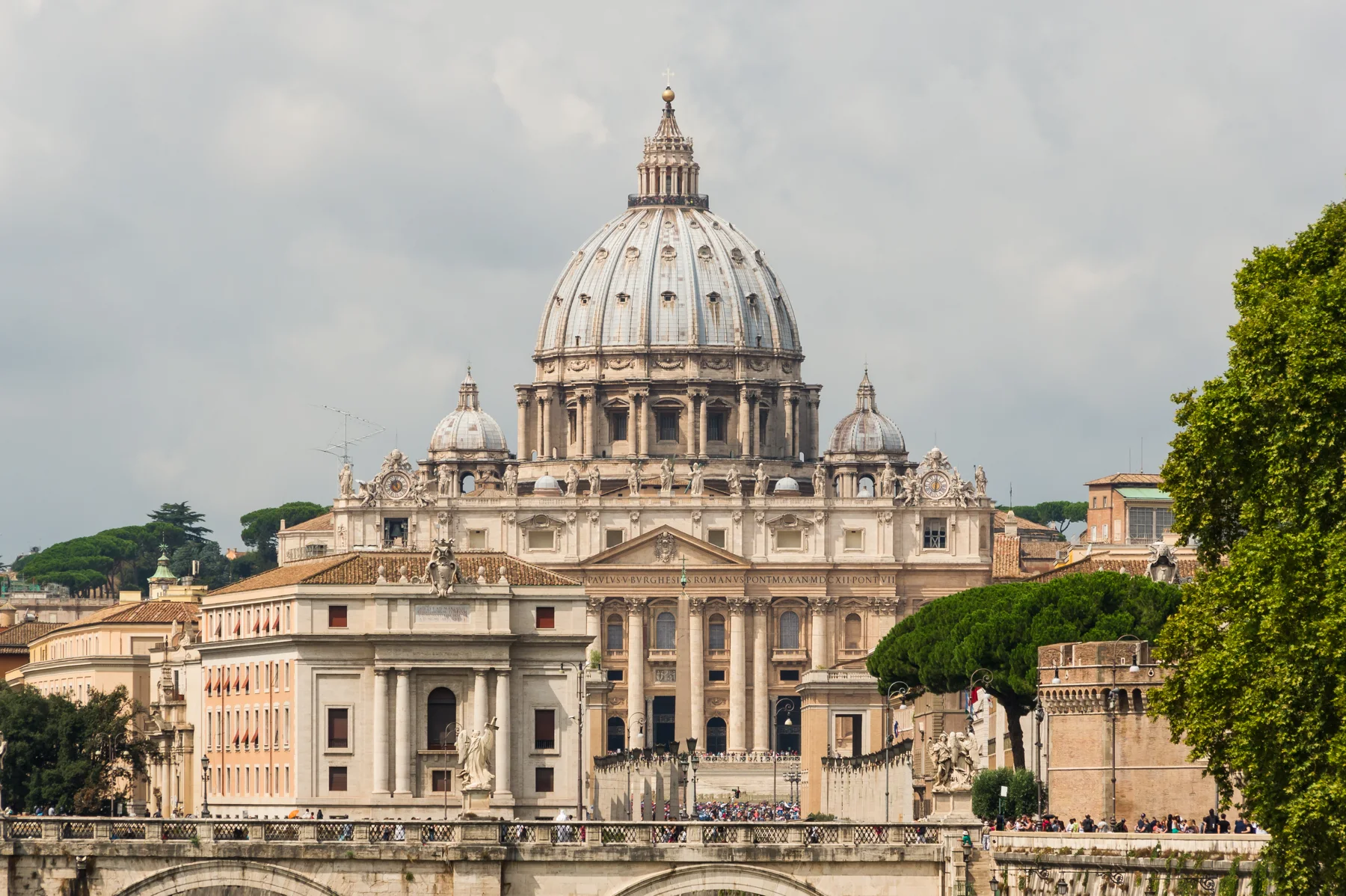
- To the tombs of the Apostles: a bishop and his priests in Rome. A bishop could take his priests to the tombs of St. Peter and St. Paul and to St. John Lateran, with concelebration where it can be arranged and quieter days in Assisi, along the lines of the Rome and Assisi Classic.
- Upper Room to Galilee. A Holy Land pilgrimage for priests could include Mass at the Franciscan chapel near the Cenacle and a day of recollection by the Sea of Galilee, subject to conditions at the time and to the arrangements of the Custody of the Holy Land.
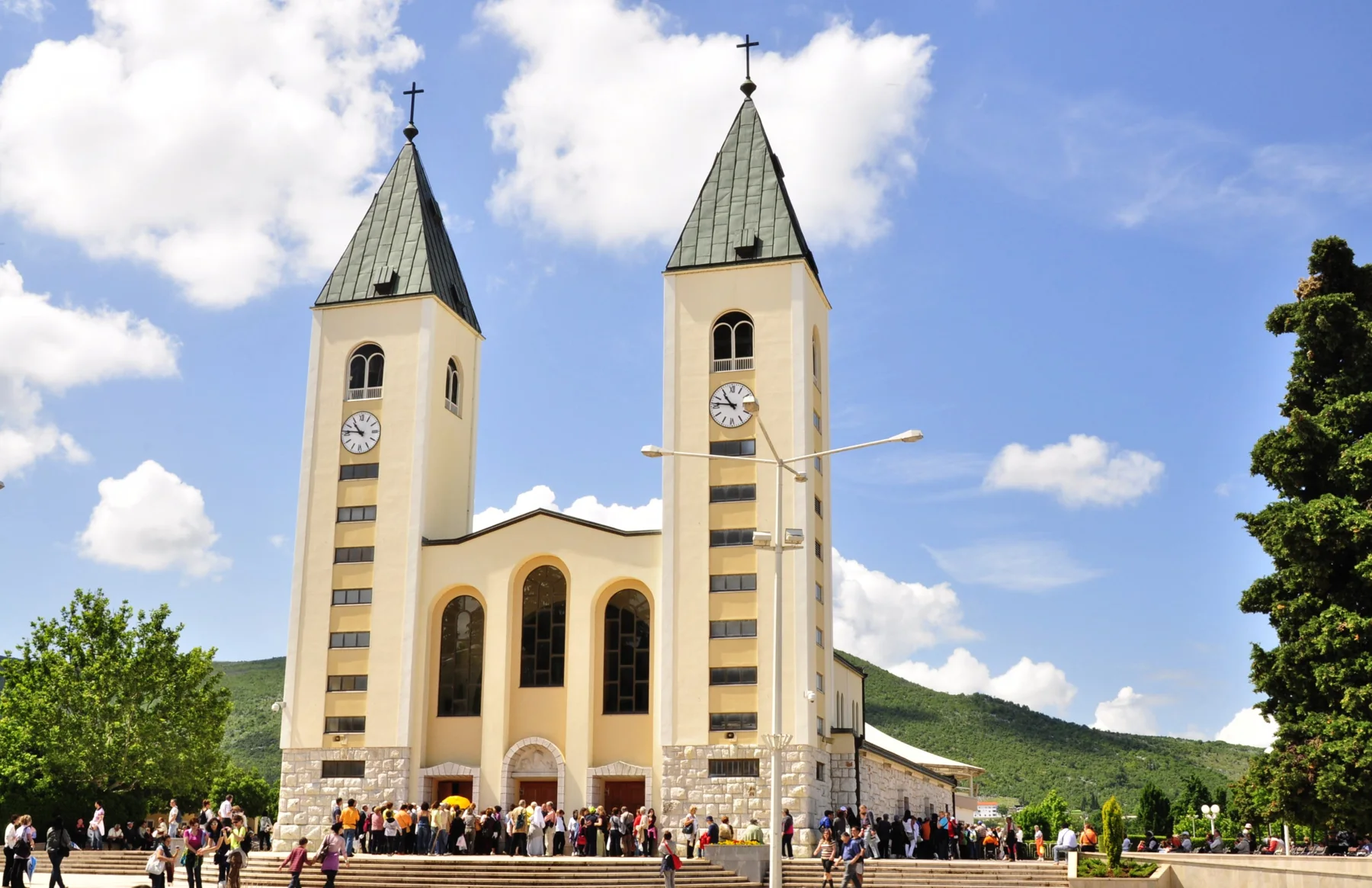
- The priests' retreat at Medjugorje. The parish of Medjugorje hosts its own annual international retreat for priests; the Holy See's 2024 Note permits and encourages pastoral pilgrimage there and recognises its spiritual fruits, without judging the reported apparitions to be supernatural.
No dated departures are currently announced. This is a journey Bold Pilgrim is considering, described so you can picture it. Dates, priest, Gateway Airport and price are published on a departure itself, and only when confirmed.
Who it is for, and what it is not
It suits a bishop or vicar for clergy planning something for the presbyterate; a group of classmates marking an ordination anniversary; a priests' fraternity or support group; a priest planning a sabbatical; a religious community of priests; and deacons where a diocese includes them.
It is not a parish pilgrimage with several priests on the bus. When a priest leads his people he is working, gladly, as their pastor: celebrating for them, hearing their confessions, carrying their intentions. That is a different journey, and Bold Pilgrim describes it elsewhere. Nor is it a familiarization trip, the kind of preview arranged for clergy and other leaders who may later bring a group.
It is also distinct from a pilgrimage for seminarians, who are still in formation, and from a discernment pilgrimage for someone asking whether God is calling him at all. Bold Pilgrim never states that a journey fulfils a priest's retreat or how his days away are reckoned; canon 276 refers retreats to "the prescripts of particular law," so that question goes to the priest's own diocese or institute. A priests' pilgrimage is arranged privately with a bishop, a vicar for clergy or a group of priests. No dated departures are currently announced.
- Bishops, vicars for clergy and presbyteral councils planning a pilgrimage or overseas retreat for their priests
- Priests' fraternities, support groups and ordination classes
- Individual priests planning a sabbatical or an extended retreat
- Religious communities of priests
- Permanent deacons, where a diocese includes them in clergy retreats
- Lay benefactors or parishes who wish to make such a journey possible for their priests, working through the priest and his diocese
A spiritual purpose has no Pilgrim Pace rating; the actual itinerary determines it. The places typical of a priests' pilgrimage are physically moderate: Ars is a compact village, Rome involves long days on foot and standing in basilicas, and Jerusalem's Old City has steps and uneven paving. A group of priests often spans several decades in age, so the itinerary should be set for its oldest members, with Pilgrim's Time protected each day. Any independent rest days after the pilgrimage are separate from it; how they are reckoned is for the priest and his diocese.
UNDERSTANDING THIS PILGRIMAGE
A priests' pilgrimage is a journey priests make for their own priesthood rather than as chaplains to a group: a few days or weeks of prayer, the sacraments, rest and fraternity with brother priests at places bound up with the priesthood of Jesus Christ, such as the Upper Room in Jerusalem, the tombs of the Apostles in Rome and the parish of St. John Vianney at Ars. A diocese may join it to its priests' retreat; a bishop may make it a pilgrimage of the presbyterate; a priest may make it part of a sabbatical. What defines it is that the priest goes as a pilgrim and a brother, not as the group's leader.
What a priests' pilgrimage is
It is a pilgrimage in which the priests are the pilgrims. No parish group is travelling with them, and no one is depending on them for Mass, confession or a homily. The days are given to their own prayer, to the sacraments, to rest and to one another.
This is how such journeys actually happen. A bishop takes a group of his priests to Rome every few years. A diocese holds its priests' retreat at Ars and continues from there as a pilgrimage. A priestly society organizes five days at Ars and Paray-le-Monial for English-speaking priests. A priest on sabbatical joins a program in Rome or Jerusalem.
Why priests go together
Priests are not ordained into solitude. The Catechism speaks of an "intimate sacramental brotherhood" and of one presbyterate gathered around its bishop (CCC 1567-1568). The Council asked priests to offer one another hospitality and to "gladly and joyfully gather together for recreation," recalling the Lord's own invitation to his Apostles to come away and rest (Presbyterorum Ordinis 8; Mark 6:31).
That teaching has not aged. In his 2025 Apostolic Letter for the sixtieth anniversary of the Council's decrees on the priesthood, Pope Leo XIV called priestly fraternity "a constitutive element of the identity of ministers" and named loneliness among the dangers that wear down a priest's zeal. A pilgrimage is one practical answer: several days in which priests pray the Office together, concelebrate, eat at one table, walk, talk, and are simply not in charge of anything.
The Catholic foundation: one Priest, and men who share his priesthood
The Catechism is blunt about where the priesthood comes from: "Only Christ is the true priest, the others being only his ministers" (CCC 1545). A priest acts in the person of Christ the Head, and the Catechism adds without embarrassment that this does not preserve him from human weakness (CCC 1548, 1550). A pilgrimage for priests begins there. It is a return to the One whose priesthood they carry, made by men who know they need him.
The Church does not leave a priest's own spiritual life to chance. Canon 276 asks clerics to nourish their life from Scripture and the Eucharist, to pray the Liturgy of the Hours, to practise mental prayer, to confess frequently, to honor the Mother of God, and to "make time for spiritual retreats according to the prescripts of particular law" (can. 276 §2). The Second Vatican Council names "spiritual retreats and spiritual direction" among the aids that are "of great worth" to priests (Presbyterorum Ordinis 18).
The Church also expects priests to rest. Canon 533 §2 permits a pastor to be absent from his parish for vacation "for at most one continuous or interrupted month" each year, and adds that the days he "spends once a year in spiritual retreat are not computed in the time of vacation"; a parochial vicar "possesses the same right" (can. 550 §3), and clerics are entitled to "a fitting and sufficient time of vacation each year" (can. 283 §2). The Council asked bishops to see that their priests can actually take it (Presbyterorum Ordinis 20). Rest, in other words, is not something a priest steals from his people.
The places that belong to the priesthood
Jerusalem comes first in the order of meaning. In his Holy Thursday letter to priests for the year 2000, which he signed in the Upper Room during his Jubilee pilgrimage to the Holy Land, Pope St. John Paul II wrote, "Our priesthood was born in the Upper Room together with the Eucharist," and that priests "can feel in a sense 'at home'" there. The room itself is not a Catholic church and Mass is not ordinarily celebrated in it; the Franciscan Custody of the Holy Land keeps the nearby friary of St. Francis ad Coenaculum so that pilgrims can celebrate the mysteries of the Cenacle close by. Galilee, where the Apostles were called and where the risen Lord told Peter to feed his sheep (John 21), completes it.
Rome is where that commission was carried to the end: the tombs of St. Peter and St. Paul, the cathedral of the Bishop of Rome at St. John Lateran, and the See with which every priest is in communion. It was Paul who told Timothy to "rekindle the gift of God" received through the laying on of hands (2 Timothy 1:6), which is as close to a mission statement for a priests' pilgrimage as Scripture offers.
Ars is the parish. St. John Vianney served one small village for forty-one years and spent much of that time in the confessional; Benedict XVI recalled that the crowds of penitents kept him in the confessional for up to sixteen hours a day. Pius XI declared him patron of parish priests in 1929. The sanctuary keeps a house for priests, says it welcomes them for stays of a few days, a week or longer, and receives a visiting priest at the presbytery table.
Other places can serve honestly: Assisi for quiet (the North American College's Roman sabbatical program for priests includes a preached retreat and days in Assisi), and Paray-le-Monial, often visited together with Ars, for the Heart of Christ. The parish of Medjugorje hosts an annual retreat for priests; the Holy See's 2024 Note permits and encourages pastoral pilgrimage there without judging the reported apparitions to be supernatural.
Questions pilgrims ask
What is a priests' pilgrimage?
A priests' pilgrimage is a journey priests make for the sake of their own priesthood: prayer, concelebrated Mass, the Liturgy of the Hours, confession, rest and fraternity at places tied to the priesthood of Christ, such as Jerusalem, Rome and Ars. The priests travel as pilgrims and brothers, not as chaplains to a lay group. It may be organized by a bishop for his presbyterate, by a priestly society, by classmates, or by a single priest during a sabbatical, and a diocese may combine it with its priests' retreat.
Is a priests' pilgrimage the same as a priest leading a parish pilgrimage?
No. When a priest leads a parish pilgrimage he is serving as pastor to the group: celebrating Mass for them, hearing confessions, teaching. On a priests' pilgrimage he is the pilgrim. No lay group depends on him, and the days are arranged around his own prayer, rest and fraternity with other priests. Bold Pilgrim's answers on priest-led pilgrimages describe the other kind.
Full answer: What does a priest do on a Catholic pilgrimage?
Are Catholic priests required to make a retreat, and for how many days?
The Code of Canon Law says that clerics "are equally bound to make time for spiritual retreats according to the prescripts of particular law" (can. 276 §2, 4°). The canon itself names no number of days and does not use the word "annual"; it refers to particular law. Canon 533 §2 adds that "those days which the pastor spends once a year in spiritual retreat are not computed in the time of vacation." For the number of days, a priest looks to the norms of his own diocese or institute.
Can a pilgrimage count as a priest's annual retreat?
That is not for Bold Pilgrim to say, and Bold Pilgrim never states that a journey fulfils it. The Code says only that clerics "are equally bound to make time for spiritual retreats according to the prescripts of particular law" (can. 276 §2, 4°); it does not mention pilgrimage. One U.S. diocesan newspaper reports that its priests, with their bishop, made their canonical retreat at Ars under a retreat director and then continued through France as pilgrims. A priest considering something similar should put the question to his own diocese or institute beforehand.
Where do priests go on pilgrimage together?
The places that recur are Rome, for the tombs of St. Peter and St. Paul and the Pope's cathedral; the Holy Land, for the Upper Room and Galilee; and Ars in France, the parish of St. John Vianney, often joined to Paray-le-Monial. Assisi is used for quieter days. Diocesan reports describe a bishop taking some twenty of his priests to Rome, and a diocese holding its priests' retreat at Ars. The best choice depends on whether the group wants a silent retreat, a pilgrimage, or both.
Can priests stay or make a retreat at Ars?
Yes. The Sanctuary of Ars has a house for priests (the Foyer Sacerdotal) and says priests have come for three days, eight days, a month or more; it asks them to give notice so the stay can be prepared, and visiting priests are welcomed at the presbytery table. A priestly society and at least one diocese have also organized group retreats and pilgrimages there, with concelebrated Mass in the basilica. Arrangements are made directly with the sanctuary and should be confirmed with it.
What is a priest's sabbatical, and can it include a pilgrimage?
A sabbatical is an extended period away from ordinary ministry that a bishop or superior grants a priest for renewal, study and prayer; eligibility and length are set by each diocese or institute. Pilgrimage is often part of it. The sabbatical program at the Pontifical North American College in Rome runs about three months and includes the Lenten station churches, a preached retreat and days in Assisi; the U.S. bishops' resource list for priests' sabbaticals also lists programs in Jerusalem and the Camino de Santiago. The plan is settled between the priest and his bishop or superior.
Who is the patron saint of priests?
St. John Vianney, the Curé of Ars, is the patron saint of parish priests. Pius XI declared him so in 1929, four years after canonizing him. Later popes have held him up as a model for every priest (Leo XIV in 2025 called him "Patron Saint of parish priests and model for all priests"), but the formal title has not been extended to all priests.
Full answer: Who is the patron saint of priests?