THE JOURNEY
Ars and Rome: the parish priest and the Church he serves
- Where
- France, Vatican City, Italy
- Length
- About eight to ten days
- Status
- Under consideration
This journey would be built around two questions: what a parish priest is, and whose Church he serves. It would begin with several unhurried days at Ars, the village north of Lyon where St. John Vianney was parish priest for forty-one years, and then go on to Rome and the tombs of the Apostles Peter and Paul. The order is deliberate: one small parish first, then the universal Church, so that the men arrive in Rome already knowing what kind of priest they are asking to become. The bishop or rector would set the horarium and the conferences, and the seminary's own formators would lead it.
The route, and why each place belongs
- 1
Ars: the basilica and the shrine of St. John Vianney
FranceWhy it belongs
St. John Vianney served this one parish from 1818 until his death in 1859, after a formation he himself found very hard. Pius XI named him heavenly patron of parish priests in 1929; a seminary was opened at Ars in 1986, and the sanctuary notes that more and more priests come there on retreat.
What you would do there
The men would pray at his shrine in the basilica, with long hours kept for silence there and a holy hour together once the day's visitors have thinned. A formator could give a conference on the life of a parish priest in the place where one was lived.
- 2
Ars: the confessional and the saint's house
FranceWhy it belongs
In the words of Benedict XVI, the Curé of Ars was "in the confessional for up to sixteen hours a day." Men who are preparing to hear confessions come here to pray about that ministry and about their own need of it.
What you would do there
The group would pray at the confessional and walk through the house where he lived. This would be the natural day for the men to go to Confession themselves, where confessors are available, and for an afternoon without any programme.
- 3
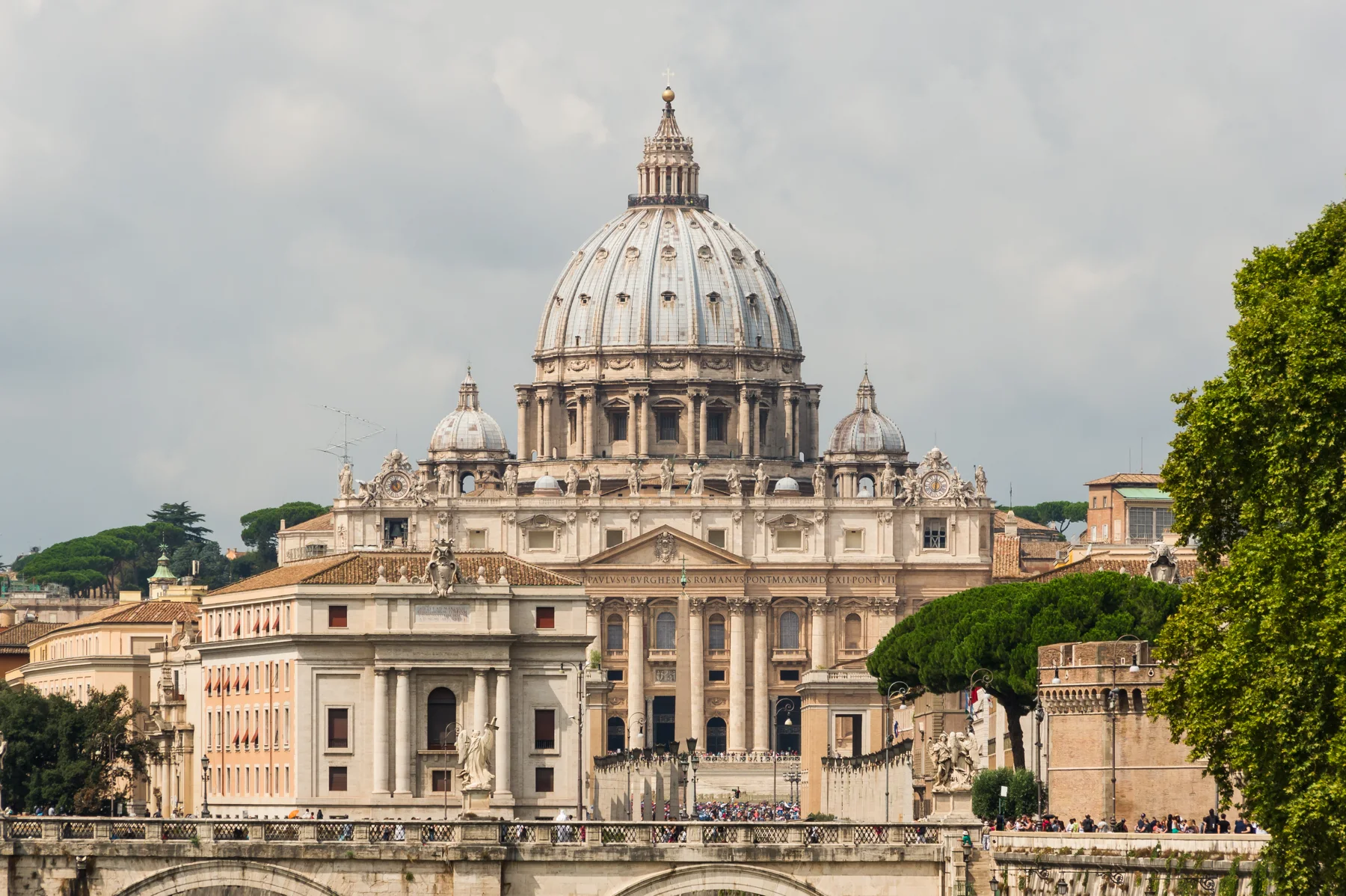
St. Peter's Basilica and the tomb of St. Peter
Vatican CityWhy it belongs
Seminarians pray at the tomb of the Apostle to whom the Lord said "Feed my sheep." After Ars, the charge given to one shepherd is seen as the charge every priest shares in his own parish.
What you would do there
The men would pray Morning or Evening Prayer in common in the basilica and each spend time alone near the Apostle's tomb, leaving the intentions they have carried from home.
- 4
St. Paul Outside the Walls
ItalyWhy it belongs
At the 2025 Jubilee of Seminarians, seminarians from 57 countries prayed the Rosary at the tomb of St. Paul. A class preparing to preach would come to the Apostle who was sent to the nations.
What you would do there
The group would pray the Rosary together at the tomb of St. Paul, as the seminarians of the Jubilee did, and a formator could give a conference there on preaching and mission.
- 5
St. John Lateran, St. Mary Major and the churches of Rome
ItalyWhy it belongs
Rome gives a seminarian the universal Church in one city, with the saints buried in its churches. One deacon who came with his ordination class said the journey let them "quite literally, try on the global Church."
What you would do there
The men would go on foot between the papal basilicas, praying the Hours in common along the way, with the possibility of meeting seminarians and priests from other countries who are studying or serving in the city.
Prayer and the sacraments
The class would keep its own life of prayer: the Liturgy of the Hours in common, a daily holy hour where a church allows it, the Rosary, and agreed periods of silence while travelling. Mass would be celebrated at the shrines where the schedule permits; clergy arrangements are confirmed for each departure, and Confession would be offered where confessors are available.
Pilgrim’s Time
Pilgrim's Time would be protected in both places: at Ars for hours alone in the basilica or at the confessional, and in Rome for a man to return by himself to the tomb or church that spoke to him. Living at close quarters with classmates is part of the formation, and so is time apart from them.
Pilgrim Pace
Ars is a small village and its days would be still and short on walking. Rome is the demanding part: long days on foot over uneven paving, many church steps and a good deal of standing. The transfer from France to Rome would take most of a day, so a lighter day on arrival would be wise.
How Pilgrim Pace worksIf you can stay longer
From Rome, the class could add Assisi, which seminary groups themselves pair with Rome: the tomb of St. Francis, the Portiuncula and the Basilica of St. Clare, on steep streets. Independent days of rest afterward are a separate matter for the seminary to decide.
Other ways to make this pilgrimage
- A Holy Land formation pilgrimage. Galilee before Jerusalem, with Scripture work led by the seminary's own faculty and Mass near the Upper Room where the Custody can arrange it, all subject to conditions at the time.
- A walking capstone for the propaedeutic year. The last stages of the Camino de Santiago, with the Hours prayed on the road and stretches of silence, led by the house's formators and ending at an Apostle's tomb.
- A domestic pilgrimage to Blessed Stanley Rother. A shorter journey a vocation office could make with its seminarians to the shrine in Oklahoma City of a priest, beatified in 2017 as a martyr, who stayed with his people.
No dated departures are currently announced. This is a journey Bold Pilgrim is considering, described so you can picture it. Dates, priest, Gateway Airport and price are published on a departure itself, and only when confirmed.
Who it is for, and what it is not
This pilgrimage is for communities of formation: a seminary class, a propaedeutic house, a diocese's seminarians travelling with their vocation director, a bishop with the men he is about to ordain, or a religious community's house of studies. The purpose is set by the rector, the formators or the bishop, because they are responsible for these men before the Church. An organizer or travel company serves that purpose with logistics and does not design the formation. No dated departures are currently announced; a journey of this kind is planned with the seminary or diocese, and its clergy and Mass arrangements are confirmed for each journey with the shrines concerned.
It is a different thing from a discernment pilgrimage. A man who is still asking whether God is calling him belongs on that journey; a seminarian has already submitted his desire to the Church and is being formed. It is also different from a pilgrimage or retreat for priests, who travel as men already ordained. Families, friends and benefactors who travel to a seminarian's ordination, or who sponsor a seminary's pilgrimage, are doing something good and related, and they are welcome to read this page, but they are pilgrims alongside the seminarians, not the subject of the program.
Whatever the route, the pilgrimage has one end. A seminarian does not go to Galilee, Rome or Ars to collect places. He goes to know Jesus Christ, the one High Priest, of whom the Catechism says that "only Christ is the true priest, the others being only his ministers" (CCC 1545).
- Seminary classes travelling with their formators (often third or fourth theology, or transitional deacons before priestly ordination)
- Propaedeutic-stage houses looking for a capstone to the first year of formation
- Vocation directors travelling with their diocese's seminarians
- Bishops who want time with the men they are about to ordain
- Houses of formation of religious institutes whose members are preparing for ordination
- Seminary rectors and advancement offices planning or funding a pilgrimage program
- Families, friends and benefactors who support a seminary's pilgrimage
A spiritual purpose has no Pilgrim Pace rating; the actual itinerary determines the pace. Typical considerations for these places: Rome means long days on foot over uneven paving and many church steps; the Holy Land combines heat, hills and stone stairways in Jerusalem with easier ground in Galilee; Ars is a small village; Assisi is steep; the Camino is as demanding as the stages chosen. Seminary pilgrimages often run long, three or four weeks in some programs, and the men describe them as tiring, so rest days and Pilgrim's Time (protected free time inside the pilgrimage) matter. R&R, meaning independent days afterward, is a separate question for the seminary to decide.
UNDERSTANDING THIS PILGRIMAGE
A seminarian pilgrimage is a journey made by men in formal priestly formation, usually as a class or house with their formators or their bishop, to the places that shape a priest's heart: the Gospel sites of the Holy Land, the tombs of the Apostles in Rome, and the parishes and shrines of holy priests such as St. John Vianney at Ars. It is part of formation, not time off from it. The seminary's own life of Mass, the Liturgy of the Hours, silence and fraternity goes on the road, so that men preparing for ordination can pray where the priesthood of Jesus Christ was given and lived.
What it means: a priesthood that belongs to Christ
The Church does not think of the priesthood as a profession a man acquires. The Catechism says that "only Christ is the true priest, the others being only his ministers" (CCC 1545), that the ordained priest "acts in persona Christi Capitis," in the person of Christ the Head (CCC 1548), and that "the ministerial priesthood is at the service of the common priesthood" of all the baptized (CCC 1547). A seminary therefore exists to do more than teach. Canon law asks that each seminarian acquire "the spirit of the gospel and a close relationship with Christ" (canon 244), and the Holy See's 2016 norms for priestly formation, the Ratio Fundamentalis, describe a path in four stages: a propaedeutic or preparatory stage, a discipleship stage, a configuration stage and a final stage of vocational synthesis.
Pope Leo XIV put the aim plainly to the seminarians who came to Rome for their Jubilee in June 2025: "Your first job, then, is to work on your interior life." He told them they are called "to love with the Heart of Christ," and added, "have a meek and humble heart like that of Jesus." That is what a seminarian pilgrimage is for. It serves the formation of the heart.
It helps to be exact about what the Church requires and what she leaves open. Canon law makes the Eucharist "the center of the entire life of a seminary" and requires that "each year students are to make a spiritual retreat" (canon 246). A further retreat of at least five days must be made before ordination (canon 1039). Pilgrimage is not among those obligations: the canons on the formation of clerics do not mention it. It belongs instead to the practice of the Church. A 2022 bulletin from the U.S. bishops' committee on clergy and vocations asks formators how they might make more use of "retreats, pilgrimages, days of reflection, and fraternal outings" during the propaedeutic stage, and seminaries have built pilgrimage into their programs for decades. It is an instrument formators choose because they judge it serves formation, and it never replaces the retreats the law requires.
Why seminaries send their men on pilgrimage
The reasons seminaries give are consistent. The first is Scripture. One U.S. seminary has sent its men on a month-long pilgrimage after their first year of theology since 1980, ordinarily to the Holy Land, so that men who will preach the Gospels have prayed where they took place; the men then make the thirty-day Spiritual Exercises. The second is the universal Church. A deacon who spent three weeks in Rome with his ordination class said the journey let them "quite literally, try on the global Church." The third is the example of priests who were saints. A vocation director who accompanied transitional deacons to Ars said: "To see them touch the confessional of St. John Vianney, hold his chalice, and contemplate their own future priesthood was powerful."
The fourth reason is fraternity. Canon law wants seminarians "prepared for fraternal union with the diocesan presbyterium" (canon 245), and weeks of shared prayer, shared rooms and shared fatigue teach that in a way a classroom does not. The bishops and formators who lead these journeys say plainly that they are not vacations, and that formation without such experiences risks staying in books.
There is also a precedent in the life of the Curé of Ars. Jean-Marie Vianney began his studies late and found them very hard. The Sanctuary of Ars records that during those years he made a pilgrimage to La Louvesc, to the tomb of St. John Francis Regis. He was ordained in 1815. A seminarian who struggles is in good company, and so is a seminarian who goes to a saint's tomb to ask for help.
The places that form a priest
Three places carry most of the weight. The Holy Land is where the Lord called fishermen from their boats, taught them, gave them the Eucharist and sent them out. A seminarian reads the call narratives differently after praying on the shore of Galilee, and he approaches the altar differently after Mount Zion, where tradition places the Last Supper and Pentecost, and after the Church of the Holy Sepulchre. Access to the Holy Land changes with events, and seminaries have more than once redirected a planned pilgrimage; the principle holds even when the route has to change.
Rome is where two Apostles gave their lives and where the successor of Peter lives. At the 2025 Jubilee of Seminarians, more than 2,500 seminarians from 57 countries, by one Catholic news report, prayed at the tomb of St. Peter, prayed the Rosary at the tomb of St. Paul and knelt in adoration together. Canon law asks that seminarians be formed in "humble and filial charity to the Roman Pontiff, the successor of Peter" (canon 245), and Rome is where that becomes concrete: the tomb, the See, and seminarians and priests from many countries praying the same faith.
Ars is the third. In a village he was warned had little love of God in it, St. John Vianney spent forty-one years as a parish priest and, in the words of Benedict XVI, was "in the confessional for up to sixteen hours a day." He left a saying that seminarians eventually meet: "The priesthood is the love of the heart of Jesus." Pilgrims pray before his shrine in the basilica, his confessional and the house he lived in can be visited, and a seminary was opened at Ars in 1986.
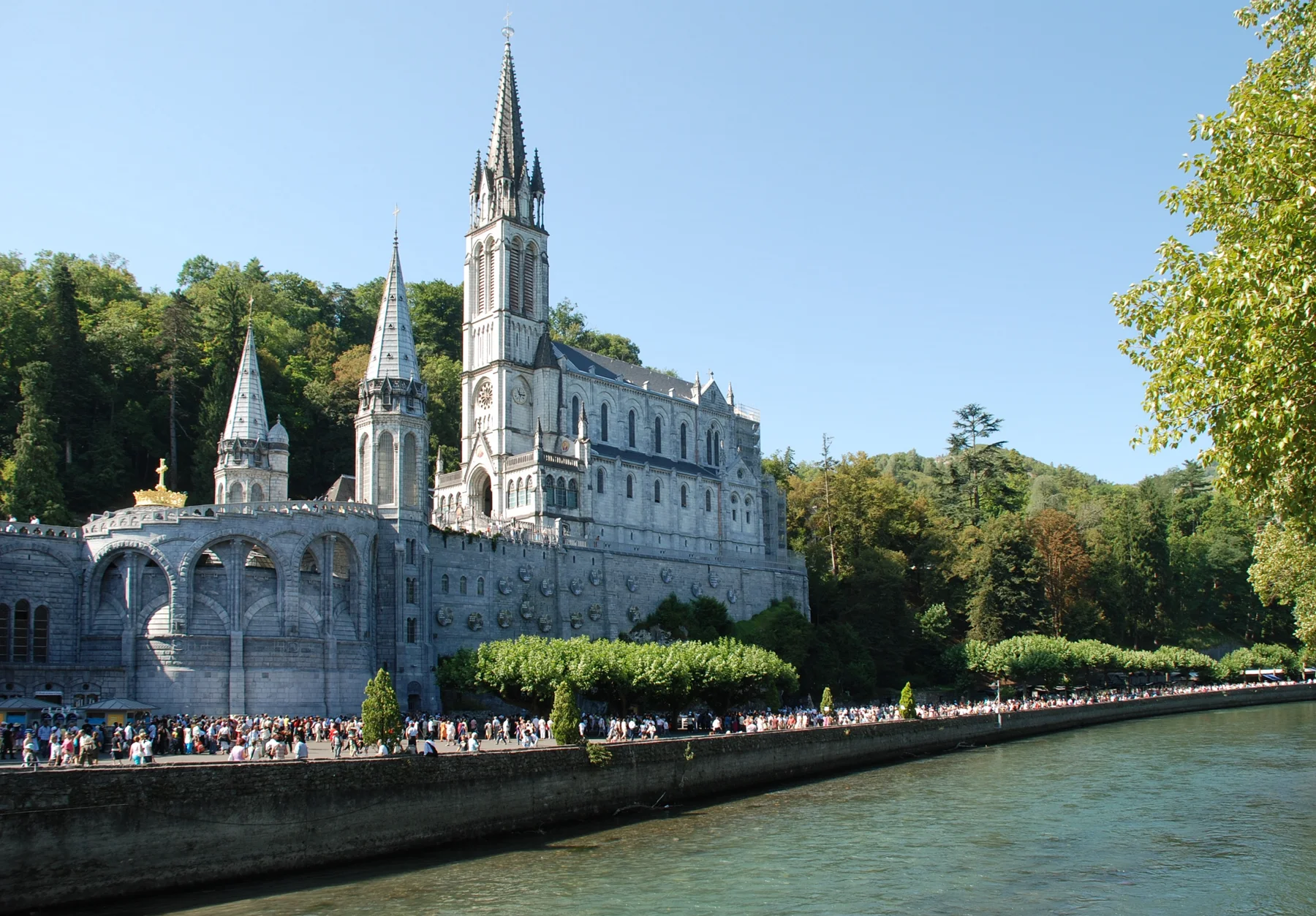
Other places serve the same purpose from particular angles. Assisi sets the poverty and joy of St. Francis beside the ambition a cleric can be tempted by. At Lourdes, one bishop spent five days with his deacons praying about the place of the Blessed Virgin Mary in the life of a priest. The Camino de Santiago has become a capstone for some propaedeutic years, and the roads of St. Paul through Greece and Turkey suit men about to be sent to preach. In the United States, the shrine of Blessed Stanley Rother in Oklahoma City honors an Oklahoma farmer's son who failed out of his first seminary because he struggled with Latin, was given a second chance and ordained, and wrote, when his life was threatened at his Guatemalan mission, that "the shepherd cannot run at the first sign of danger." None of these places is required. Each is chosen because a formator can say what it will teach a future priest.
Questions pilgrims ask
What is a seminarian pilgrimage?
It is a pilgrimage made by men in formal formation for the Catholic priesthood, usually as a class or house with their formators, vocation director or bishop. It goes to places that shape a priest, such as the Holy Land, the tombs of the Apostles in Rome and the parish of St. John Vianney at Ars, and it keeps the seminary's rhythm of Mass, the Liturgy of the Hours, silence and fraternity on the road. It is part of formation, not a holiday from it, and it is distinct from a pilgrimage for men still discerning a call.
Do Catholic seminarians go on pilgrimage, and where do they go?
Many do, by their seminary's or bishop's choice; Church law requires retreats, not a pilgrimage. They go most often to the Holy Land, to Rome and the tombs of St. Peter and St. Paul, and to Ars, the parish of St. John Vianney, and some programs use Assisi, Lourdes, the Camino de Santiago or the Pauline sites of Greece and Turkey.
Why do seminaries take their men to the Holy Land?
Chiefly so that men who will preach the Gospel have prayed where it happened. One U.S. seminary takes the men preparing for the diaconate there each January, and another has run a month-long program, ordinarily in the Holy Land, since 1980. Access changes with events, and seminaries have redirected these journeys to Greece and Turkey or to the shrines of the saints in Europe when the Holy Land was not advisable, so check current conditions before planning.
Why is Ars important for seminarians and priests?
Ars is the village north of Lyon where St. John Vianney was parish priest from 1818 until his death in 1859. He had great difficulty with his studies, yet his preaching, prayer and long hours in the confessional renewed a parish he had been warned was cold. Pius XI named him heavenly patron of parish priests in 1929. Seminarians and deacons go to pray at his shrine, at his confessional and in his house, and a seminary was opened at Ars in 1986.
Who is the patron saint of seminarians?
St. Charles Borromeo (1538-1584), archbishop of Milan, is honored by custom as patron of seminarians because he carried out the Council of Trent's call for seminaries; the U.S. bishops' resource for the 2025 Jubilee of Seminarians names him in that role, and no papal act giving him the title is cited. St. John Vianney, whose prayers this page asks, holds a different and formal title: Pius XI named him heavenly patron of parish priests in 1929.
What is the propaedeutic year, and does it include a pilgrimage?
The propaedeutic stage is the first stage of priestly formation, a preparatory period the Holy See's 2016 norms say should ordinarily last one to two years, lived in community and given to prayer, the sacraments, Scripture, study of the Catechism and parish or charitable service. A U.S. bishops' committee bulletin says it should last at least twelve consecutive months. A pilgrimage is not required, but several programs include one: at least two U.S. programs have closed the year by walking part of the Camino de Santiago.
Is a seminarian pilgrimage the same as the retreat before ordination?
No. Canon law requires every candidate for ordination to make a spiritual retreat of at least five days beforehand (canon 1039), and every seminarian to make a retreat each year (canon 246). A retreat is ordinarily silence and stillness in one place. A pilgrimage is a journey to holy places with others. Some bishops and seminaries add a pilgrimage in the months before ordination, for example to Lourdes and Ars or to the Holy Land, but it accompanies the canonical retreat and does not replace it.
Who pays for a seminarian's pilgrimage, and how can I help?
Usually benefactors. Seminaries that run pilgrimage programs fund them through sponsorship appeals, dinners and auctions, parish fundraisers and individual gifts. The way to help is to give through the seminary's or diocese's own development or vocations office and to send your prayer intentions with the men, who commonly pray for their benefactors at the shrines they visit.