
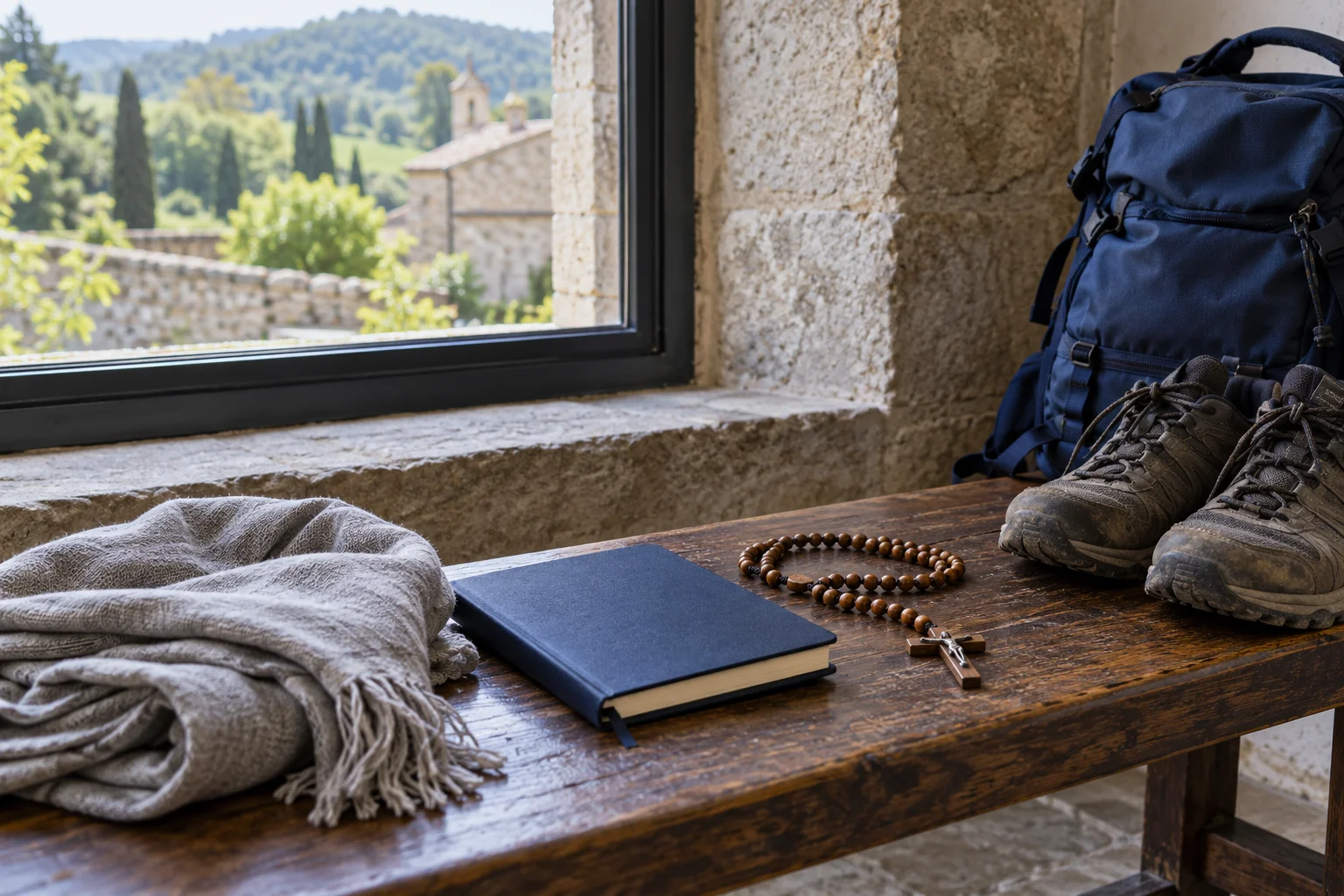
Italy is the strictest in practice, because the check happens at a security line. The U.S. bishops' visitors office in Rome tells pilgrims to dress "with shoulders, knees, and everything in between covered," and warns that people dressed otherwise may be refused entry to papal events even with tickets. Head coverings are no longer expected. A scarf in a bag will not always rescue a sleeveless top on a hot day, so dress for the church in the morning.
In the Holy Land the Custody's page for the Holy Sepulchre gives hours and Mass times but no dress rule; pilgrims commonly report signs at the doors of the sanctuaries asking for modest dress, so keep to shoulders and knees every day. Shoes matter there too: the Custody describes steep stairs up to Calvary and down to the lower chapels. The Western Wall is a Jewish holy site, where the Western Wall Heritage Foundation asks visitors to dress appropriately and, on the Sabbath and Jewish holidays, not to use electronic devices, take pictures, or write.
Lourdes, Fátima, and Medjugorje are lived largely outdoors: add a rain layer and something warm for the evening processions, and for Medjugorje's hills, which the parish describes as steep, closed shoes instead of sandals. The same church standard serves at the Basilica of Our Lady of Guadalupe in Mexico City, where a visit includes a large open plaza and the stairs up Tepeyac hill, and where the city's high altitude makes mornings and evenings cool.
Lightweight layers solve most of it: long, loose trousers or a skirt below the knee, shirts with sleeves, and one outfit you can wear comfortably through a full day on foot.