
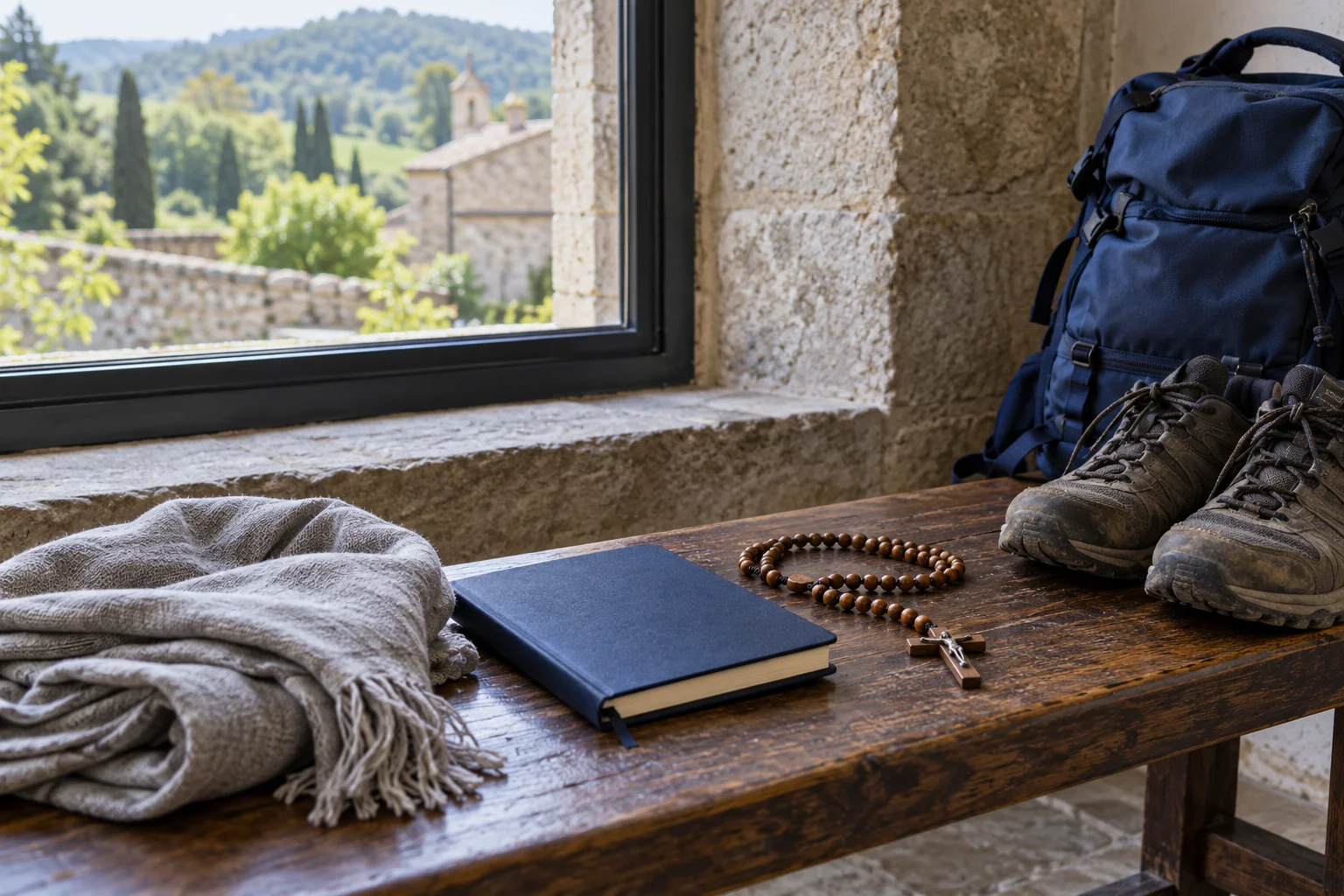
Rome fits a week well. Four or five full days allow the four major basilicas, a catacomb, and the Pope's Wednesday general audience, for which tickets are free but must be requested in advance. Lourdes and Fátima each need only two or three full days for the places of prayer, the processions, and, at Lourdes, the baths, which the sanctuary opens in the morning from April to November with no booking for individuals. That leaves a week at either shrine unhurried; visiting both in one week means a flight between Portugal and France and is better given nine or ten days.
Medjugorje suits a week because pilgrims stay in one village and follow the parish's daily program of prayer, with Masses in several languages in the morning and adoration in the afternoon. The Holy See's 2024 note permits public devotion there without pronouncing on the supernatural character of the reported apparitions. On the Camino, the Pilgrim's Reception Office in Santiago grants the Compostela to those who walk at least the last 100 km, which most people cover in five or six days from a town such as Sarria or Tui at the usual 20 to 27 km (12 to 17 miles) a day, with a day left for the cathedral.
Good to know before you choose: count nights, not days, since the arrival day after an overnight flight is rarely a full one. One hotel for the whole week is far more restful than three. In Rome, make sure your dates include a Wednesday. The Holy Land asks for more time because Galilee and Jerusalem are two separate bases; a week there means leaving out one or the other.